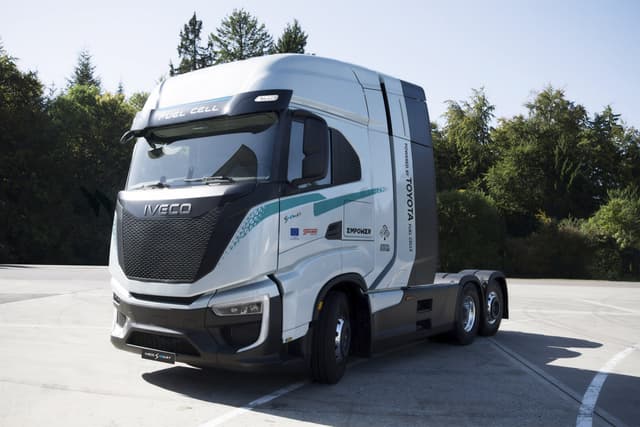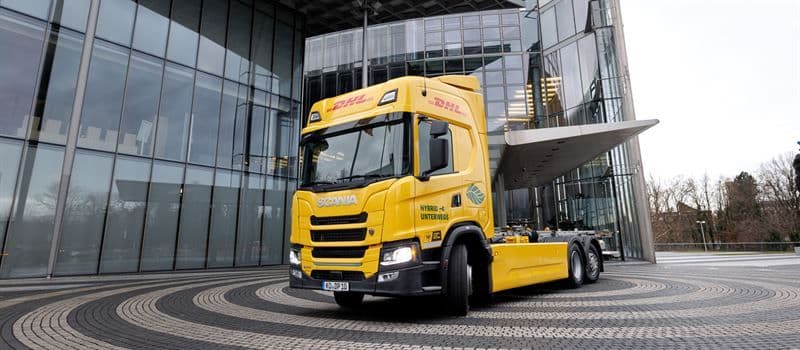
Scania and DHL Group have jointly developed an electric truck with a fuel-powered generator, making it possible to shift to battery-electric road transport without having to wait for a complete charging network. Fully electric vehicles are the ultimate solution in a sustainable transport system, and the shift to electric needs to accelerate now. There are, however, hurdles such as the lack of charging points, the high costs of ensuring enough charging capacity at the depots during seasonal peaks, and the strain on the grid and high spot prices for electricity on for instance calm winter days. This is where Scania and DHL’s Extended Range Electric Vehicle (EREV) comes into the picture. The vehicle helps to overcome these hurdles while enabling DHL to drive 80 – 90% on renewable electricity.
Fuel-powered generator replaces one of the battery packs
The new e-truck will be deployed by the Post & Parcel Germany division in February for parcel transport between Berlin and Hamburg to test its performance in day-to-day operations, before additional vehicles are added to DHL’s fleet. The fuel-powered generator replaces one of the battery packs in a fully electric truck not needed for the majority of the transport routes, thus reducing the range coming from the batteries, but providing back-up energy for the mentioned scenarios. The vehicle has a possible range of 650 to 800 kilometers (subject to the findings from the test) and can be refueled at any conventional petrol station, if needed. This compares with the 550 kilometers of Scania’s most modern and industry-leading 100 percent electric trucks with an equivalent maximum weight.
"A pragmatic solution for making logistics more sustainable"
DHL Group CEO Tobias Meyer: “It is going to take some time before renewable electricity, the grid and charging infrastructure are available and robust enough to rely fully on battery-electric trucks, especially for a large-scale system like the German parcel network of DHL. Instead of waiting for this day to come, DHL and Scania are collaborating on a pragmatic solution for making logistics more sustainable and reduce CO2 emissions by more than 80%. This vehicle is a sensible, practical solution that can make an immediate contribution to reducing greenhouse gas emissions in freight transport short-term. Such reductions should be proportionally reflected in the road toll pricing and EU fleet emission scheme. We see this collaboration as a successful innovation project of two companies committed to battle climate change.”
The EREV has been developed by Scania Pilot Partner, exploring new technologies and solutions, in this case together with the strategic partner DHL. Range-extended electric vehicles offer a promising interim solution for significant CO₂e reductions, especially where infrastructure and other conditions for fully electric transport are lacking. EU and national policies should recognise and incentivise this concept through adequate recognition of the realistic emission intensity in and proportional road toll reductions.
Should be accepted while infrastructure is being built
Christian Levin, CEO, Scania: “The future is electric, but perfect must not be the enemy of good as we are getting there. The vehicle we have developed together with DHL is an example of interim solutions that can enhance the scaling of decarbonised heavy transport before the transport system eventually becomes 100 percent electrified. An effective climate transition requires that policymakers accept such solutions, while ramping up their investments in public infrastructure and other enabling conditions.”
The EREV is a 10.5 meter long truck with a maximum weight of 40 metric tons, powered by a 230kW electric engine (295 kW peak). Energy is delivered by a 416 kWh battery and a 120 kW gasoline powered generator. With the aid of the onboard generator – initially powered by petrol and later by diesel fuel/HVO – the truck’s range extends up to 800 kilometers. EREVs can be equipped with a software limiting the usage of the fuel-powered generator, thereby allowing CO2 emissions to be reduced and limited to a specified level. Its maximum speed is 89 km/h, with a cargo capacity of approx. 1,000 parcels (volume of a swap body). The truck can also pull a trailer with an additional swap body. The vehicle is to be deployed for “main carriage” transport between the cities of Berlin and Hamburg.