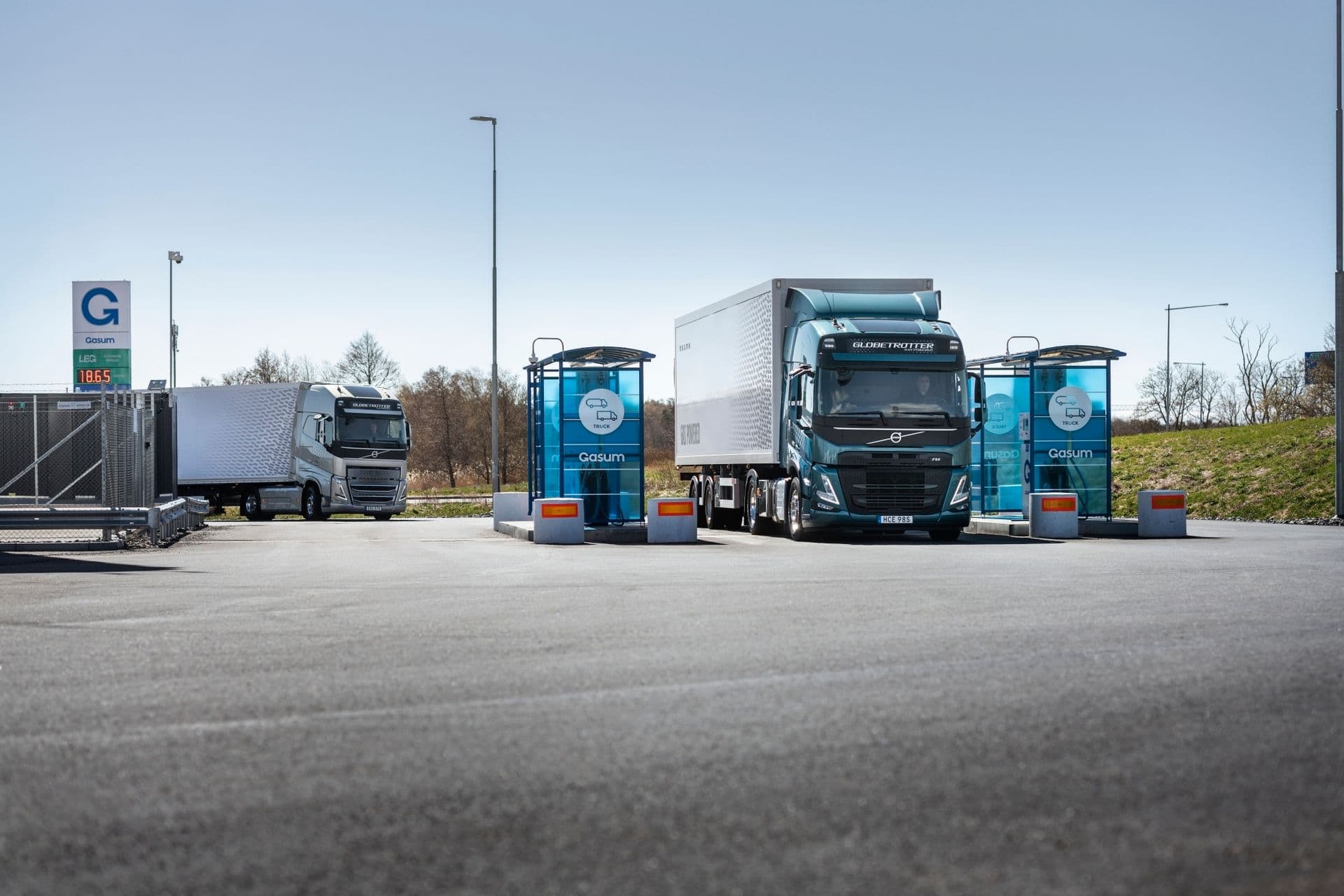
Volvo Trucks is launching a new, more powerful gas-powered truck that can run on liquified biogas. The new truck can carry out demanding, long distance journeys, while reducing overall CO2 emissions.
Five years ago, Volvo Trucks launched its first trucks that can run on liquified biogas, often called bio-LNG, which is a renewable fuel that can be produced from many types of organic waste, including food scraps. The fuel can reduce CO2 emissions by up to 100%.
Biogas is a great complement to electric transport solutions, helping hauliers with their sustainability ambitions and aims towards climate neutral transport,
says Daniel Bergstrand, Product Manager for gas-powered trucks at Volvo Trucks.
The new gas-powered Volvo FH and FM are getting a higher power level of 500 hp, joining the previous 420 and 460 hp engines. The gas engines also get major technical upgrades that makes them up to 4% more fuel efficient**, which together with a new 10% larger gas tank, contributes to a longer range.
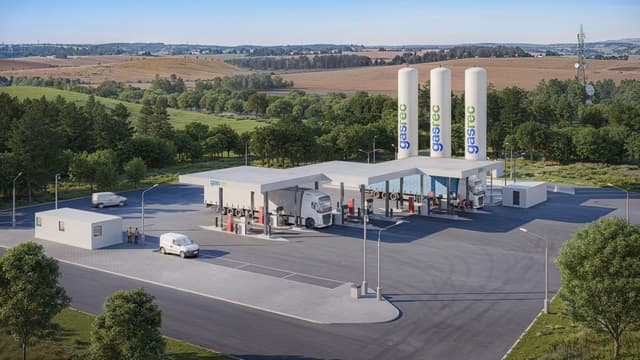
Our efficient gas-powered trucks have a performance comparable to their diesel equivalents. Fuelling up is almost as fast as a diesel truck and the growing network of more than 600 fuel stations for both bio-LNG and LNG in Europe makes them ideal for long-haul work,
adds Bergstrand.
The strengthened gas-powered line-up fits well with Volvo Trucks’ three-path strategic roadmap to reach zero emissions: battery electric trucks, fuel cell trucks and combustion engines that run on renewable fuels like biogas, HVO or even green hydrogen.
Several technical solutions are needed because the availability of energy and fuel infrastructure differs greatly between countries and regions, and also because the requirements for each transport assignment can vary,
says Bergstrand.
European production of bio-LNG is expected to ramp up quickly to shift away from the use of fossil LNG. The EU Commission has put forward a plan called REPower EU, where the focus is on creating greatly increased domestic production capacity for different kinds of energy. The plan is to boost annual biogas production ten times by 2030* and the sector has already started a rapid growth phase. Outside of Europe the potential for biogas is also gaining interest.
Facts about Volvo’s gas-powered trucks:
-
Product models: Volvo FH, FM and FMX (on request).
-
Power levels: 420, 460 and 500 hp.
-
Fuel: bio-LNG (liquified biogas) or LNG. A small amount of diesel or HVO is used to ignite the gas.
-
Range: up to 1,000 km**.
-
Engine technology: By utilising the diesel engine’s high efficiency, the same driveability as a diesel truck is achieved, making it possible to run with high loads and cover long distances.
-
The new gas-powered Euro 6 step E engines are up to 4% more fuel efficient** than the step D engines.
-
The gas engines have been completely updated and the increased efficiency is obtained by new injectors and pistons for lowered friction, together with a new turbo, variable oil pump, and Crank Case Ventilation that handles unfiltered oil.
Facts about liquified gas:
-
Bio-LNG is a renewable fuel that is liquid biogas (biomethane). Any organic waste can be digested to produce biogas, for example sludge from treatment plants, food waste, manure and other residual products.
-
LNG (Liquified Natural Gas) is a fossil gas (methane) which is extracted from underground or undersea reserves.
-
The process for liquifying biogas is the same as for LNG; the gas is cooled down to –162 °C. The fuel then takes significantly less space, which makes it possible to bring a much larger amount of energy onboard the truck, which increases the range significantly.
-
The EU Commission’s goal (REPower EU) is to boost annual biogas production ten times to 35 billion cubic metres by 2030*. More than 78 bio-LNG plants are already confirmed to be ready in Europe by 2024. Germany and Italy, together with the Netherlands, are expected to be the leading bio-LNG countries in the coming years.