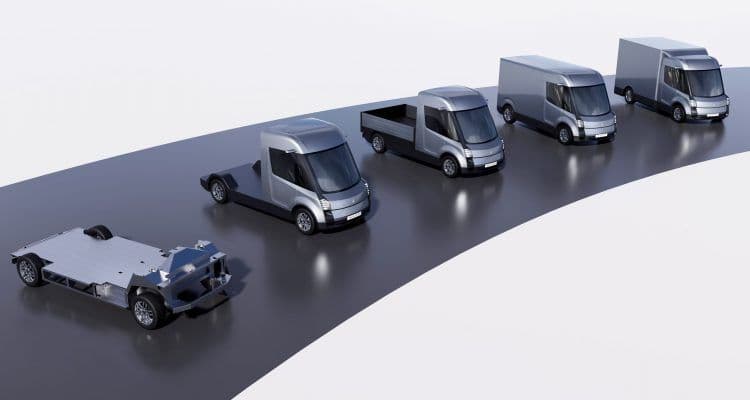
Watt Electric Vehicle Company (WEVC), a pioneer in the design, engineering, and manufacture of low-to-medium volume EVs, both under its own brand and for third parties, today reveals a unique lightweight and efficient chassis-cab product set to provide the foundation for next-generation electric light commercial vehicles.
Designed for production of up to 5000 vehicles per annum, the innovative and highly flexible 3.5-tonne cab and chassis unit, codenamed WATT eCV1, enables a wide range of electric commercial vehicle designs, facilitating mission-specific models which meet customers’ particular fleet requirements.
The first of multiple commercial vehicle offerings to come from WEVC, the eCV1 uses the company’s breakthrough, proprietary PACES architecture, a sophisticated yet cost-effective modular electric vehicle platform. Developed to support commercial vehicle manufacturers, specialist vehicle converters and fleet operators in the transition to an electric future, PACES complies with ISO regulations and exceeds stringent European Small Series Type Approval safety standards.
It’s ’cell-to-chassis’ system means batteries are integrated to the primary structure (rather than having a separate battery pack), thus optimising stiffness, minimising weight and maximising payload. As a result, the clean sheet design means the eCV1 has none of the structural, weight and packaging compromises inherent in the majority of electric LCV designs, many of which having been converted from ICE drivetrains and which are further constrained by traditional high volume manufacturing processes.
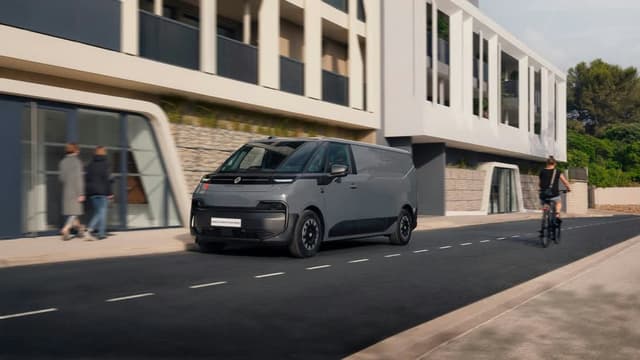
The eCV1 range features a central driving position which allows a safer kerbside exit for the operator, whichever side of the road the vehicle is driving or parked on. The cabin can be configured as a one-, two- or three-seater vehicle, with the large glass house providing superb visibility making the vehicle safer to drive and easier to manoeuvre and park. A further benefit of the central driving position is that it has allowed the A-pillars to be repositioned inboard, thus reducing frontal area and drag, a key metric in designing an efficient electric commercial vehicle. The unique platform design creates generous full standing height headroom, facilitating easy ingress and egress and a ‘walk through cabin’ option that is ideally suited for urban delivery vehicles.
The intrinsically lightweight PACES architecture results in a chassis cab with a kerb weight from just 1750kg, delivering class leading payload and range in the 3.5t and 4.25t segments.
Neil Yates, Founder and CEO of Watt Electric Vehicles, explains:
I’m delighted to reveal the WATT eCV1. Our unique approach to addressing the challenges facing the industry enables the transition to mission-specific, yet cost-effective electric light commercial vehicles. We have embraced circular economy principles in the design, manufacture, and operation of our commercial vehicles to specifically align with increasingly stringent corporate and fleet operator sustainability responsibilities.
The industry is rapidly moving to a zero-emission future, working with WEVC and our eCV1 platform will allow customers to benefit from electrified commercial vehicles tailored to exactly meet their needs.
Advanced e-platform technology, manufactured in the UK
Flexible, scaleable, lightweight and cost-effective, WEVC’s PACES architecture (Passenger And Commercial EV Skateboard) features bespoke aluminium lightweight extrusions and ultra-precise laser-cut and CNC-folded pieces which ingeniously interlock and bond together, a technical innovation known as FlexTech®.
Designed for low-to-medium volume manufacture, it can be applied to passenger and commercial vehicles including FWD, RWD and AWD configurations – enabling WEVC to rapidly engineer a broad range of lightweight automotive products. With a capacity of 5,000 units per annum, the company’s new UK manufacturing facility will be home to its light commercial EV range. From the outset, WEVC’s business to business services have included ‘white label’ build provision for third party manufacturers and OEMs, in parallel with its own-branded commercial EVs.
Neil Yates, Founder and CEO of Watt Electric Vehicles, continued:
As the electrification of the transport sector accelerates what we are seeing from customers is the need for a ready-to-go, sophisticated yet cost-effective electric commercial vehicle offering. With our first product, the eCV1, we have really re-thought what is possible, and over the coming months will reveal full details of the further unique features that make it a truly revolutionary light electric commercial vehicle.