
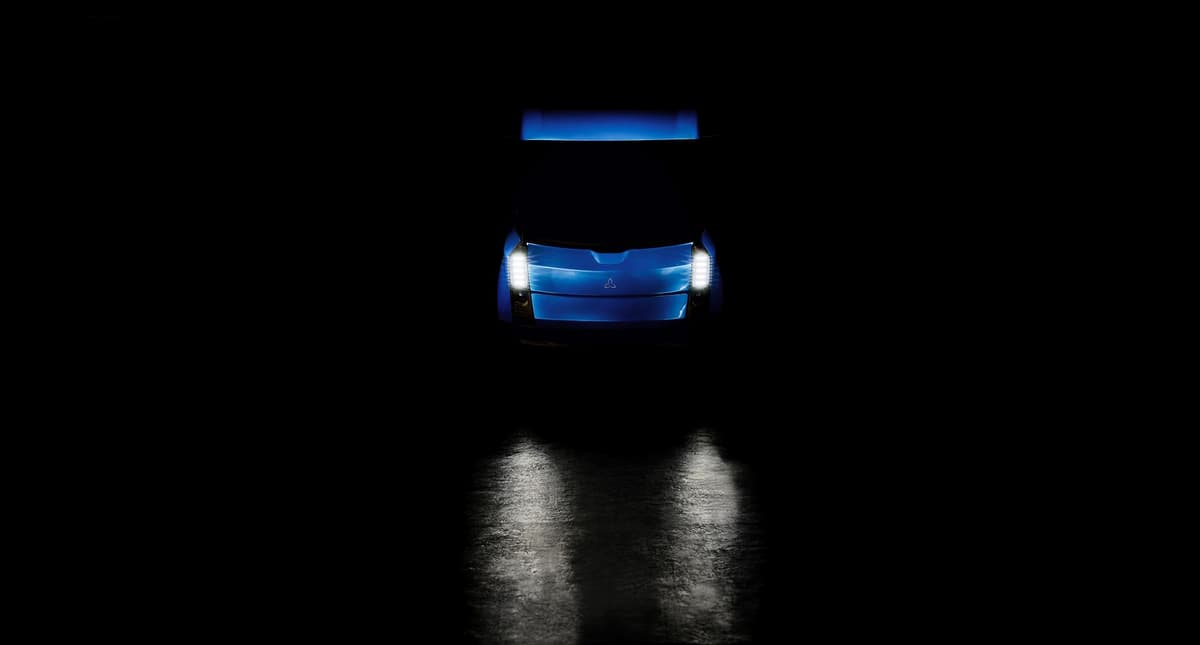
Watt Electric Vehicle Company (WEVC) has revealed the first glimpse inside its electric eCV1 prototype electric commercial vehicle, showcasing its unique central driving position.
Making its public debut at the Commercial Vehicle show at the Birmingham NEC next week in the form of a working prototype, the innovative UK-designed WEVC eCV1 is a clean sheet design based on WEVC’s flexible EV architecture which enables a wide range of electric commercial vehicle designs, facilitating mission-specific models which meet customers’ particular fleet requirements.
One of the platform’s key benefits is an ergonomic cabin focused on a central driving position, always allowing easy kerbside exit for driver safety and one, two or three seat configurations. As well as easing ingress and egress on either side and offering remarkable headroom, the central driving position gives excellent visibility, further enhancing driver and other road users’ safety.
Placing the driver in the centre of the vehicle also facilitates a smaller frontal area, which combined with a class-leading kerb weight, results in a highly energy efficient electric commercial vehicle. The prototype at the CV Show will demonstrate a representative two-seater layout and is being shown on the stand of WEVC partner, ETRUX, an electric commercial vehicle specialist.
Following the signing of an MoU between the two companies in March, the collaboration will see WEVC’s game-changing electric vehicle platform technology adapted by ETRUX into a range of offerings for the commercial vehicle market. To underline the intent of the relationship, ETRUX will be exhibiting an engineering prototype at the NEC, based on the eCV1 3.5-tonne cab and chassis unit, complete with an in-house-designed body.
Neil Yates, CEO of WEVC said:
Our unique approach to addressing the challenges facing the industry is going to enable the transition to mission-specific, yet cost-effective electric light vans - vehicles which, because they have been designed from a blank sheet of paper, are packed full of innovative features that bring benefits to both fleet operator and drivers.
Our eCV1’s cabin has been designed to make their job easier, safer, and less strenuous, improving visibility, maximising headroom, allowing them to get in and out of the van from either side, and not into traffic. Putting the driver at the centre of things helps them avoid damage with a better view, while maximising driving range through reduced frontal area.
This layout brings a host of unique advantages - and it’s part of a raft of innovations that allow us to truly tailor a fleet of vehicles to customer requirements. We cannot wait to show people the vehicle for the first time in Birmingham next week.
The WEVC eCV1 prototype is built around the intrinsically lightweight PACES architecture results in a chassis cab with a kerb weight from just 1750kg, delivering class leading payload and range in the 3.5t and 4.25t segments.
The CV Show will be the first chance to see the functional prototype, which will be continuing test and development activities directly after the event. Designed for production of up to 5000 vehicles per annum, WEVC’s innovative and highly flexible 3.5-tonne cab and chassis unit enables a wide range of electric commercial vehicle designs, facilitating mission-specific models which meet customers’ particular fleet requirements.
ETRUX will be exhibiting the WEVC eCV1 on stand 5D88, at the commercial vehicle show at the Birmingham NEC from 18th-20th April.