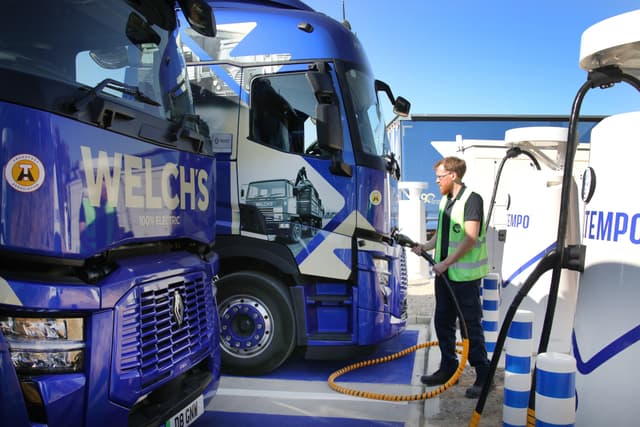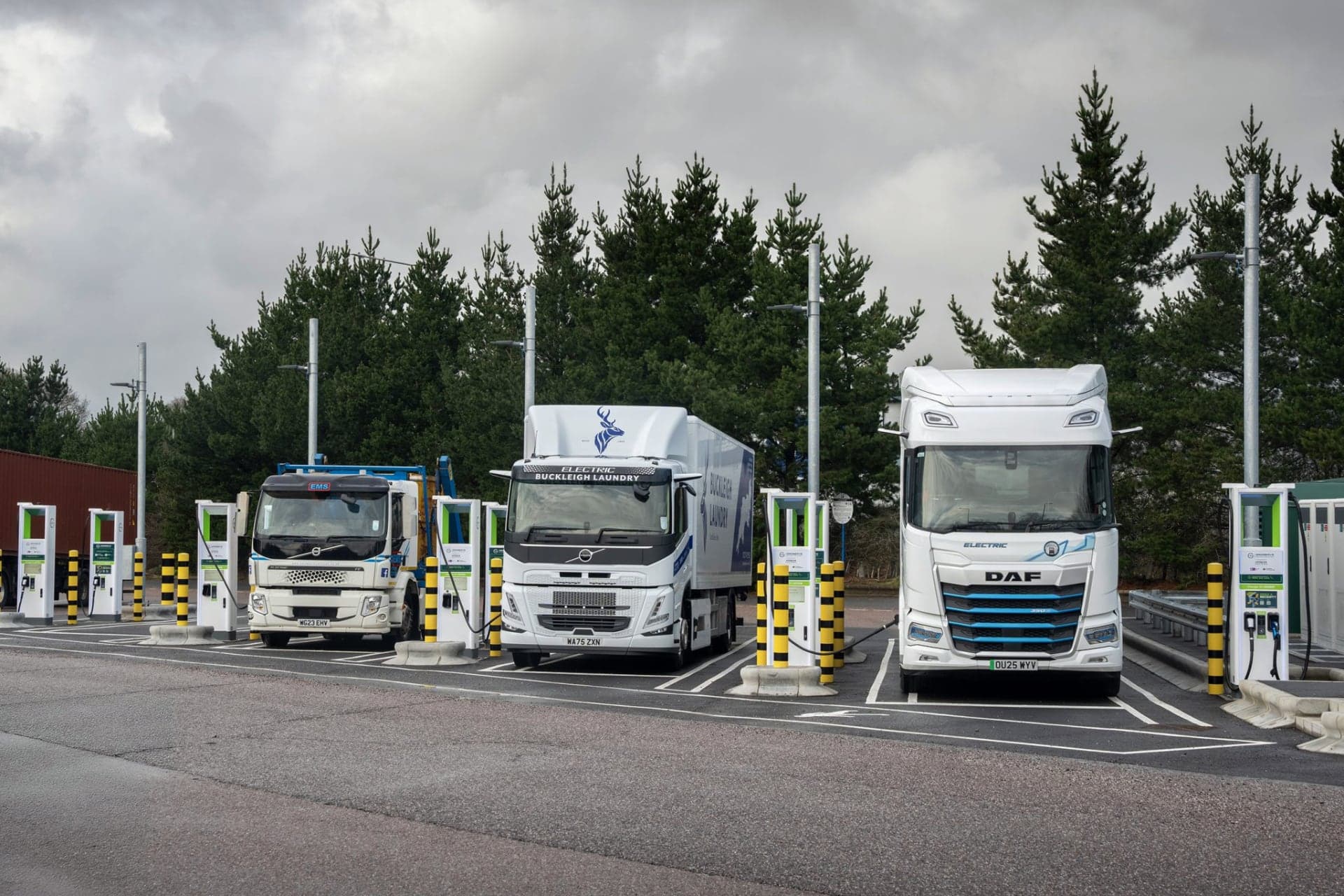
The initiative forms part of Gridserve’s Electric Freightway programme, a flagship network envisioned to provide fast, reliable charging infrastructure tailored to the unique needs of HGVs. Funded through the UK Government’s Zero Emission HGV and Infrastructure Demonstrator (ZEHID) programme, delivered in partnership with Innovate UK, the Electric Freightway brings together a consortium of 25 leading hauliers and vehicle manufacturers aiming to accelerate the shift from diesel to electric trucks.
At Extra Baldock services, located at junction 10 of the A1(M), drivers will find six dedicated high-power charging bays, while Moto Exeter, at junction 30 of the M5, opens with four bays. Both locations have been carefully designed with truck drivers in mind — featuring drive-through bays to accommodate different vehicle layouts, enhanced safety markings, and bespoke signage to reflect the higher cab height of HGVs. Additional safety features such as widened walkways, sensors, lighting and CCTV help ensure that drivers can move safely between vehicles, chargers and service facilities.
These hubs are not merely upgraded car charging points rebranded for trucks. They have been developed with specific attention to the operational realities of heavy freight, from accommodating large turning circles to aligning with typical dwell times and route planning requirements. As Sam Clarke, head of the eHGV Programme at Gridserve, explains: “A key strength of the Electric Freightway programme has been the consortium of leading hauliers and logistics operators, whose real-world insight have been critical in shaping the design, layout and technical capability of the hubs. Their input has helped ensure the infrastructure reflects the operational needs of today’s electric trucks — from vehicle size and manoeuvrability to charging power requirements, dwell times and route planning — making the hubs genuinely fit for purpose.”
Clarke’s words reflect Gridserve’s clear intent: to design infrastructure that supports actual business operations, rather than theoretical or idealised use cases. Early adoption by commercial fleets is dependent on reliability, safety, and the ability to operate within tight logistical schedules — and this infrastructure aims to meet those demands.
Investment driving change
The Electric Freightway’s rollout is a powerful example of public-private collaboration to drive decarbonisation within one of the hardest sectors to electrify. Heavy goods vehicles make up only around 1% of the UK’s licensed vehicle stock, yet contribute approximately 16% of domestic transport greenhouse gas emissions and 5% of NOx emissions — disproportionate figures that underline the urgency of targeted solutions.
Through the ZEHID programme, the UK Government has committed tens of millions of pounds to support infrastructure and fleet electrification over the coming decade. In addition to public funding, Gridserve and its consortium partners are making substantial commercial investments into infrastructure that will support the transition to electrified freight at scale. At Moto Exeter, for example, high-power charging units provided by ABB and implemented by Actemium form part of a design built to adapt to future expansion and increased charging demand — demonstrating both immediate capability and future-proofing.
These investments create a virtuous cycle: as infrastructure becomes more accessible and purpose-built, fleet operators can confidently electrify their trucks without fear of charging gaps along key corridors. This confidence, in turn, supports further investment in zero-emission HGVs from logistics companies, truck manufacturers and energy providers alike.
From pilot to national network
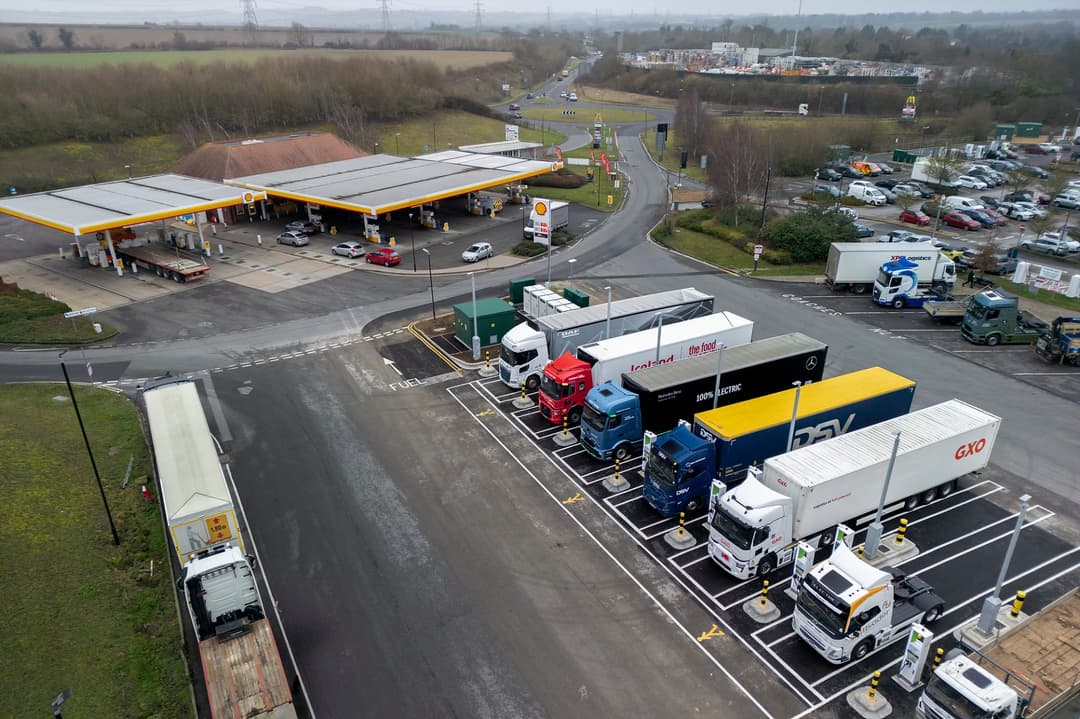
Gridserve’s Electric Freightway initiative is not stopping at Exeter and Baldock. These two hubs are the first of seven public charging sites planned for 2026, with future locations set to include Tamworth, Thurrock, Leeds, Chester and Strensham North — strategically placed along critical freight routes to maximise coverage and minimise range anxiety for drivers.
The design philosophy behind the network draws on lessons learned from Gridserve’s Electric Highway for passenger vehicles, which over the last five years has expanded ultra-rapid charging across motorways and service areas in the UK. With the Electric Freightway, Gridserve aims to replicate this success for trucks, enabling fleets to plan and execute long-distance journeys with confidence.
At a recent event to mark the opening of the new hubs, a DAF XF Electric eHGV completed a demonstration route between Exeter and Baldock, showcasing the practical capabilities of both the charging infrastructure and electric truck technology across real-world distances. This demonstration underscored the message that zero-emission freight is no longer a distant goal but a present-day reality.
Commercial and environmental benefits
The immediate commercial benefits of such infrastructure are significant. For logistics operators, access to high-power public charging hubs reduces dependency on depot-only solutions and mitigates concerns about vehicle range and operational flexibility. It also enables more comprehensive electric fleet deployment strategies for companies of all sizes.
From an environmental perspective, enabling the practical use of electric HGVs directly supports national and international climate targets. Decarbonising freight transport reduces reliance on diesel engines, cutting greenhouse gas emissions and improving local air quality — outcomes that benefit both public health and environmental sustainability.
Moreover, as the technology and supporting infrastructure improve, operational costs for electric fleets are expected to decrease, creating further economic incentives for adoption. Early infrastructure deployments like Exeter and Baldock serve not only as charging points but as catalysts for broader market transition.
A blueprint for the future
Gridserve’s strategic deployment of dedicated eHGV charging hubs at Exeter and Baldock is a landmark moment for the UK’s journey toward zero-emission freight. These investments demonstrate that practical, large-scale charging infrastructure is achievable and commercially viable — and that it can serve the operational needs of complex logistics networks.
As more hubs come online and partnerships deepen between government, industry and infrastructure providers, the Electric Freightway is poised to become a backbone of the nation’s sustainable freight ecosystem — supporting fleets, reducing emissions and driving forward a truly zero-emission future.