Key points
- The Conservatives have announced plans to repeal the Government's 2035 and 2040 diesel HGV phase-out dates.
- The party will abolish the Zero Emission Van Grant and Zero Emission Truck Grant, saving £877 million for taxpayers and ensuring inflationary costs do not impact prices in supermarkets and shops.
- The Conservatives will rule out new manufacturer mandates, fleet requirements or purchase requirements that force businesses towards electric HGVs, instead backing a technology-neutral, multi-fuel approach to cutting freight emissions. The changes are backed by industry, with 80% of respondents in a recent Logistics UK survey saying the HGV mandate is bad for their business.
A multi-fuel approach
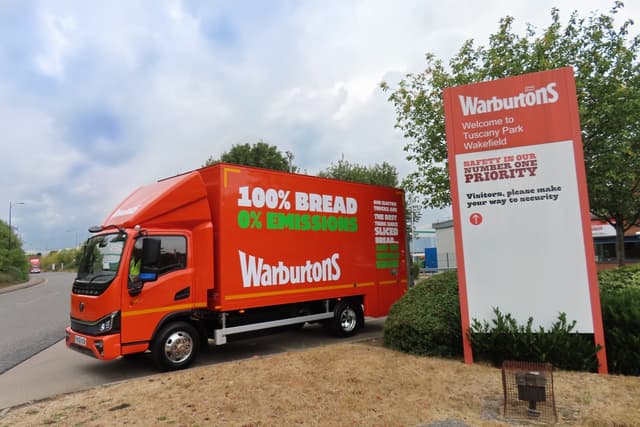
Today, the Conservatives have announced that they would scrap Labour's one-size-fits-all approach to decarbonising Heavy Goods Vehicles (HGVs), repealing the 2035 and 2040 diesel HGV phase-out dates and ruling out new mandates that would force manufacturers or freight operators towards battery-electric trucks.
Labour's policy will end the sale of new non-zero-emission HGVs up to 26 tonnes by 2035 and all new non-zero-emission HGVs by 2040. The Government is also consulting on a new regulatory regime that could include mandates for manufacturers, requirements for fleets to purchase or lease an increasing number of zero-emission HGVs, and penalties for non-compliance. The Conservatives will rule out these measures, which would have a devastating impact upon the cost of transporting food and other essential goods.
The Conservatives support decarbonising freight but reject the assumption that decarbonisation must mean total electrification. From long-distance haulage and refrigerated goods to construction, agriculture and urban deliveries, different journeys and loads require different solutions. The industry is already cutting emissions through biomethane, Hydrotreated Vegetable Oil (HVO) and battery-electric HGVs where suitable, and the Conservatives will back this multi-fuel approach rather than prescribe a single technology from Whitehall.
This follows the Conservatives' wider approach to the ZEV mandate announced by Kemi Badenoch and Richard Holden, the Shadow Transport Secretary, last December. Just as drivers should be free to choose the car that works for them, businesses should be free to choose the truck that works for them.
Cost concerns
In a 2025 Logistics UK survey, 79.3 per cent of respondents said an HGV mandate would have major negative impacts on their business and could lead to its closure. Electric HGVs remain significantly more expensive than diesel vehicles, while the sector faces major challenges around range, payload, charging and infrastructure, particularly for smaller hauliers operating on wafer-thin margins.
Labour's approach risks driving up costs for hauliers already facing higher National Insurance, employment costs, and energy bills. Adding expensive new vehicle requirements and penalties risks pushing up the cost of moving goods around Britain, with those costs ultimately passed on to families at the checkout.
By repealing the 2035 and 2040 phase-out dates and ruling out future manufacturer mandates, fleet requirements and purchase requirements, the Conservative Party will cancel £877 million of planned spending on the Zero Emission Van Grant and Zero Emission Truck Grant.
Electric HGVs can weigh up to 4 tonnes more than their diesel equivalents, reducing their payload and, in some cases, requiring additional journeys to transport the same goods. Additionally, longer charging times can reduce vehicle utilisation and add further staffing and operating costs. This is in addition to the baseline cost of an electric HGV, which is around two to three times that of an equivalent diesel. Current Government subsidies still leave an electric HGV costing more than its diesel equivalent.
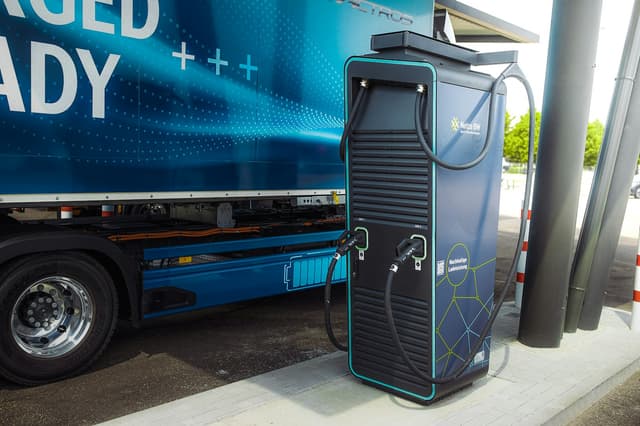
The Conservatives will retain support for depot charging upgrades but will review funding to ensure money is spent on removing barriers rather than on buying vehicles.
The Conservative plan is a common-sense change which will allow operators to cut emissions using the technologies that work best for them, whether electric, biomethane, HVO or future alternatives, while keeping costs down for families and businesses across the country.
Reaction
Richard Holden MP, Shadow Secretary of State for Transport, said:
"Everyone wants to see emissions from Britain's transport fleet reduced. But this should not come at the cost of an almost 19 per cent increase in the cost of transporting food and produce around the UK, hitting hard-pressed families in the pocket and hammering haulage businesses.
"Britain's hauliers keep our shelves stocked and our economy moving. Just as drivers should be able to choose the car that works for them, businesses should be able to choose the truck that works for them.
"Labour are spending £877 million of taxpayers' money chasing targets they plainly cannot meet. Their blinkered eco zealotry risks imposing huge costs on hauliers operating on wafer-thin margins, which will ultimately be paid by families at the checkout.
"The Conservatives will repeal Labour's arbitrary phase-out dates, scrap unnecessary vehicle subsidies and back a multi-fuel future for British haulage. We will trust businesses, not Whitehall, to decide what works best for them."
Simon Smith, CEO of Voltempo, said:
"The economics of electric HGVs are already becoming more compelling. They can deliver lower and more predictable operating costs, drivers prefer them and they offer important safety benefits. Hauliers aren't asking government for more money — they need consistent policy and the confidence to make long-term investments in vehicles, charging and infrastructure.
"That certainty will accelerate private investment and help build stronger, more profitable haulage businesses, while reducing their exposure to volatile global oil prices. That's good for UK growth, good for hauliers and, ultimately, good for consumers through more stable costs of getting goods onto shelves."