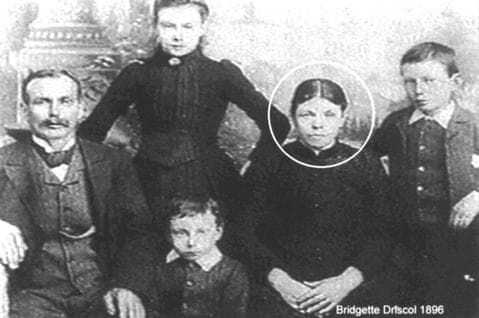


On 17th August 1896, in the grounds of the Crystal Palace, a 44 year old mother from Croydon named Bridget Driscoll stepped into the path of a motor car and became the first pedestrian in Britain to be killed by one. The car, driven by Arthur Edsall, was travelling at roughly four miles an hour. At the inquest, the coroner, Percy Morrison, expressed the hope that such a thing would never happen again. The jury returned a verdict of accidental death. Nobody was prosecuted. Nobody, in any sense that mattered, paid.
History has not been kind to Mr Morrison's hope. It has been disappointed many millions of times over since, and in disappointing it the law was forced to grow up fast. Confronted at Crystal Palace with a machine so novel that it genuinely did not know whom to blame, English law recovered its composure within a generation and settled upon an answer it has clung to ever since: the person holding the wheel. 130 years on, a Chinese manufacturer has stood up and proposed the first genuinely new answer since Edsall walked free — and it is worth pausing on the symmetry, because the story that began with a car nobody knew how to blame is ending with a car whose maker is volunteering to be blamed.
For as long as there have been motor cars there has been a comfortingly simple answer to the question of who pays when one of them hits something: the idiot behind the wheel. The law has dressed this up over the years in the finery of negligence, breach of statutory duty and the Highway Code, but the principle has remained gloriously intact since the days when a man with a red flag walked in front of the vehicle. The driver drives; the driver answers.
BYD — which, for those who have spent the last five years under a tarpaulin, is now the largest car maker in China — has just torn that principle up.
At its Intelligent Driving Strategy event, the company announced that if a legally liable accident occurs while a driver is properly using the Urban Navigate on Autopilot function of its "God's Eye" system, BYD will directly cover all resulting economic losses. Not the driver. Not the driver's insurer. The manufacturer. Repairs, third-party property damage, personal injury — the lot, with no monetary ceiling. The claims process bypasses the insurance industry entirely: you ring BYD's after-sales line, technicians attend, the vehicle's data logs are interrogated, and if the algorithm was at fault, the company pays.
Now I'm writing this as a mere columnist, and as a recovering lawyer I am obliged to point out the small print, because there is always small print, and it is load-bearing.
The coverage lasts one year. It applies only in China. It applies only to vehicles running God's Eye 5.0 — some 3.15 million of them, admittedly, which is not nothing — and only when the system is being used "in compliance with regulations." That last phrase is doing an enormous amount of work.
The phrase "when used correctly" is important. Who determines compliance? The manufacturer. On what evidence? Adjudicated by whom?
The manufacturer's after-sales department might simultaneously be the defendant, the loss adjuster, the expert witness and the judge.
An experienced insurance litigator might want to see the first hundred contested claims before declaring this a revolution rather than a press release.
And yet — as a columnist, let me wrestle back the pen from my profession — it is a revolution, of a sort, because nobody else has dared do it.
BYD's offer, for all its caveats, is the first time a volume manufacturer has stood in front of the world and said: our software drives; our software answers.
Why does this matter to a haulier in Wigan rather than Shenzhen? Three reasons.
First, the United Kingdom has already legislated for exactly this moment, and hardly anyone in road transport has noticed. The Automated Vehicles Act 2024 creates the concept of the "authorised self-driving entity" — the company that answers for the vehicle when it is lawfully driving itself. The Automated and Electric Vehicles Act 2018 had already arranged for insurers to pay victims first and pursue manufacturers afterwards. In other words, our statutory architecture assumes that liability will migrate from the cab to the codebase. BYD has simply done voluntarily, and commercially, what English law is preparing to do compulsorily. When God's Eye or its equivalents arrive on UK roads — and BYD's premium brands are already landing here — the question will not be whether liability shifts but how fast, and who is left holding obsolete policies when it does.
Second, consider what this does to motor insurance. If the manufacturer absorbs the cost of the machine's mistakes, the underwriter is left insuring only the human's mistakes — and the whole promise of autonomy is that the human makes fewer of them, because the human is increasingly asleep. The motor book of general insurance begins to look like a melting ice cube. For haulage operators, whose fleet premiums are among the largest lines on the P&L, the medium-term implications are enormous: liability consolidating with a handful of manufacturers, premiums decoupling from driver behaviour, and the claims history that operators have spent decades polishing becoming steadily less relevant than the software version their trucks are running.
Third, voluntary schemes are not law. BYD's promise is a warranty, revocable, time-limited and jurisdictionally confined. It creates expectations it is not legally obliged to honour beyond its own terms. The history of product liability, from Donoghue's snail onwards, is the history of the gap between what manufacturers promise and what courts eventually make them pay. The interesting litigation of the 2030s will not be about whether autonomous systems fail — they will — but about the evidential monopoly the manufacturer holds over the only witness that matters: the vehicle's own black box.
Disclosure battles over telemetry could make the tachograph disputes of the last forty years look like parish council business.
So: a stunt, or a watershed? The honest answer is both. It is a marketing exercise, conducted in one market, for one year, on the manufacturer's own terms. It is also the first public admission by a major car maker of what everyone in the industry privately accepts — that when the machine drives, the machine's maker must pay. The red flag man was made redundant by the internal combustion engine. The driver, as the law's designated defendant, is about to be made redundant by the algorithm.
The operators, insurers and lawyers who work out the consequences first will own the decade that follows.
And really — what is the deal with a car company begging to be blamed? For a hundred and thirty years, manufacturers have had one job at the scene of an accident: not being there. Now BYD pulls up going, "Was it us? It was us, wasn't it. Here's a cheque." You can't get a courtesy car out of most dealers, and this lot are volunteering for the writ. Because when the machine that hit you is also the machine that pays you, that's not motoring any more — that's a relationship. And like every relationship, it's wonderful right up until somebody checks the logs.