The transition to zero-emission road transport is accelerating, but for fleet operators, success depends on more than simply choosing an electric truck. Every operation is different, with route profiles, payload requirements and charging opportunities all playing a role in determining the most effective path to decarbonisation.
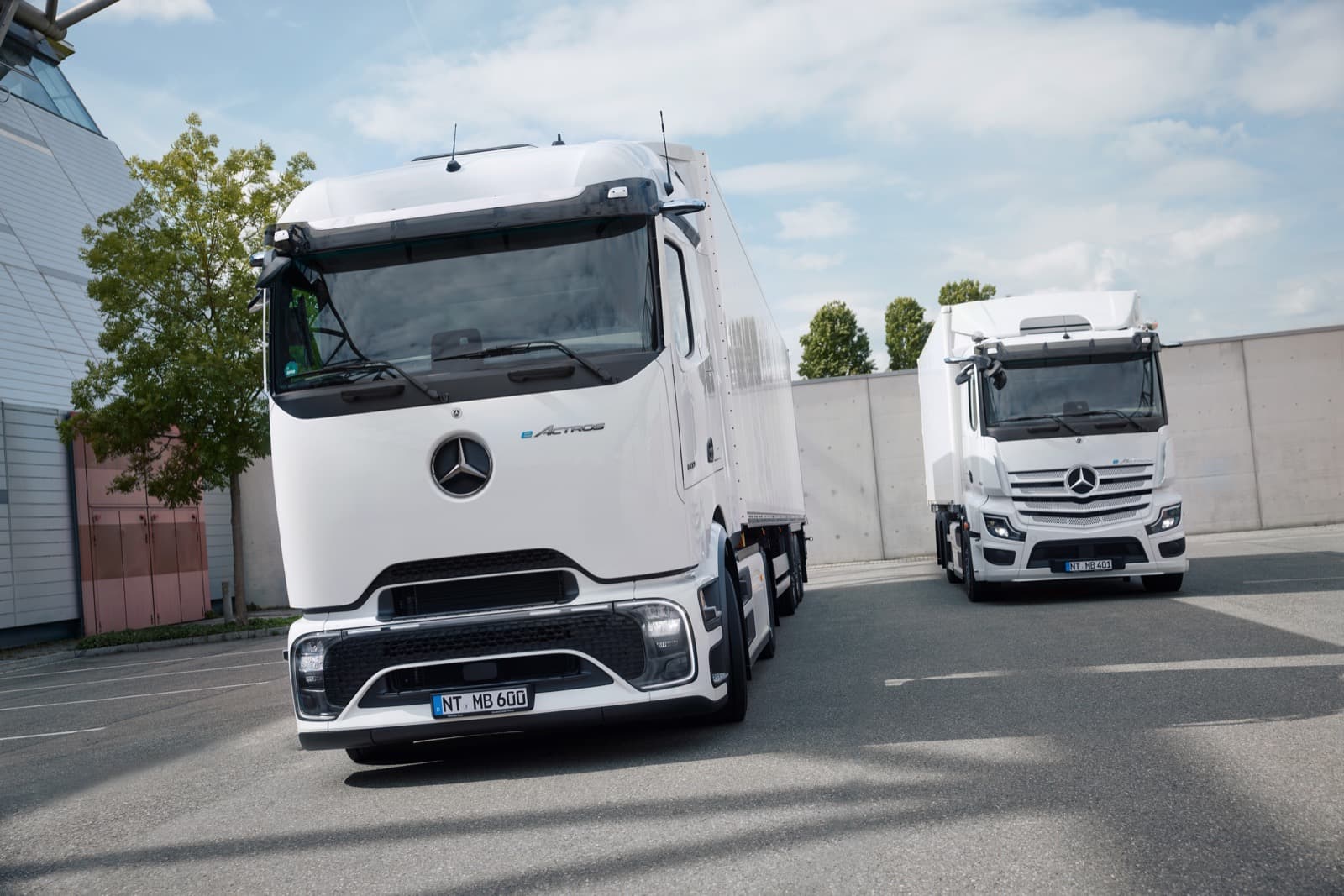
Recognising this, Mercedes-Benz Trucks has developed the eActros range to support a variety of transport applications. The eActros 400 and eActros 600 share a common electric architecture and battery technology, but are designed to address very different operational demands.
Moving Beyond a One-Size-Fits-All Approach
One of the challenges facing operators embarking on electrification is the assumption that a single vehicle specification can meet every requirement. In reality, the transition to net zero is far more nuanced.
Regional distribution fleets often have very different priorities compared to long-haul operators. While some businesses need maximum payload and predictable daily routes, others require extended range and the flexibility to cover substantial distances between charging opportunities.
Mercedes-Benz Trucks' dual-model strategy reflects this changing landscape, offering solutions tailored to different duty cycles while helping businesses reduce emissions without compromising operational performance.
Enabling Long-Distance Electric Transport
The eActros 600 has been developed with long-haul transport in mind. Equipped with three lithium iron phosphate (LFP) battery packs providing 621kWh of installed capacity, the vehicle is designed to deliver at least 500km of range, with real-world testing demonstrating significantly greater distances – up to 700km - under favourable conditions.
This capability represents an important development for the industry. Long-distance freight has traditionally been considered one of the most challenging sectors to decarbonise due to its demanding daily mileage requirements. Advances in battery performance and charging technology are helping to change that perception.
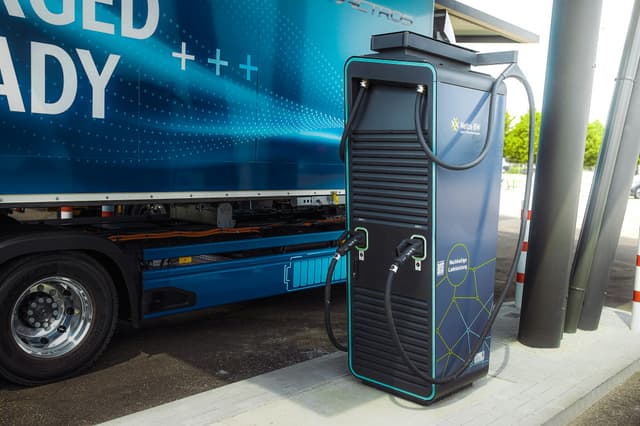
The vehicle has also been engineered to support future megawatt charging systems, allowing operators to take advantage of emerging high-power charging networks as they become more widely available. This creates the potential to recharge during mandated driver rest periods, supporting productivity while reducing operational emissions.
Optimised for Regional Distribution
For many fleets, however, the fastest route to electrification lies closer to home.
The eActros 400 is designed for regional delivery, urban logistics and return-to-base operations. Its two-battery configuration provides 414kWh of installed capacity while reducing vehicle weight, enabling a payload of around 25 tonnes without sacrificing operational practicality.
With a range of up to 500km, the vehicle aligns closely with the daily requirements of many distribution fleets. Operators running fixed routes can often integrate overnight depot charging into existing schedules, creating a straightforward and highly efficient charging strategy.
For businesses where payload directly impacts revenue, the balance between range, vehicle weight and operational efficiency can make the eActros 400 a particularly attractive proposition.
The Vehicle Is Only Part of the Solution
While vehicle technology continues to advance, successful fleet electrification requires a broader ecosystem approach.
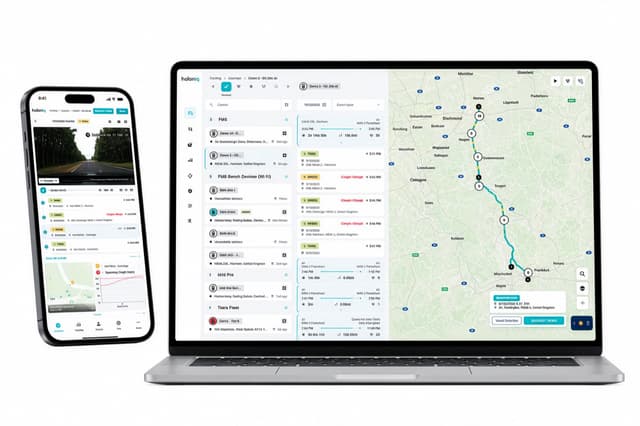
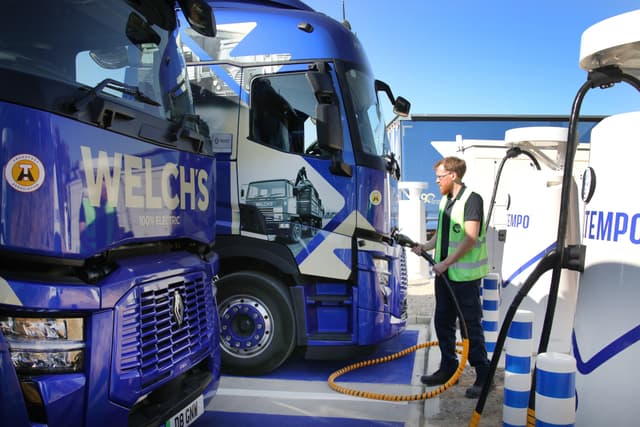
Charging infrastructure, energy management, route planning and digital fleet tools all play a critical role in maximising uptime and ensuring investments deliver value. Access to real-time vehicle data can help operators optimise energy consumption, improve route efficiency and support preventative maintenance strategies.
Driver engagement is equally important. Familiar controls, advanced safety systems and intuitive digital interfaces can help ease the transition to electric vehicles, supporting adoption while maintaining high standards of comfort and productivity.
Turning Ambition into Action
For transport operators, the conversation around electrification has shifted significantly. The question is no longer whether zero-emission heavy-duty transport is possible, but how best to implement it across different areas of a fleet.
By offering solutions suited to both regional distribution and long-haul transport, vehicles such as the eActros 400 and eActros 600 demonstrate that there is no single route to net zero. Instead, success lies in selecting the right technology for the right application and building a transition strategy that reflects operational reality.
As fleets continue their decarbonisation journey, that flexibility may prove just as important as the technology itself.