Share this post
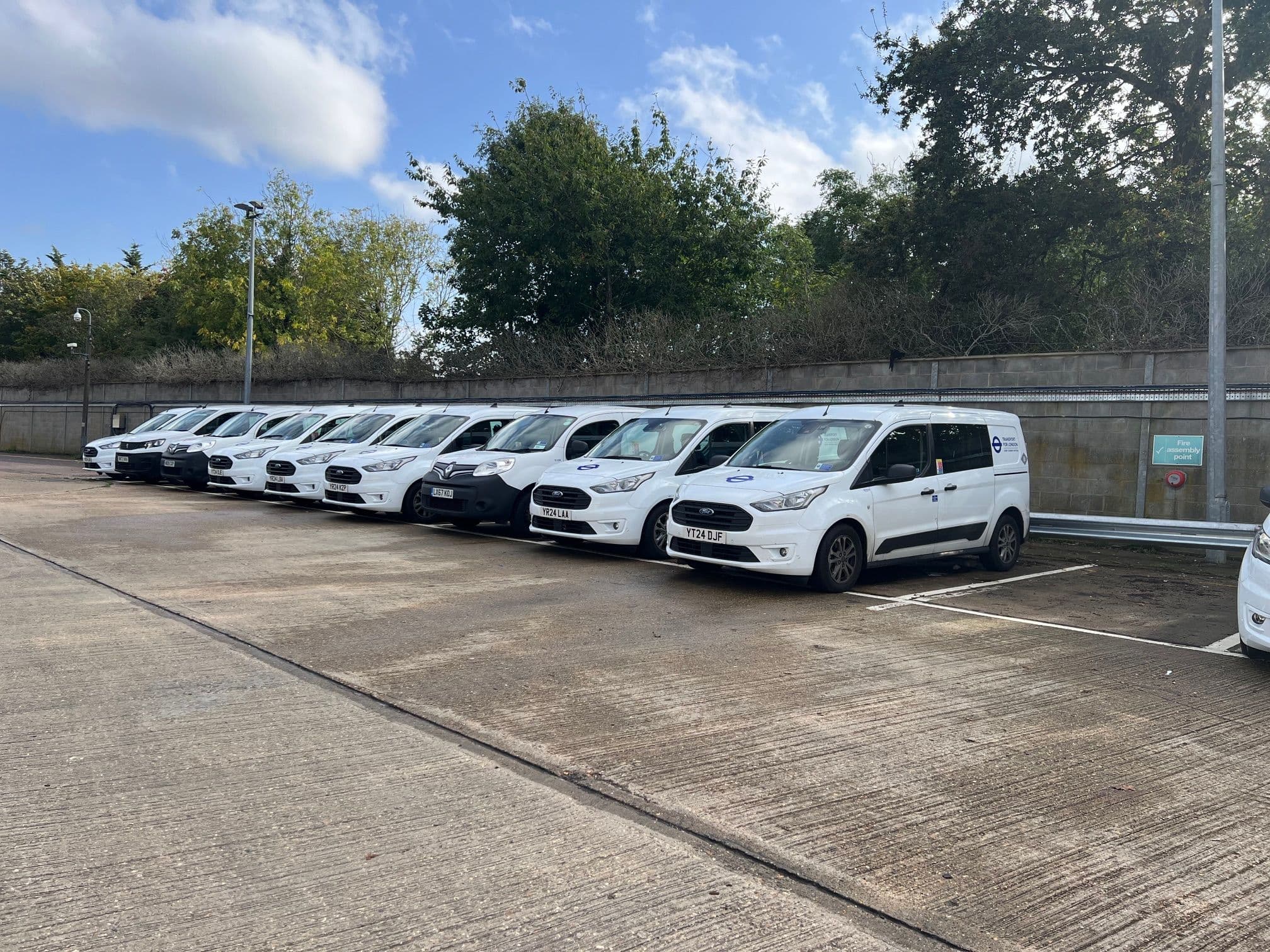
Dynamon, a commercial fleet optimisation software specialist, is supporting Transport for London (TfL) in accelerating the electrification of its approximately 962-vehicle engineering service fleet

Dynamon, a commercial fleet optimisation software specialist, is supporting Transport for London (TfL) in accelerating the electrification of its approximately 962-vehicle engineering service fleet

Published on 21 Mar 2025 • 2 min read

Dynamon’s ZERO Planning Software identified 50% of TfL fleet ready to transition to EVs with no schedule or route changes

Dynamon’s ZERO software analysed TfL’s vehicle telematics data and operational patterns over a 12-month period, covering 356 locations, including depots, Tube stations, offices, and bus stations. ZERO identified optimal EV models, charging infrastructure needs, and efficient charging patterns, providing TfL with actionable insights and recommendations. As TfL’s support fleet operates across a diverse network, the analysis was based on creating dedicated fleet-specific charging infrastructure on TfL sites, rather than relying on publicly available chargers. Vehicles were classified into three tranches:

  • Green vehicles: 50% of TfL’s fleet recommended as suitable for immediate electrification with infrastructure at key locations, requiring no schedule or route changes.

  • Amber and Red vehicles: The remaining 50% either needs minor adjustments to be electrified (marked as amber) or additional charging solutions, which will require further assessment by TfL (marked as red).

Efficient planning for fleet-specific charging infrastructure was critical to ensuring cost-effective and operationally feasible electrification of TfL’s support fleet. Unlike public charging points, this infrastructure would be solely for fleet use, designed to meet the operational demands of TfL’s vehicles. Dynamon provided TfL with a data-driven plan to support a seamless transition of its fleet to zero-emission vehicles

By leveraging ZERO’s advanced analytics, Dynamon provided TfL with comprehensive insights that delivers efficiencies and significant potential cost savings, along with a smooth transition of its fleet to electric vehicles.

Out of the 356 sites analysed for TfL’s support fleet, ZERO helped TfL identify 36 primary locations for installing dedicated fleet-only charging infrastructure. These identified sites would cover 90% of the fleet’s energy demand, potentially reducing the number of chargers required by 43%, with charger sharing strategies improving charger utilisation by 35%. If implemented according to the proposal, the fleet’s reliance on public charging could be reduced by 25%.

Angus Webb, CEO of Dynamon, commented, “Our ZERO software is designed to provide actionable insights and cost-effective strategies for fleet electrification, and we are proud to see it making a significant impact for TfL in their journey towards a zero-emission future. This partnership demonstrates how data-driven solutions can enable large organisations with complex fleet requirements to transition confidently, efficiently and sustainably to electric vehicles.”
More news

Under £20k: Harris MAXUS UK takes on compact electric van market with eDELIVER 3
7 September 2026

Under £20k: Harris MAXUS UK takes on compact electric van market with eDELIVER 3

Harris MAXUS UK launches a new sub-£20,000 acquisition proposition for its compact electric eDELIVER 3 van.

SINOTRUK targets UK zero-emission truck market with Harris Group deal
4 September 2026

SINOTRUK targets UK zero-emission truck market with Harris Group deal

Harris Group has signed a long-term deal to become SINOTRUK's exclusive UK and Ireland distributor, bringing a new range of battery-electric trucks to market from 2027.

Finding the Right Route to Zero: Matching Electric Trucks to Real-World Operations
1 September 2026

Finding the Right Route to Zero: Matching Electric Trucks to Real-World Operations

Mercedes-Benz Trucks' eActros 400 and eActros 600 share a common electric architecture but target very different duty cycles — showing there is no single route to net zero for fleet operators.

Warrington biomethane station to expand Gasrec's growing network
25 August 2026

Warrington biomethane station to expand Gasrec's growing network

Gasrec has secured planning permission for its first large-scale, public-access Bio-LNG station in the North West – a Warrington facility capable of refuelling 1,000 gas trucks a day.

Warburtons takes delivery of first Yutong TE7 7.5t electric truck
20 August 2026

Warburtons takes delivery of first Yutong TE7 7.5t electric truck

Warburtons has taken delivery of its first Yutong TE7 7.5t electric truck from Pelican Electric Trucks, the first of seven ordered as it works to electrify its 170-strong fleet of 7.5-tonne vehicles.

Conservatives pledge to repeal diesel HGV phase-out and scrap zero-emission truck grants
20 August 2026

Conservatives pledge to repeal diesel HGV phase-out and scrap zero-emission truck grants

The Conservatives have announced plans to repeal Labour's 2035 and 2040 diesel HGV phase-out dates, abolish the Zero Emission Van and Truck Grants, and rule out new mandates — backing a technology-neutral, multi-fuel approach to cutting freight emissions.

Report into driver coaching highlights onboarding as crucial
18 August 2026

Report into driver coaching highlights onboarding as crucial

New research from Teletrac Navman finds drivers who feel well-prepared are three times more likely to rate safety coaching as highly effective, making onboarding the critical first step for fleet operators.

Wholesalers prove electric HGVs can match diesel as new case study reveals real-world results
18 August 2026

Wholesalers prove electric HGVs can match diesel as new case study reveals real-world results

A new case study from the Scottish Wholesale Association, Renault Trucks and Vertellus finds electric HGVs can match or exceed diesel on local wholesale delivery routes, with up to 95% of journeys achievable on electric.