-
GRIDSERVE begins construction on public charging hubs for electric Heavy Goods Vehicles (eHGVs)
-
Seven planned locations on key logistics routes across the UK, including Extra Baldock and Moto Exeter
-
Electric Freightway project is part of DfT’s Zero Emission HGV and Infrastructure Demonstrator (ZEHID)
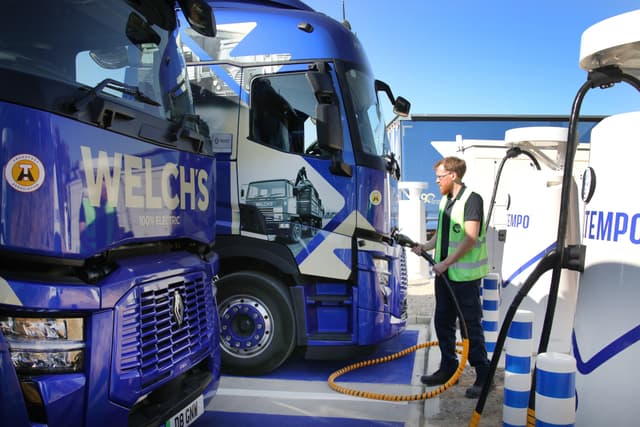
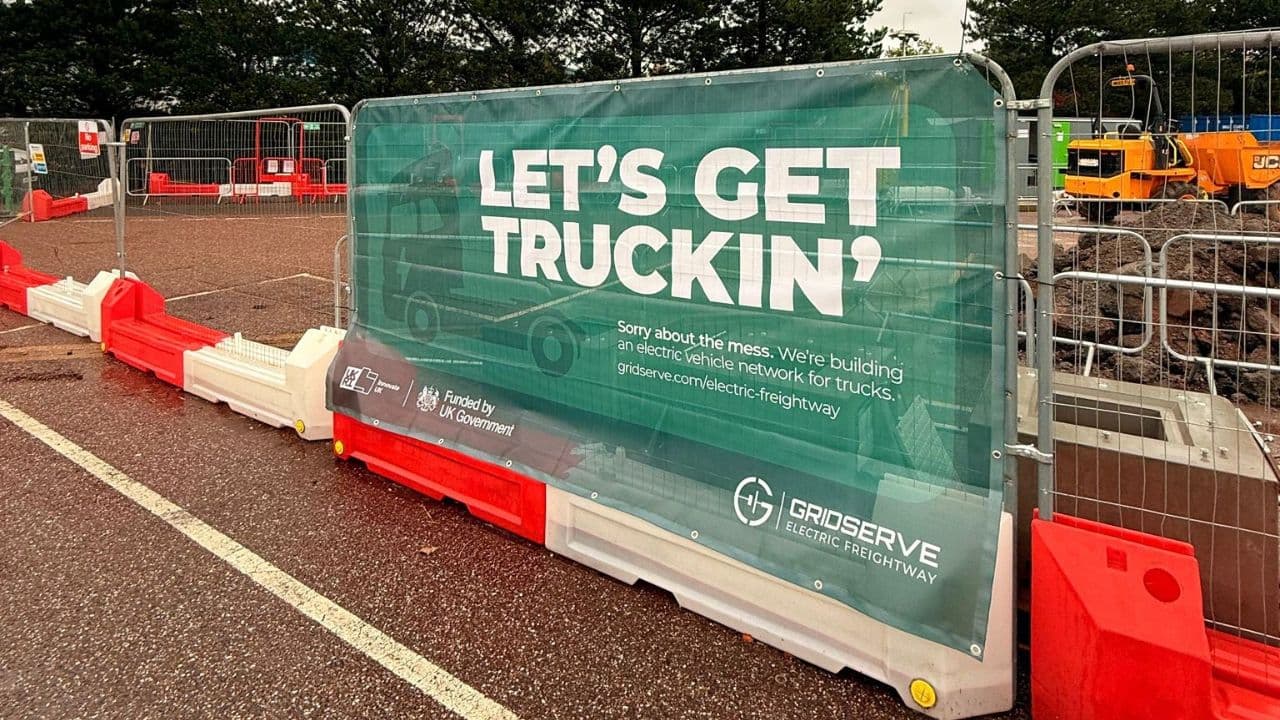
Construction has started at two of the seven planned public eHGV charging locations in GRIDSERVE’s Electric Freightway programme, funded in part through the UK Government’s Zero Emission HGV and Infrastructure Demonstrator (ZEHID) programme and delivered in partnership with Innovate UK.
The Electric Freightway aims to do for trucks what the GRIDSERVE Electric Highway has done for cars, laying the foundation for a nationwide eHGV charging network that reshapes how goods are transported while reducing the industry’s climate impact. The heavy goods sector currently accounts for nearly 20 per cent of the UK’s transport CO2 emissions.
The selected sites focus on key logistics routes that are already well-used by HGVs, ensuring maximum impact for those hauliers committed to electrifying their fleets. These locations will complement new depot charging facilities also installed by GRIDSERVE as part of the ZEHID programme, including the recently opened Nissan Manufacturing UK (NMUK) Charge Yard.
With construction now underway at Extra Baldock, located at J10 of the A1(M), and Moto Exeter, located at J30 of the M5, further eHGV charging hubs are also planned across the UK. The first public eHGV hubs will feature between four and eight High Power charging bays, each designed as drive-through bays that enable all models to plug in, regardless of charging port location. A swept-path analysis has also been conducted to ensure drivers can navigate the charging lanes safely.
New safety markings and signage will be installed to account for the high driving position, while wide walkways, lighting, sensors and CCTV are all being considered to ensure drivers can safely walk between vehicles, chargers and the service area facilities.
Daniel Kunkel, GRIDSERVE CEO, said:
"We are thrilled to lead the Electric Freightway project, a consortium dedicated to building out EV infrastructure and synchronising the development of an electric truck fleet. This initiative is crucial for the decarbonisation of the heavy goods sector and a vital step towards achieving net zero. Our strategy aligns perfectly with the project’s goals, as we are committed to providing fast charging solutions that enable the freedom to travel for EV drivers.
Announcing the first eHGV charging hub locations is another significant milestone. Our depot charging rollout has already helped to support over a half a million zero-emission miles in the UK, and as we start construction of our public eHGV hubs, we begin to realise our vision for a national network that will support the electrification of long-haul, heavy-duty freight."
Minister for Aviation, Maritime, and Decarbonisation, Keir Mather, said:
"This is a major step towards making electric HGVs a practical choice for hauliers everywhere. With charging hubs in the right places, the industry can drive towards a zero-emission future with confidence.
Our £200 million programme is delivering over 360 bays across the UK and combined with £30 million to support HGV, van, and coach operators install chargers at their depots, we’re backing businesses to cut their emissions and supporting cleaner, greener supply chains."
The first GRIDSERVE eHGV public charging hubs are expected to open this winter.