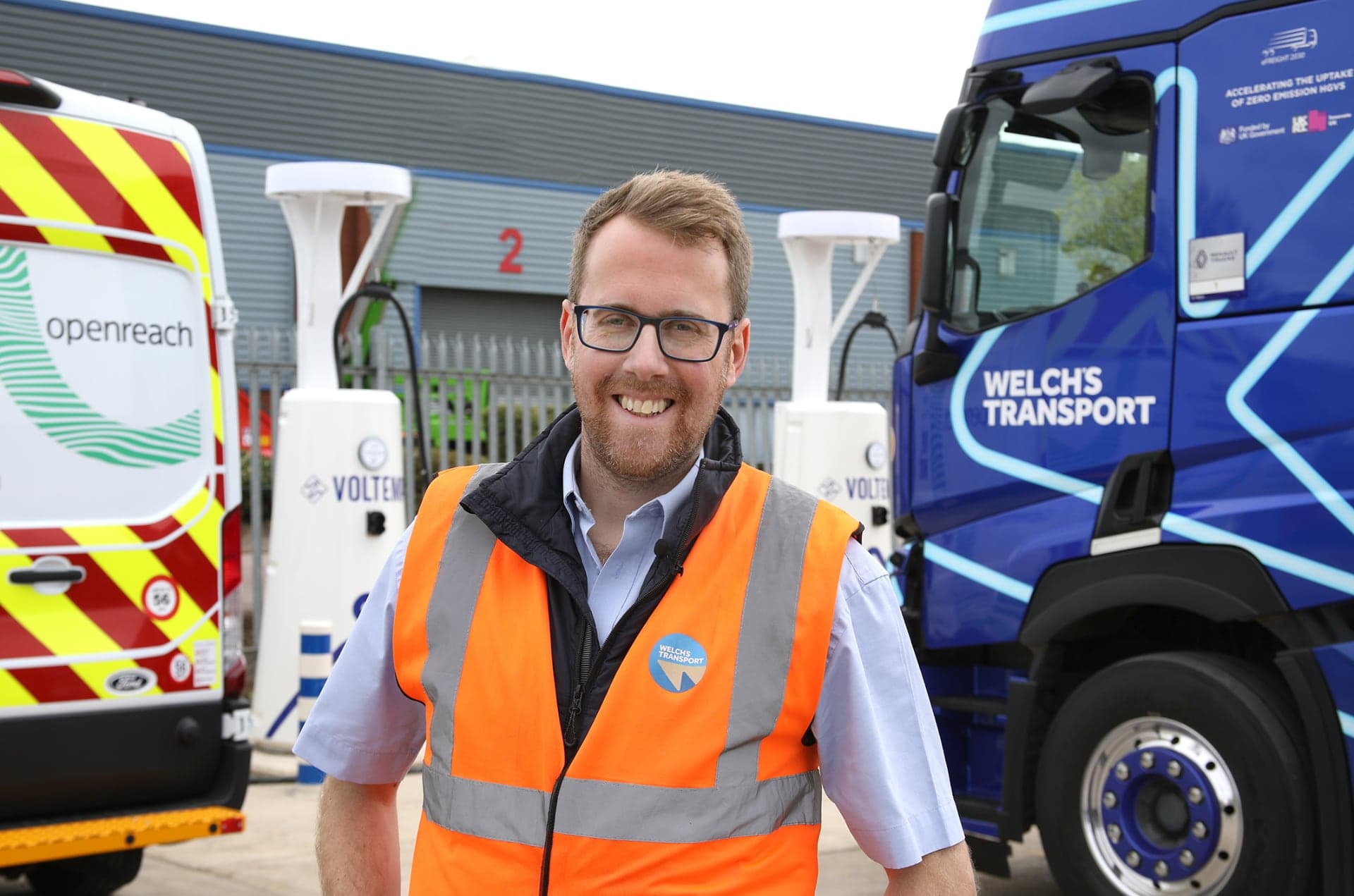
Shared charging's next chapter: from concept to commercial rollout
A new live deployment involving Voltempo, Corpay, Welch Group and Openreach may point towards a compelling answer.
Voltempo and Corpay have moved from announcing their landmark partnership in early April to delivering the first live rollout of a fully integrated shared depot charging model, combining infrastructure, energy procurement and fleet payments in what could prove a significant blueprint for UK fleet decarbonisation.
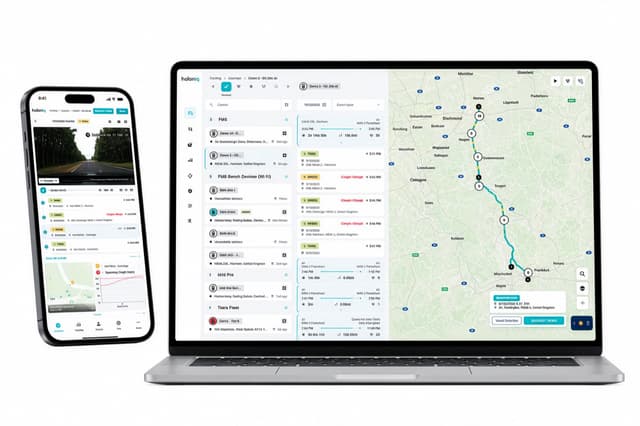
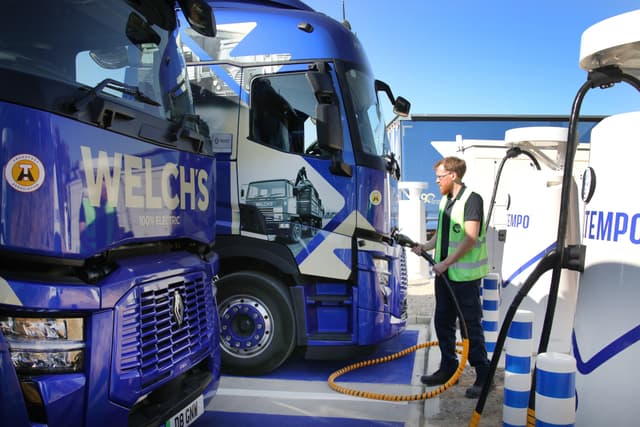
Now operational at Welch Group's East of England depots, the system combines Voltempo's Depot Charging as a Service (D-CaaS) model, and US listed payments group Corpay's global fleet payment platform, giving Openreach engineers secure, bookable access to charging infrastructure. For an industry often constrained by fragmented charging access, capital costs and energy uncertainty, the significance lies not simply in another charging installation, but in the commercial model behind it.
Turning depots into strategic assets
The principle is straightforward, but potentially transformative: unlock underused private depot charging and make it accessible to third-party fleets, while allowing site owners to retain operational control, improve utilisation and generate revenue from existing assets.
For Welch Group, it demonstrates how SMEs can move beyond being electrification participants to becoming enablers of it.
The biggest brake on fleet electrification isn't appetite,
says Chris Welch, Managing Director, Welch Group.
It's the trifecta of infrastructure cost, energy complexity and cashflow uncertainty that keeps stopping them.
We've been living that reality ourselves, so when Voltempo came to us with a model that tackles all three and actually generates revenue from our existing depot footprint, it was a straightforward decision. Now we can point to two of our depots and say: there's your proof.
That revenue opportunity is reinforced by integrated energy procurement plans being developed through Corpay, using a bunkering-style approach aimed at improving cost certainty and resilience while supporting lower total cost of ownership. Access to renewable, traceable energy also strengthens sustainability reporting, supported at Welch by on-site solar generation.
For many operators wrestling with the economics of electrification, that combination of infrastructure monetisation and energy optimisation could be where the model gains real traction.
Validation at scale
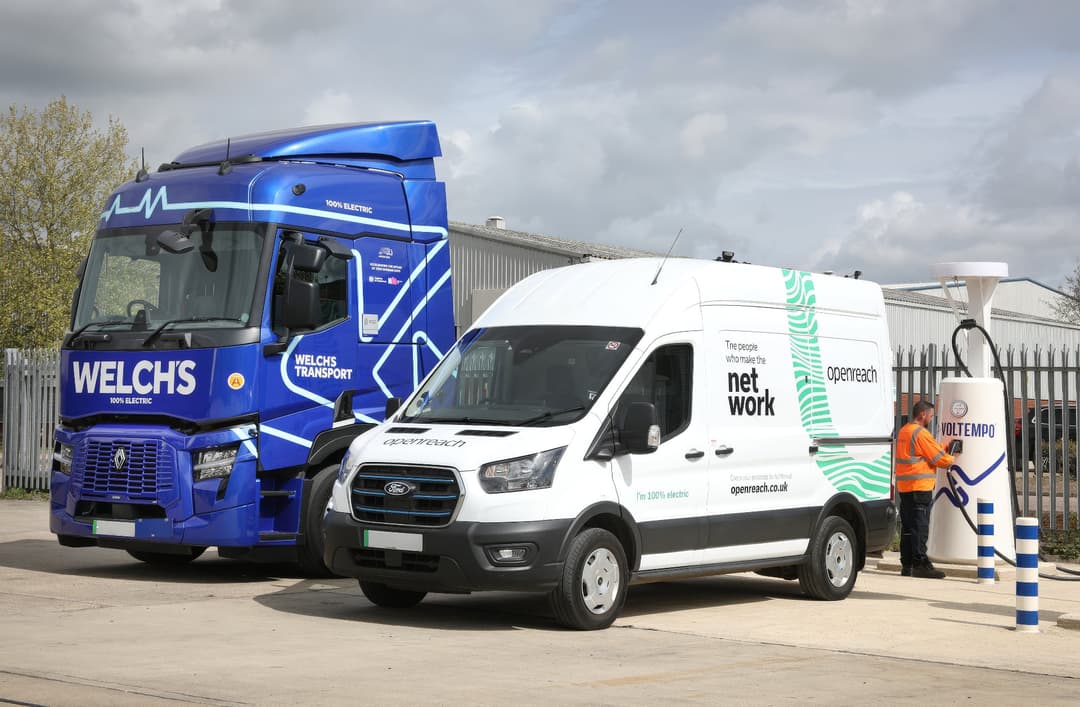
However, the strongest endorsement may actually come from Openreach.
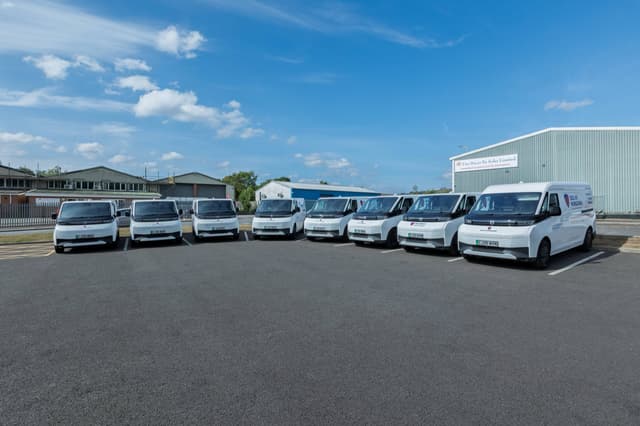
Operating the UK's second-largest commercial fleet, with nearly 7,000 electric vehicles already deployed, the company brings significant scale validation to the concept. The model complements Openreach's existing mix of home, public and operational charging, adding another layer of practical charging access for engineers unable to charge at home.
Partnerships like this are essential as we build the UK's Full Fibre network, and scale up our electric fleet to support that work,
says Judy O'Keefe, Director of Fleet, Openreach.
Moving a fleet of our size to electric is a big job, and it only works if charging is simple, safe and reliable for our engineers.
We've already installed more than 4,000 EV chargers at engineers' homes and across our operational sites, but we know home charging isn't an option for everyone. That's why working closely with trusted charging and technology partners matters.
Engineers can access charging through existing EV charge cards, including Allstar Chargepass, via Corpay's payment platform, helping simplify administration through a single billing relationship.
It is that integration of infrastructure, energy and payments operating as one that partners argue differentiates the proposition from traditional charging deployments.
This is a pivotal moment for the industry,
says Simon Smith, CEO of Voltempo.
We've moved from talking about the challenges of electrification to actively solving them at scale.
By integrating infrastructure, energy and payments into a single solution, we are removing the biggest barriers to adoption; cost, complexity and access. What's critical is that this model works for everyone, from innovative SME operators like Welch Group to major fleets like Openreach.
A blueprint for broader rollout?
The bigger opportunity may lie in what this signals for the wider industry.
Shared depot charging has long been discussed as a route to accelerate electrification, particularly for operators unable to justify dedicated infrastructure investment. What has been less proven is whether it can work commercially and operationally at scale.
This deployment begins to answer that.
For SMEs, it offers a route to extract greater value from depot assets. For larger fleets, it creates access to reliable charging without significant upfront infrastructure investment. And for the wider sector, it suggests collaboration, rather than standalone infrastructure buildout, could help accelerate the path to zero-emission freight.
Tom Rowlands, Managing Director, Global EV Solutions at Corpay, including Allstar, sees partnership as central to that shift.
Collaboration and partnerships like this are key to accelerating fleet electrification,
he says.
By combining Voltempo's high-quality charging infrastructure with Welch's strategically located depots, we're enabling forward-thinking fleets like Openreach to access reliable, cost-effective charging at scale, whilst helping depot operators generate returns from their infrastructure investments.
With broader rollout of Voltempo DepotCharge sites planned across the UK, the model has now moved from pilot to potential platform.
And in a sector searching for scalable, commercially credible routes to net zero, that may be the bigger story.