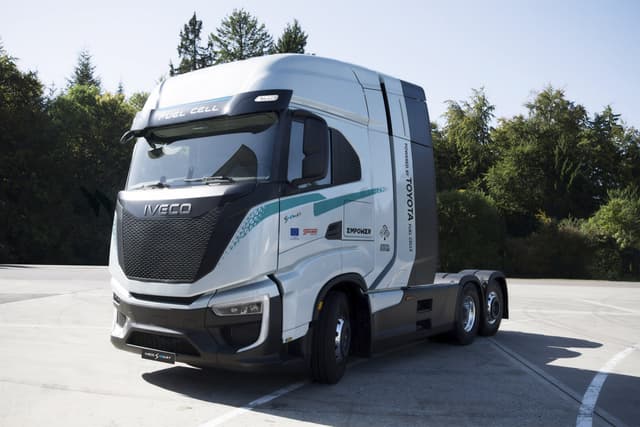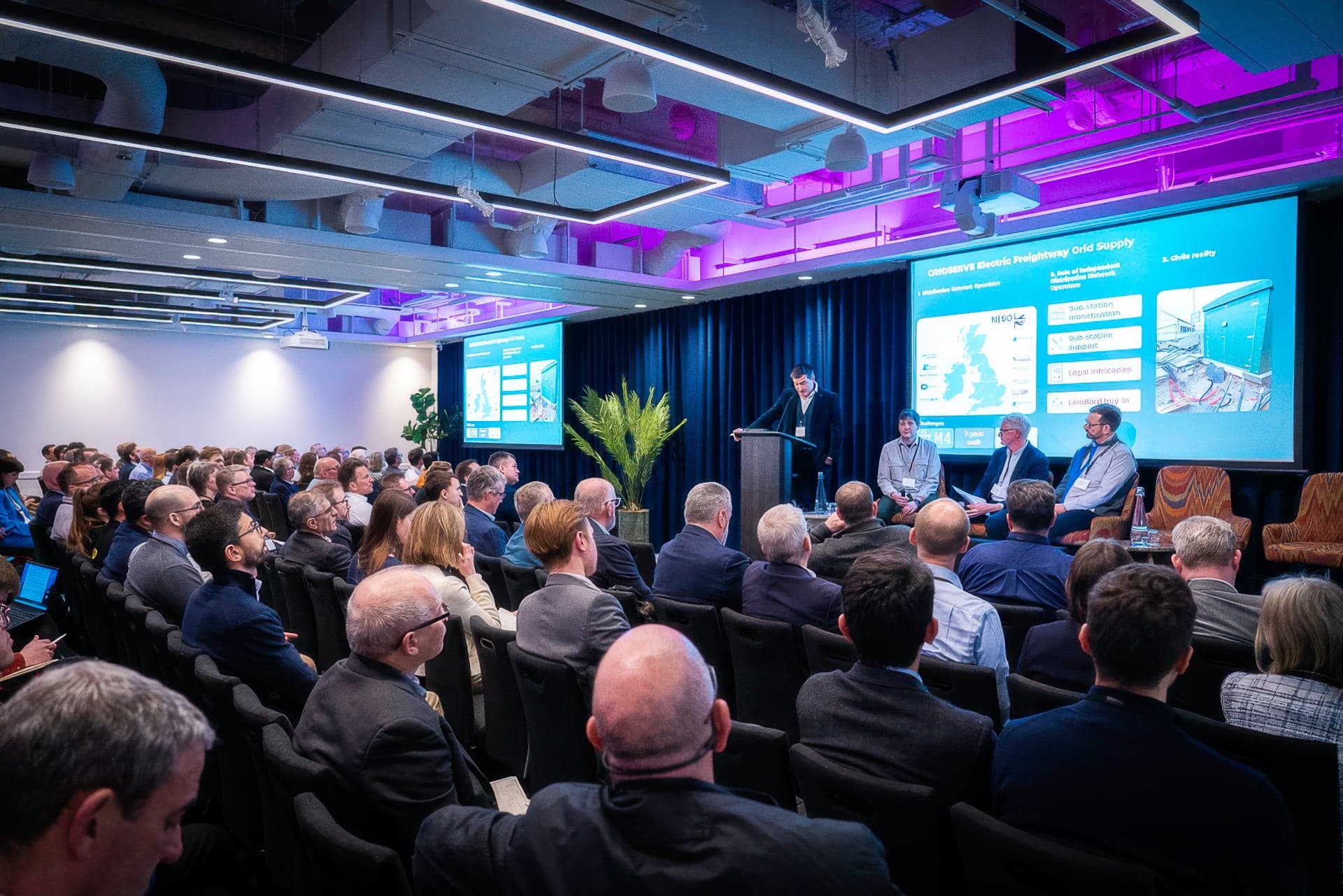
The ZEHID programme is now entering its five-year demonstration phase, during which time eFREIGHT 2030, Electric Freightway and ZENFreight consortium members will show the capabilities of eHGVs, hydrogen trucks and supporting infrastructure. Most of the trucks are now on the road and a large proportion of planned infrastructure is operational.
To share insights from the programme so far and to address potential challenges that still lie ahead, Innovate UK held a summit in mid-March. Alistair Barnes, Senior Programme Manager – Land and Maritime Transport at Innovate UK said:
“It’s really important to share the learning, and that’s one of the things I want to encourage today.
“I also want to remind everyone that anecdotes do count here. So let’s share our successes, from operator to operator, or from infrastructure provider to other infrastructure providers. If the ZEHID programme is generating the evidence, today’s sessions are where we turn that evidence into practical pathways and how to scale and how to solve these challenges together.”
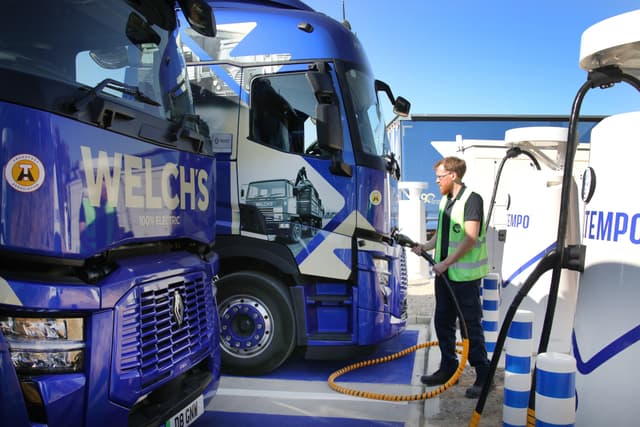
How are ZEHID members approaching eHGV charging?
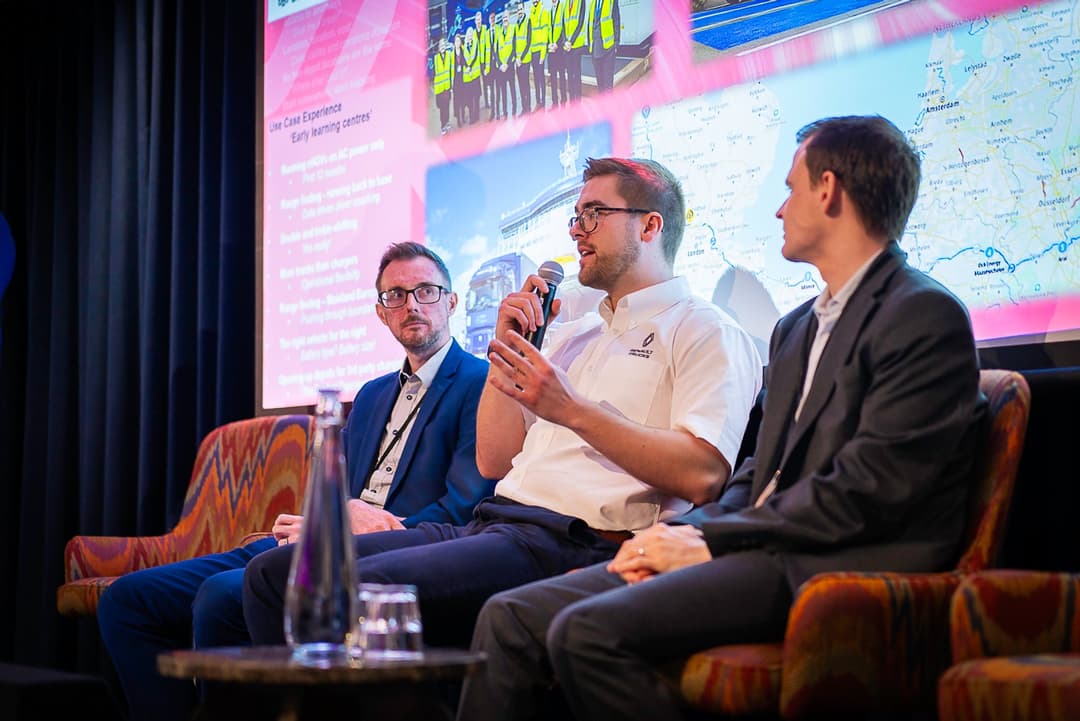
A number of operators were very open about the individual challenges and opportunities of their infrastructure projects. For example, Russell Logistics is installing megawatt charging at one of its depots. Stephen Madden, group fleet engineer at Russell Logistics explained:
“We were very fortunate that at the end of our site, there was infrastructure from an old mining site which we didn’t know about.
“Initially, we thought we had to channel it in from outside. We were quoted somewhere in the region of £800,000 to £900,000, but we luckily found a connection. We believe megawatt charging is a way forward for us to reduce vehicle downtime.”
In scenarios where vehicles are charging for extended periods of time, smart charging solutions are being used to optimise energy costs. Tom Williams, deputy CEO at Maritime Transport said:
“In the eight weeks that we’ve been charging in Wakefield, we’ve reduced our kWh price by 15%.
“Now that might only be a couple of pence in reality, but when we put that across a whole fleet, it can be a significant saving. Since starting, our fuel cost is down 10% on the diesel equivalent, which is brilliant. When you look at what’s going on in other parts of the world and oil price volatility, this is going to have a really big impact on our business.”
For Voltloader’s eHGV-only fleet, the strategy has been to install charging at customer sites. Dave Rose, CEO at Voltloader said:
“Part of our model is to go and look for capacity that’s already out there. There’s a lot of unused allocation already that we can use in the short to medium term. It might not solve the long-term problem, but it shouldn’t be a blocker for getting started now and doing something meaningful.”
Electric Freightway has also opened two Gridserve eHGV charging hubs at Baldock and Exeter with another seven sites due to be live this year, eventually ramping up to a total of 11 public eHGV charging hubs.
Explaining how distribution network operators (DNOs) hope to engage with fleets, Ben Cattermole, head of transport decarbonisation at National Grid Electricity Distribution (NGED) said:
“We can plan for your demand and strategically invest in the network and make sure that there is sufficient capacity on the network.”
While grid connections are often described as being a queue for power, Cattermole said:
“That really only applies to really big connections. It doesn’t mean your connection for a smaller demand is always going to be quick and easy, because it might take some time to build your connection. But it doesn’t mean you’re in a queue behind other people.”
What are the key challenges?
Even when grid connections have been secured, unforeseen delays are impacting infrastructure installations. From surveys for badgers, bats and newts to legal delays, additional complexities are adding another layer of cost and undetermined timelines to projects.
Williams added:
“Our Tilbury site has been built since April last year but it’s still not energised. We can’t get the right permissions, so that’s a massive barrier. Also, the cost is huge. Thankfully, we’ve got some support from government which is really great, but we need more support.
“The OEMs are building fantastic vehicles but they’re very expensive, more than double what we’re paying now for a diesel truck and in the cold light of day, they can’t do what a diesel truck can do now. I’m not saying they need to completely replicate it. But we’re speaking very honestly and there’s a massive cost pressure on what we’re doing.”
What do fleets want from the government?
To overcome some of the issues highlighted, operators are calling on the government to provide more support. Madden urged the government to have the same enthusiasm for electrification as the Chinese government, which is addressing infrastructure as well as vehicle deployments.
Madden said:
“It’s a slow process. We’re a family-owned company, so if the government pulled the plug on funding, I can see us pulling the plug on investment on electric and certainly scaling it back”
Beyond additional funding opportunities, Madden also argued payload limitations should be addressed.
“It’s a major issue for us because when you go to 6x2 and you’re looking at 12.6 tonnes for the vehicle, it’s not justifiable. We just cannot justify putting a 6x2 on the road operating at 44-tonnes. We’re losing too much money, too much payload, so we’re limiting the customer base that we can use these vehicles with. I think we have to look at increasing the 44 tonne limit to 46 tonnes, which would help enormously.”
While Keir Mather MP, Parliamentary Under-Secretary of State (Department for Transport) wasn’t able to offer any new information on weights and dimensions or funding, he said:
“I know that global headwinds have made energy markets increasingly volatile, and this has only been compounded with the recent escalations that we’ve seen in the Middle East.
“I believe eHGVs offer a direct route to greater energy security, they reduce our exposure to unpredictable fossil-fuel prices and maintain that steady, reliable flow of goods that Britain depends on. For businesses, the business case is just as compelling; in some cases, these vehicles are cheaper to run and to maintain, offering relief from the cost pressures, which I am very alive to, and which I know haulage is facing.”
Mather confirmed that details about the future of the plug-in truck grant and depot charging scheme will be announced soon. He also signaled that the upcoming zero-emission HGV and coach infrastructure strategy will offer long-term clarity.
What is the impact on drivers and operators?
Despite the challenges associated with deploying eHGVs and infrastructure, the initial human impact has been hugely positive. As a result of surveys conducted before and after eHGV deployments, Electric Freightway found drivers that spent more time driving eHGVs were the most positive towards them.
Jim Connor, Electric Freightway project manager at Hitachi ZeroCarbon said:
“If you want to get drivers on board – and it’s really important to get drivers on board – get them behind the wheel. You want people to be advocates for them, and the best way to do that is to get them behind the wheel. The data really supports that.”
Daniela Paddeu, Associate Professor of Sustainable Freight Futures at the Centre for Transport and Society (CTS) at the University of the West of England, also emphasised how important it is to prepare the necessary skills for eHGVs. This includes upskilling technicians, building a positive culture around sustainability and familiarising operators with the intricacies of the transition.
Chris Ashley, Head of Policy – Environment and Regulation at the RHA commented:
“Daniela Paddeu’s point about preparation: frankly, anybody can start that now. Some people, especially smaller operators, might not see it as a big priority right now, but there’s nothing to stop just tiny bits of that journey now. It’s that education piece.”