The Rise of Chinese Commercial Vehicles
Jaecoo, BYD, Omoda, Xpeng, and Ora are just some of the new Chinese brands introduced to the UK car market over the past couple of years but, in the commercial vehicle market Maxus – a brand introduced almost 10 years ago – remains the only mainstream competitor.
Is this all about to change?
China is exporting commercial vehicles in huge quantities. Of the 4.17 million vehicles exported from January to September 2025, 790,000 (15.9%) were commercial vehicles of which the vast majority were sent to developing markets in Africa, South America and Asian markets were legislation and homologation is less stringent than in the UK and EU.
However, in the UK and Europe, the primary focus has been passenger cars. This year, over 10% of new cars registered in the UK have been built in China, compared with around just 4% of LCVs and fewer still trucks.
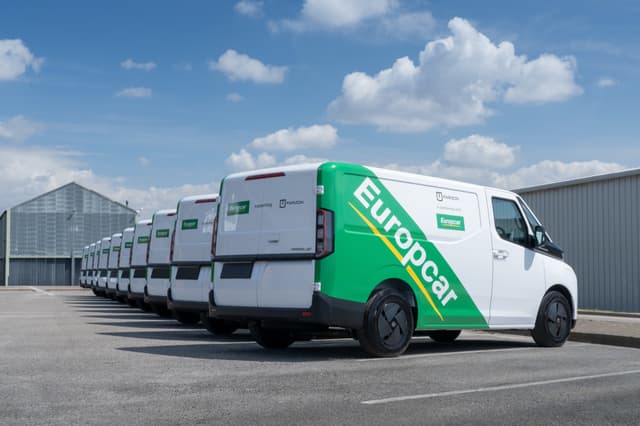
There are signs that this is about to change. Farizon launched its SV van at the CV Show this year, and Yutong and JAC have plans to introduce their light trucks with collaborations with Pelican Engineering and Wrightbus respectively.
As with passenger cars, the Chinese manufacturers are using their technical advantages with EVs as their foot in the door for Europe and, at the CCVS, a range of potential new candidates were on show in full force.
DongFeng
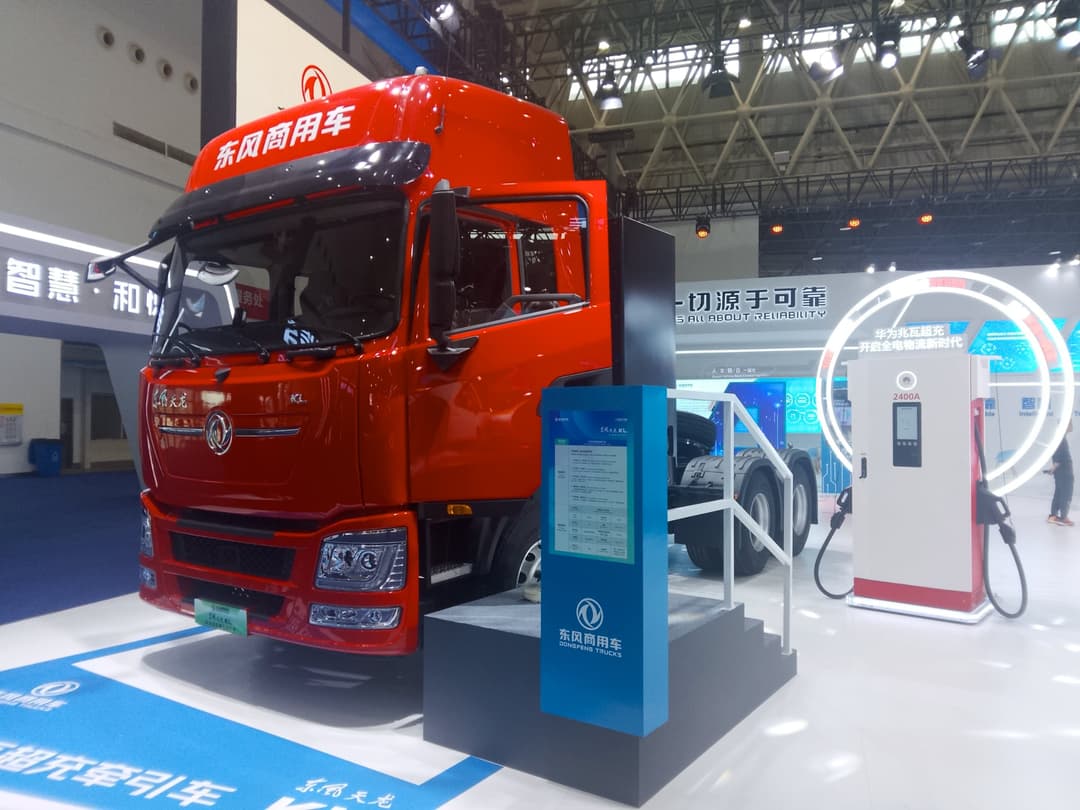
Taking the largest stand at the CCVS was Dongfeng; a company whose global HQ is located just a couple of miles down the road from CCVS.
Dongfeng recently commenced trials of its new hydrogen truck in Wuhan, in conjunction with Honda. This combines Honda’s fuel cell stack and system architecture, developed through over three decades, and Dongfeng’s vehicle platform and manufacturing integration.
Other big news from Dongfeng is its successful partnership with Huawei to deploy megawatt chargers to fleet customers, with Dongfeng contributing to the world’s first 100MW charging station opened by Huawei in Sichuan Province.
DFAC
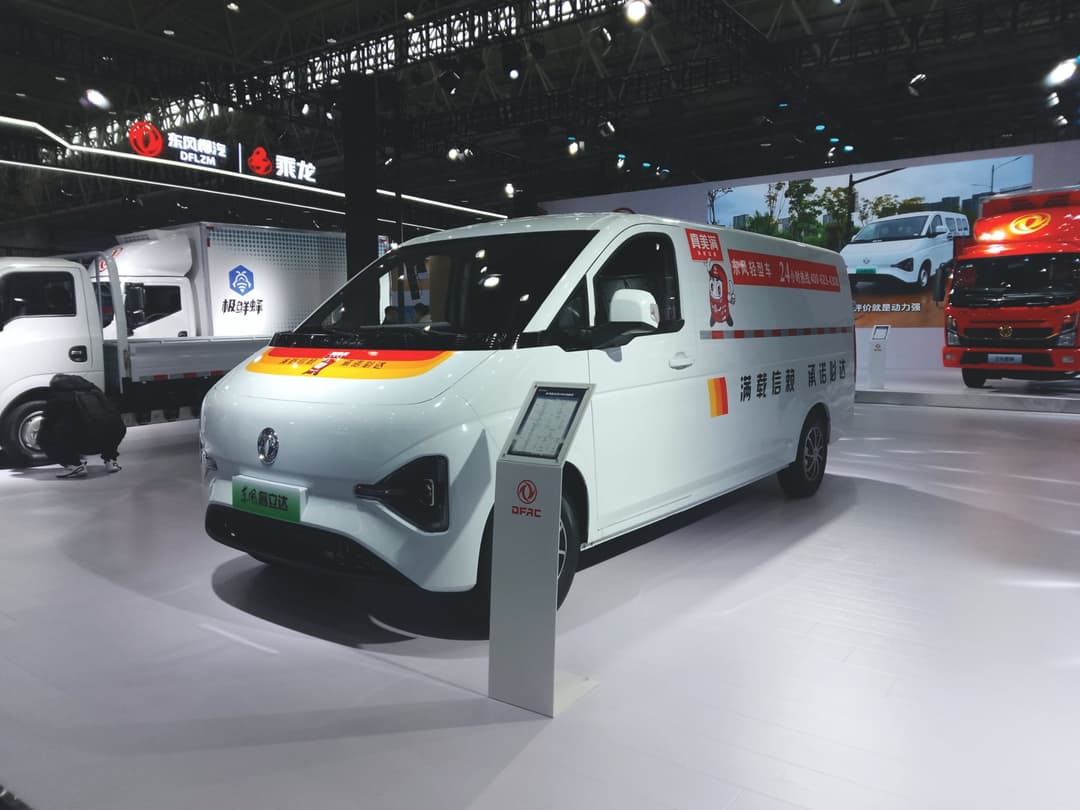
One of the key’s to DongFeng’s success over recent years has been its joint ventures and some UK LCV buyers will know the DFSK (DongFeng SoKon Automotive) EC35 van imported to the UK by Innovation Automotive. Another JV with Nissan, DFAC (DongFeng Automobile Company) has produced this V8E van, launched in May with a 5 cubic metres loadspace and a 54kWh battery, priced at just £8,600!
BYD
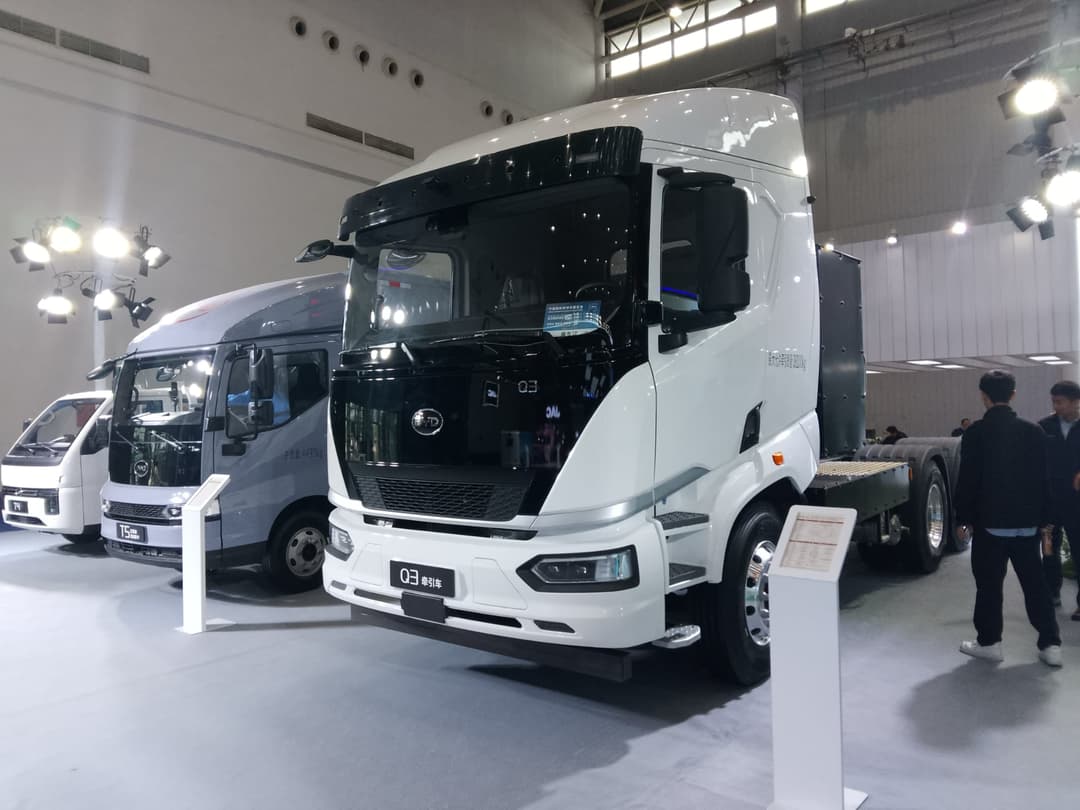
Despite its huge stature in the car and bus markets, BYD is still a relatively small player on the CV scene with its eNV200-based T3 van being its most successful product globally so far. The recently-announced eVali van – earmarked for the UK – wasn’t on display at CCVS but there was a range of three trucks.
The T4 and T5 are rated at 3.5 and 4.5 tonnes, respectively, while the Q3 heavy truck is fitted with the BYD’s new-generation 452kWh battery pack, which is capable of charging at speeds of up to 350kW and can take a 60% charge takes just 50 minutes.
JAC
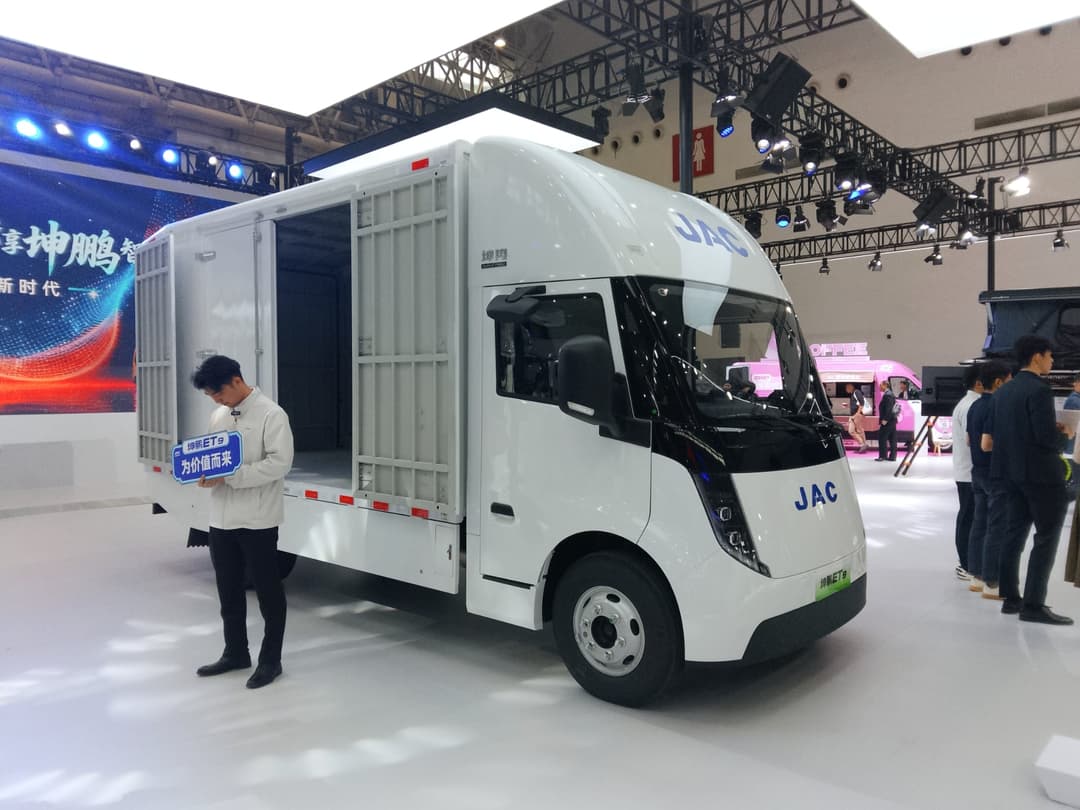
JAC will be familiar with UK consumers thanks to its partnership with Wrightbus to launch the Rightech RT75 7.5t light truck in the UK. The Hefei-based company specialises in the light-end of the market (sub-12t), and was at CCVS to celebrate the launch of the new 4.5t ET9 light truck.
With its wedge-shape design, the ET9 has a drag coefficient of just 0.33 (33% lower than the segment average) to increase range by 15%, which stands at an impressive 510km from a 120kWh CATL battery.
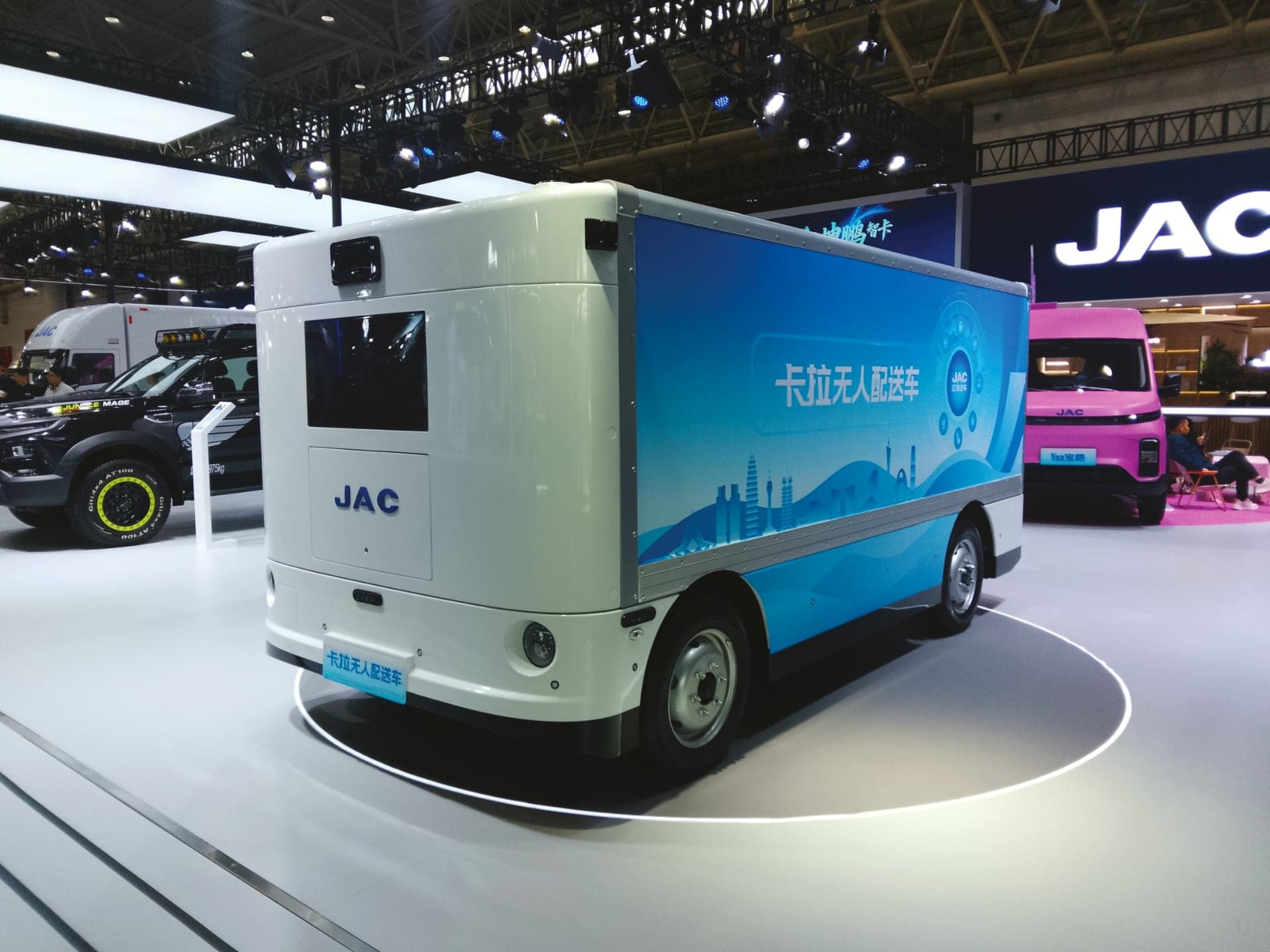
Elsewhere on the JAC stand was a 3.5-tonne autonomous van (see cover), developed with Shine Auto. With approval granted in numerous municipalities across the country, autonomous delivery vans is a fast-growing sector in China thanks to their lower running costs and higher payloads and load volume.
A JAC salesperson explained:
Fleet operators don’t feel the need to fit autonomous vans with such powerful motors as conventional vehicles have, and this particular model is claimed to return around 300km from just a 50kWh battery.
Hybot
Hybot’s striking H49 hydrogen truck won the 2026 Chinese Truck of the Year award at CCVS, and the relatively new startup was attracting plenty of attention. Earlier this year, Hybot secured £45m of Series A funding and plans to launch the truck early next year.
In addition to offering L4 autonomous driving, the H49’s main advantage is its efficiency. Its sleek, aerodynamic design affords a low consumption rate of just 7.1kg of hydrogen per 100km and a range of over 1000km.