For many hauliers, the question isn’t if to decarbonise, but how to do so in a way that supports business profitability, not undermines it.
The good news? You don’t have to wait for fleets of electric trucks or hydrogen infrastructure to make a meaningful difference. By focusing on smart, operational improvements, often with little or no large capital outlay, you can reduce fuel use, cut carbon emissions, improve efficiency and strengthen your bottom line. This article explores accessible, cost-effective strategies across multiple dimensions, and uses real-world case studies to show what’s already being achieved.
Smarter driving
Drivers are the frontline of any haulage operation. How a vehicle is driven has a direct impact on fuel consumption, vehicle wear and emissions, and therefore cost. Training drivers in efficient driving techniques is a highly leveraged step with relatively modest investment.
What good driver-training covers:
-
Smooth acceleration and braking: avoiding sudden throttle or brake applications reduces wasted energy and improves fuel economy.
-
Correct gear-selection and keeping in a high and appropriate gear: For manual transmissions especially, reducing unnecessary gear shifts (and revving) improves overall fuel efficiency. In one case 15 drivers improved average MPG by 7% after training and gear changes dropped by 42%.
-
Reducing idling: engine idle time is fuel burned but no distance gained. One case cut idling time by 50% and saved £700 per week across the fleet.
-
Anticipation and route-planning: Drivers trained to anticipate changes in traffic, hills and load conditions can maintain steadier pace, reducing fuel use.
John Mitchell (Grangemouth) Ltd (UK) trained all its 100+ drivers in a SAFED (Safe and Fuel Efficient Driving)-type programme and achieved:
-
A 7% fuel improvement across the test group.
-
Annual cost savings of ~£274,000 in fuel use.
Collateral benefits included fewer accidents, reduced wear and improved driver behaviour.
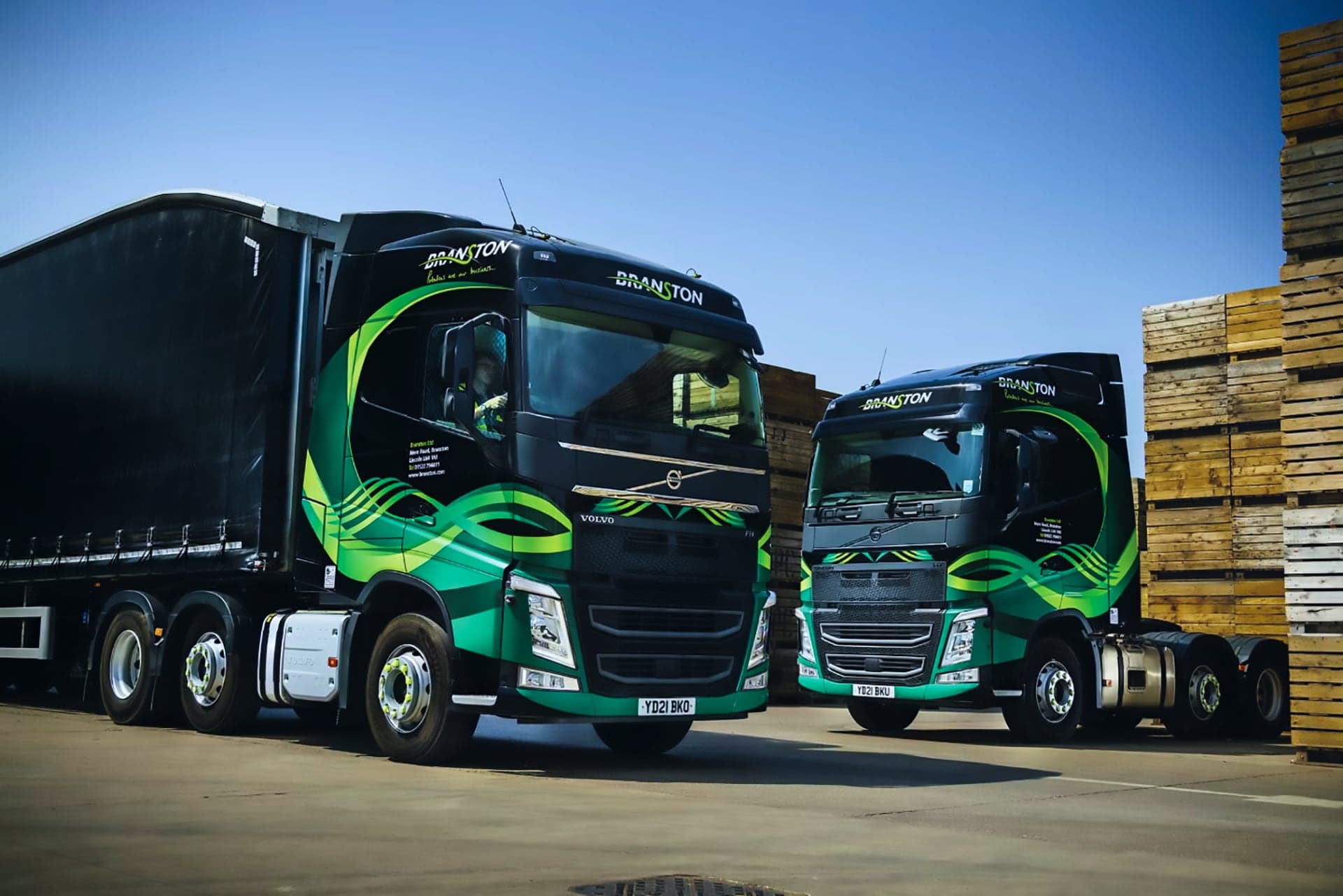
Branston Ltd, a UK potato haulier, undertook a driver-training course using telematics (Volvo Connect) and boosted driver efficiency by one MPG across 33 trucks, equating to £60,000+ per year savings.
Fuel is one of the largest controllable costs in haulage. Training that improves driving behaviour also improves fleet longevity, reduces maintenance and supports decarbonisation. It’s one of the highest-return, lowest-capital actions you can do.
Route Optimisation
Beyond how you drive, where and how far you drive has a huge impact. Optimising routes, reducing empty miles and maximising vehicle utilisation are steps that in many cases fund themselves.
Key tactics include using AI-enabled or algorithm-driven route-planning tools to analyse distance, stops, traffic congestion, driver hours, and load sequences. Optimised routes reduce extra mileage, downtime and idle time.
Combined deliveries/pick-ups ensure vehicles are fuller and avoid returning empty or near-empty. Monitor route adherence using telematics; identify deviations, excessive idle or detour mileage and address them. Leverage load-matching platforms to fill return legs, reducing empty running.
A UK logistics firm reported savings of up to 20% in fuel consumption by using route optimisation tools.
Use of clustering/platooning algorithms in European fleets reduced fuel by 10–20 % through smarter routing.
Digital freight-exchange platforms in the UK such as HaulageHub are enabling hauliers to cut empty miles substantially. One platform helped reduce empty runs, which account for over 30% of HGV miles nationally, by better matching return-load opportunities and improving overall fleet utilisation.
Reducing empty or inefficient legs directly cuts diesel use, reduces wear, lowers labour and frees up capacity. The return on investment for route-optimisation software is often less than a year, especially given today’s fuel price environment.
Vehicle aerodynamics
At highway speeds, aerodynamic drag becomes a major contributor to fuel consumption. Many hauliers underestimate how much difference simple aerodynamic enhancements can make, while the cost/time to implement is relatively modest.
Roof deflectors/fairings and side-skirts on trailers: reduce turbulent airflow and help the vehicle “slice” through air. Cab fairings ‘bridge’ the gap between tractor and trailer and stop the formation of drag-inducing vorticies.
Under-tray panels and trailer tails (boat-tails) help manage airflow beneath and behind the vehicle. Even modest modifications can pay-back quickly: one study showed a retrofit roof fairing cost £300 and paid back in under six months.
John Mitchell (Grangemouth) Ltd invested in aerodynamic aids across the fleet: this alone delivered an estimated 9% improvement in MPG, saving ~£355,000 per year.
In research on trailer skirts, savings of 4-7% were reported depending on design.
Aerodynamic losses are largely ignored until fuel bills force attention to the topic. But small changes add up, especially given the high annual mileage of HGVs. The investment is often modest and the pay-back short.
Maintenance and Tyres
Even with optimised driving and routing, equipment inefficiencies can undo gains. Vehicles that are poorly maintained cost more fuel, emit more and require more repairs.
Maintenance best practices:
-
Tyre pressure and condition:
Under-inflated tyres increase rolling resistance and fuel use. Studies show ~2% fuel penalty for tyres a bar under-inflated. -
Wheel alignment:
Misaligned axles increase both rolling resistance and wear. One guide showed misalignment on trailers could increase fuel consumption by up to 15%. -
Engine filters, clean injection systems, correct oil/lubricants:
Ensuring combustion efficiency and reducing internal friction. -
Tyre technology:
Low rolling resistance (LRR) tyres represent a compelling upgrade. Research shows typical fuel savings of 4–6% from LRR tyres in heavy-vehicle service. For example, The Continental “Conti Eco” heavy-duty tyres claim up to 12% improvement in rolling resistance over predecessor models, plus up to 10% more mileage.
Maintenance isn’t just about reliability, it’s about fuel efficiency and carbon efficiency. Every litre saved is fewer emissions and fewer pounds spent. Over a large fleet, these efficiencies stack.
Collaboration
Beyond the truck itself and the driver, what truly affects profitability is how effectively each vehicle is used? Are you carrying full loads? Are you returning empty? Are your assets working to their full potential every day?
For many hauliers, optimising utilisation is one of the quickest, lowest-cost ways to reduce emissions and boost income simultaneously.
Key tactics include load maximisation ensuring trailers are filled as close to capacity as possible and that loads are balanced to prevent “partial legs.” Smart scheduling and digital load-planning tools help ensure no space or energy is wasted.
Back-hauling and return loads avoiding empty return journeys is one of the simplest ways to improve fuel efficiency and profitability. Coordinating collections for the return leg of a trip can turn what was once a cost into a source of revenue.
Collaboration and digital freight marketplaces: Platforms such as HaulageHub and the Transport Exchange Group are changing the way operators do business. By connecting hauliers in real time with available loads, these platforms dramatically cut empty running. They allow companies to share capacity, match journeys, and build flexible partnerships across the logistics sector.
Every mile travelled without revenue-producing cargo is a direct hit to profitability. Fuel, driver hours, maintenance, and tyre wear all continue to accumulate even when a trailer is empty. Collaboration platforms like HaulageHub turn those empty miles into earning opportunities, helping fleets to reduce fuel consumption and emissions per tonne-kilometre, increase asset utilisation and revenue, and build stronger partnerships across the logistics ecosystem.
By embracing digital collaboration, hauliers can decarbonise operations and grow profitability at the same time proving that sustainability and efficiency are no longer competing goals, but two sides of the same smart strategy.
Fuel procurement
While we often focus on fleet renewal, there are other strategic steps hauliers can take now to reduce cost and carbon without buying new vehicles.
Review whether you operate too many or sub-optimally utilised vehicles. Matching fleet size and vehicle type to actual demand cuts fixed cost and fuel use.
Alternative fuel blends can offer rapid gains. While full electric/hydrogen may be long-term, bio-diesel, HVO or renewable diesel blends can reduce the carbon intensity of current fleet operations for a lower investment.
These strategies don’t require replacement vehicles, instead they optimize what you already have, your spend, your contracts, your asset base, your fuel procurement. They support a rational transition rather than a disruptive one.
A positive road
Decarbonisation is often framed as a burden, but it doesn’t have to be. For haulage firms, it can be a source of competitive advantage, leaner operations, better margins, stronger reputation, and future-proof operations.
By combining training for drivers, smart routing and technology, aerodynamic upgrades, disciplined maintenance, utilisation improvements, strategic procurement and load optimisation, fleets can reduce emissions by 20–30% or more without major capital investment. In many cases, the savings pay for themselves within months.
Moreover, the business benefits go beyond fuel. You’ll see:
-
Lower maintenance and repair costs Longer vehicle life and fewer breakdowns
-
Better driver retention and satisfaction
-
Stronger positioning with customers who demand sustainable logistics
-
Improved compliance and reputational resilience
If you’re a haulier reading this, you don’t need to wait for huge subsidies or electrified roads to act. The tools, tactics and frameworks are available today. The path forward is positive, and profitable.