The Viability of Zero-Emissions Haulage
While the range between recharges offered by battery-electric trucks is increasing, many operators remain sceptical about their viability on long-distance intercity runs. Battery-electrics may be perfectly capable if all they are transporting are parcels or hanging garments, but what if they are asked to haul heavy cargo such as bricks or glass? Surely the weight of their battery packs will eat into their maximum permitted payload despite the gross weight concessions that are allowed, making their use uneconomic?
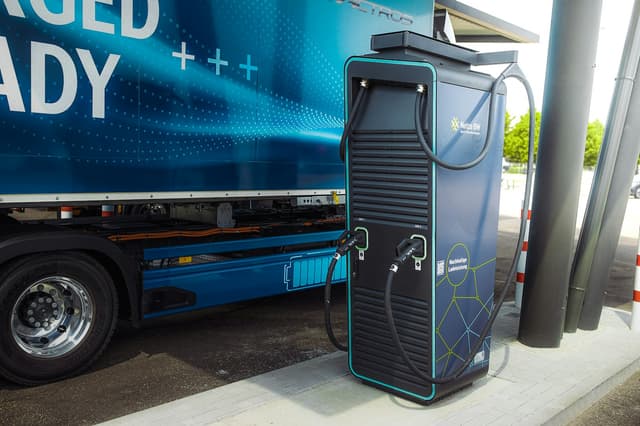
Charging times are another concern. Admittedly they are getting shorter, but they are unlikely to get as short as the time it takes to fill a truck’s fuel tank with diesel.
Toyota's Hydrogen Solution
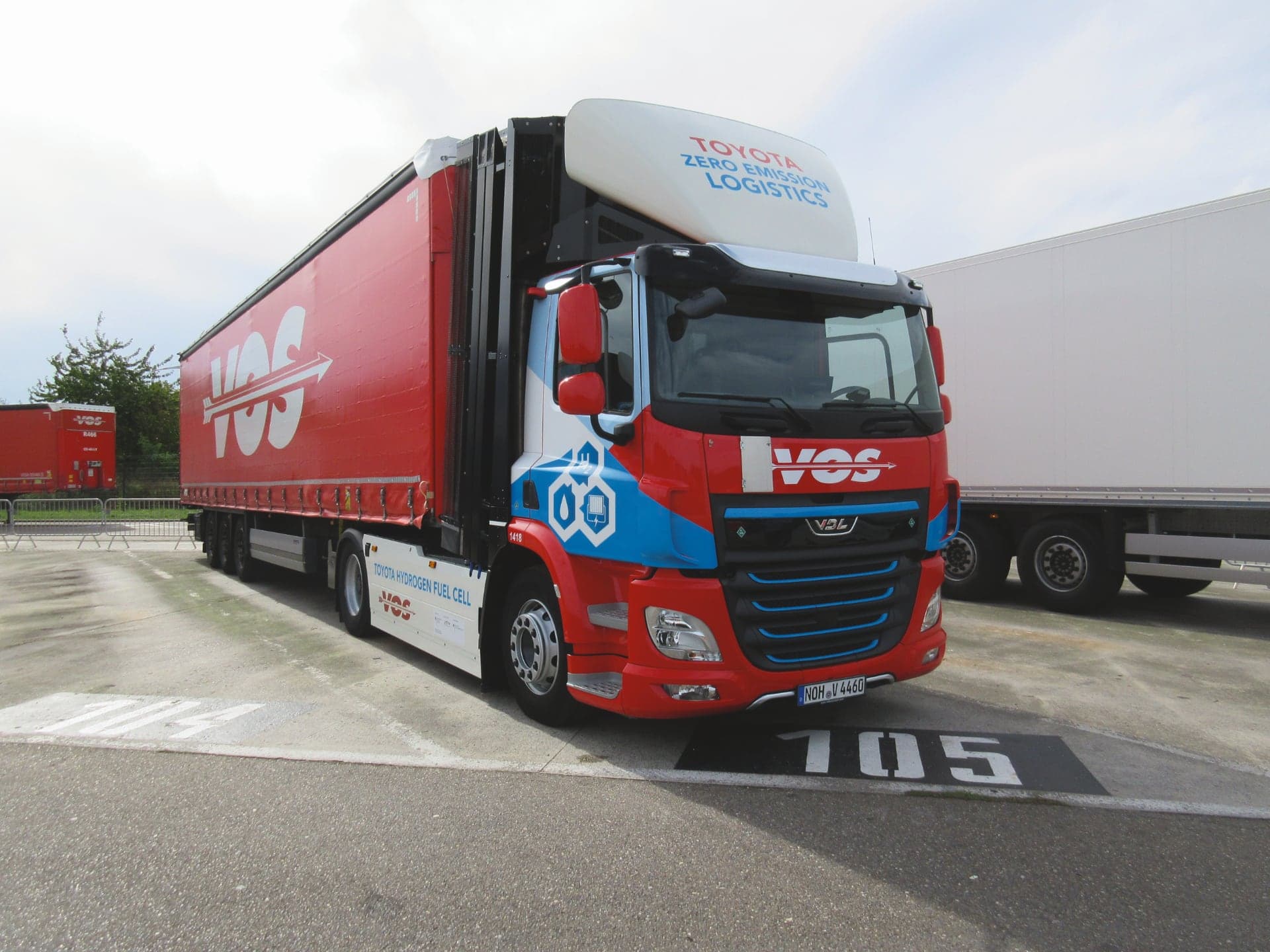
Toyota reckons the answer to both of these concerns is the hydrogen fuel cell. It has put four trucks using the technology into service to help distribute parts to dealers across Europe from its sprawling warehouse complex at Diest in Belgium. They are not encumbered by tonnes of batteries, and the time taken to replenish their hydrogen tanks fully is measured in minutes. The only emission they produce is water.
Running at 40 tonnes, and tipping the scales at 11 tonnes, the 4x2 tractor units used are based on 3.8m-wheelbase day-cab DAF CFs. They have been converted to hydrogen power by Netherlands-based VDL Groep, which has involved equipping them with Toyota’s own fuel cell modules.
Performance and Real-World Testing
Range between refuelling stops achieved by the converted CFs is over 400km says Toyota, with the trucks regularly operating at maximum gross weight. Each truck has a tower of hydrogen tanks stacked behind the cab at a pressure of 350 bar. They can hold 39kg of hydrogen.
A 360kW/480hp electric motor has been fitted and the package includes a 210kWh battery. It can be employed as a get-you-back-to-base option should hydrogen be unavailable, with a range of 100km.
Since May the trucks have covered approximately 80,000 kilometres on four routes across three countries linking Diest with Amsterdam and Rotterdam in the Netherlands, Lille in France and Cologne in Germany. Drawing hydrogen from eight refuelling stations, they have consumed around 7kg per 100km apiece, saving over 80,000kg of CO2 when compared with a diesel truck on the same work says Toyota.
The Road to Carbon Neutrality
Why has Toyota committed itself to what must be an expensive project? It forms part of the brand’s plan to achieve carbon neutrality across Europe by 2040.
Toyota Motor Europe (TME) executive vice president, Shinichi Yasui, states:
These trucks are the future of our logistics. Our common enemy is CO2, and we need to reduce it as soon as possible.
Another route to environmental virtue could be to convert existing truck engines to run on hydrogen as a combustion fuel. It would be a less-complicated option than installing fuel cells agrees Toyota senior research and development manager, Charles Ollivier.
However fuel cells are more efficient.
He goes on to point out that burning hydrogen generates some NOx which has to be dealt with using an emission control system, so it is not completely emission-free.
Future Developments and Infrastructure Challenges
The next steps will be to extend the range of the fuel cell trucks with 700-bar tanks, boost power and efficiency by installing Toyota’s third-generation fuel cell module, and cut refuelling times even further. At present, fuel-cell trucks are produced in small numbers in Europe, which means they are even pricier than already-painfully-expensive electric models.
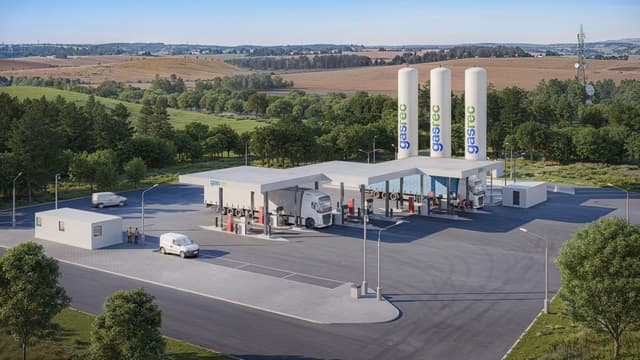
The lack of a truly-comprehensive refuelling infrastructure makes their operation over long-distance routes all around Europe a challenge. Furthermore, the hydrogen has to be green hydrogen and priced competitively. Hydrogen should become more widely available across the European Union in the coming years says Toyota as a consequence of AFIR, the Alternative Fuel Infrastructure Regulation.
Thiebault Paquet, TME vice-president and head of its fuel cell business, says:
Europe is showing long-term confidence in hydrogen, and so are we. We will continue to develop fuel cell passenger cars and other light-duty vehicles while we have broadened our focus towards heavy-duty transport to support the expansion of a viable hydrogen infrastructure.