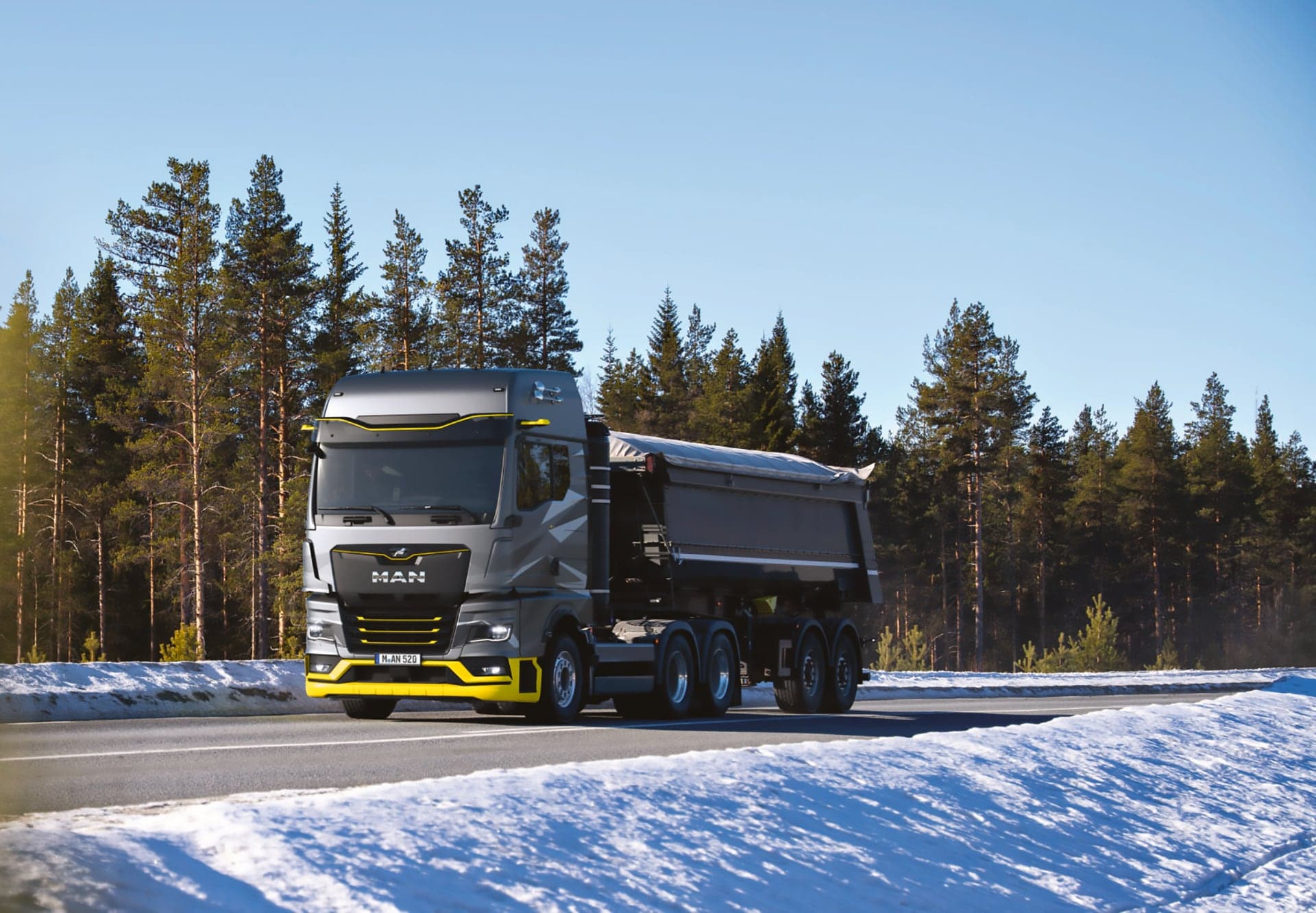
The Rise of Hydrogen Internal Combustion
Producing little more by way of exhaust than non-toxic water vapour, hydrogen burnt in engines as an internal-combustion fuel – H2ICE – looks set to play a key role in truck propulsion. So says Dr Tauseef Salma, chief technology officer at automotive catalyst and filter specialist Johnson Matthey’s Clean Air division.
I don’t believe that battery-electric or hydrogen fuel-cell technology can cater for the whole of the truck market.
...she comments.

As an indication of its confidence in H2ICE’s advantages, Johnson Matthey (JM) plans to open a hydrogen internal-combustion engine test centre in Sweden later this year. It will be able to accommodate power plants developing up to 800hp, just ahead of the most-powerful diesel engines currently fitted to production trucks in Europe.
It’s a real show of our backing for this technology as we seek to unleash the potential of hydrogen mobility. We cannot rely on battery-electric vehicles alone to solve our challenges.
...she continues.
Industry Partnerships and Emissions
Under the Project Brunel banner JM has worked with Cummins to develop a 6.7-litre H2ICE truck and bus engine. It has achieved a tailpipe CO2 emission reduction in excess of 99% compared with a modern diesel engine, Cummins states.
MAN has rolled out small-series production of H2ICE trucks for use in sectors such as the construction industry. They may have to haul heavy loads in locations where battery charging points may not always be readily available. JM is a partner in the manufacturer’s hTGX initiative.
H2ICE presents a difficulty so far as emissions are concerned, however. While the water vapour it generates is environmentally neutral, burning hydrogen in an engine also produces a small amount of NOx. This means that it requires aftertreatment using Selective Catalytic Reduction - technology which JM of course supplies – and that means relying on AdBlue.
The NOx level is so small that the European Union classes hydrogen combustion as zero-emission. The UK government does not, however. JM is hoping it will change its tune. There may be good grounds for optimism given that London match-funded the Cummins project referred to earlier.
Challenges and Alternative Solutions
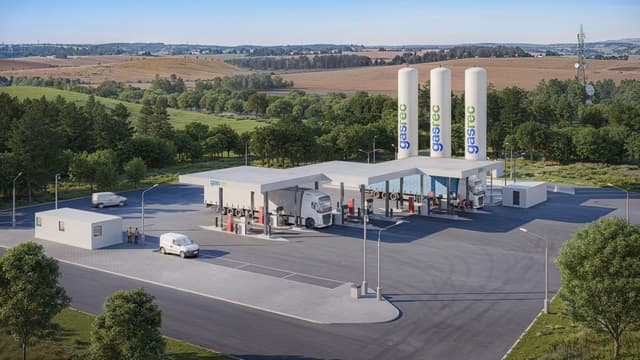
Burning hydrogen in an engine has some other drawbacks. Getting hold of the fuel remains problematic, it needs to be green hydrogen from sustainable sources if the environmental argument is to stack up, and price is a consideration. All these considerations also apply to fuel cells, of course.
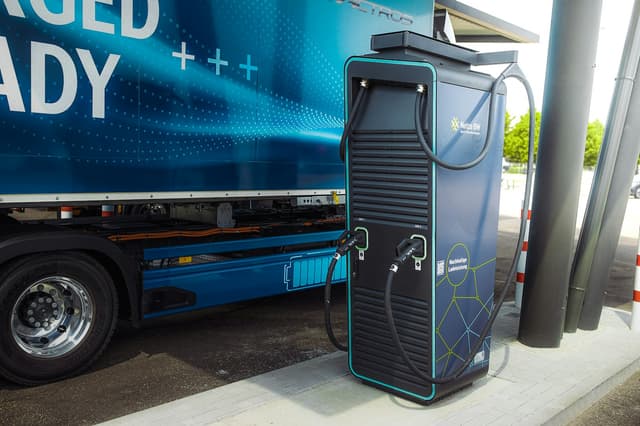
Fuel cell technology is more complicated than H2ICE however, pricier, and more vulnerable to failure if exposed to poor-quality hydrogen. On the positive side, there is no denying that refuelling with hydrogen is far quicker than having to wait for a battery pack to charge up no matter whether you travel down the H2ICE or the fuel cell route. That is likely to remain the case, even though battery-charging times are falling.
MAN says that its H2ICE trucks can be refuelled in less than a quarter of an hour and offer a range of up to 375 miles.
The trouble with heavy trucks is that they are difficult to electrify.
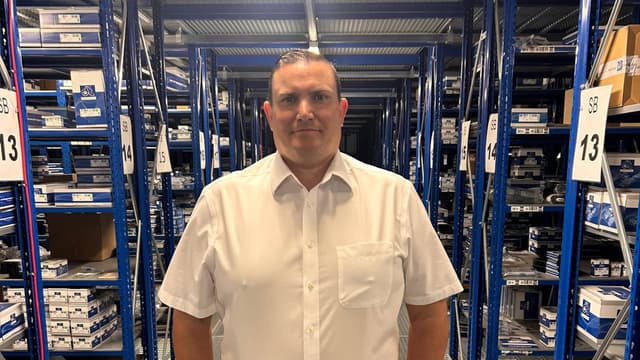
...says JM strategic projects director, Dr Chris Morgan.

The weight of the battery pack puts a squeeze on their potential payload, he points out, and charging opportunities may be difficult to come by if they are double- or triple-shifted. That said, batteries can be topped up during a driver’s statutory rest breaks and charging points specifically for heavy goods vehicles are slowly becoming more common.
The Role of Hybrids and Biofuels
Although they are not zero-emission, hybrids still have their place too, Morgan believes. Global demand for them looks set to stay healthy for the next ten years, he contends. Nor should the environmental benefits of biofuels and fuels such as compressed natural gas be discounted, he adds. Like hybrids, they need aftertreatment but have the advantages of speed of refuelling and range as well as offering CO2 cuts.
Hydrotreated Vegetable Oil (HVO) can go straight into the majority of modern diesel engines as a so-called drop-in fuel without any need for them to be modified. Synthesised from renewable raw materials such as used cooking oil and vegetable oils and fats, it can deliver a well-to-wheel cut in carbon emissions of up to 90%, say its advocates.
It should not be forgotten that the UK government plans to ban the sale of all new diesel trucks from 2040 onwards.
Future Technologies and Euro 7
JM’s support for H2ICE does not mean that it is walking away from fuel cells. Earlier this year it inked a deal with Bosch which confirms the intention of both companies to develop and manufacture catalyst-coated membranes for use in fuel cell stacks. JM has not long become a founder member of the Global Hydrogen Mobility Alliance. Embracing upwards of 30 companies including Bosch, Daimler Truck and Iveco, it is busy promoting fuel cells alongside H2ICE.
Hydrogen fuel cells are vital to Europe’s clean energy transition. They offer a practical solution for decarbonising transport, particularly in sectors where battery-electric options may not suffice.
...argues JM chief executive officer, Liam Condon.
JM’s verdict is that all the aforementioned technologies can play a part in parallel with electrification, which cannot be seen as the sole zero-emission solution.
There are major opportunities for decarbonisation in road freight, but there is no silver bullet.
...Morgan remarks.
JM is now helping to develop technology that meets the requirements of the new Euro 7 emission regulations, scheduled to apply to all newly-Type-Approved trucks from 29 May 2028. All new trucks will have to comply from 29 May 2029. NOx will have to tumble by 62% and particulates by 20%, with the limit applying to smaller particles than was the case previously. A limit is also being slapped on the amount of N2O and NMOG that can be produced, a new requirement. The exhaust aftertreatment needed looks set to be more complex as a result of these changes says Morgan – with more emphasis being placed on in-service compliance with emission restrictions than was the case before.