The Challenge of Zero-Emissions
Any conversation about electric trucks will inevitably extend to matters external to the truck itself. Purchase price, charging infrastructure, axle configurations for British roads, battery life, resale values, driver acceptance and insurance all end up part of the discussion. But let's focus on the truck itself. Manufacturers were set a challenge by governments and the EU; the future of road transport must be zero-emissions. At some point not too far from now we're going to stop you from selling diesels, which by the way you still need to keep developing towards the near insane requirements of Euro 7 and if you sell too many and you exceed a CO2 target we may well fine you heavily for it.
While those who wield power have many responsibilities of their own to enable this to happen, if they don't meet any of them they can just change the rules as they go along. Truck makers have no such luxury, but let's make one thing clear; they have – quite incredibly when you consider the uncertain circumstances and variety of propulsion systems they have to hedge their bets on (biomethane, hydrogen) – held up their end of the deal.
Cut away all the externals that surround the introduction of electric truck, and focus only on the vehicle, and they've done it! They've built fully electric trucks which can do the jobs that vast majority of diesel-powered ones do. Taking into consideration the almost exclusively adverse circumstances presented by the 2020s, it really is a phenomenal achievement.
The New MAN eTGX and eTGS
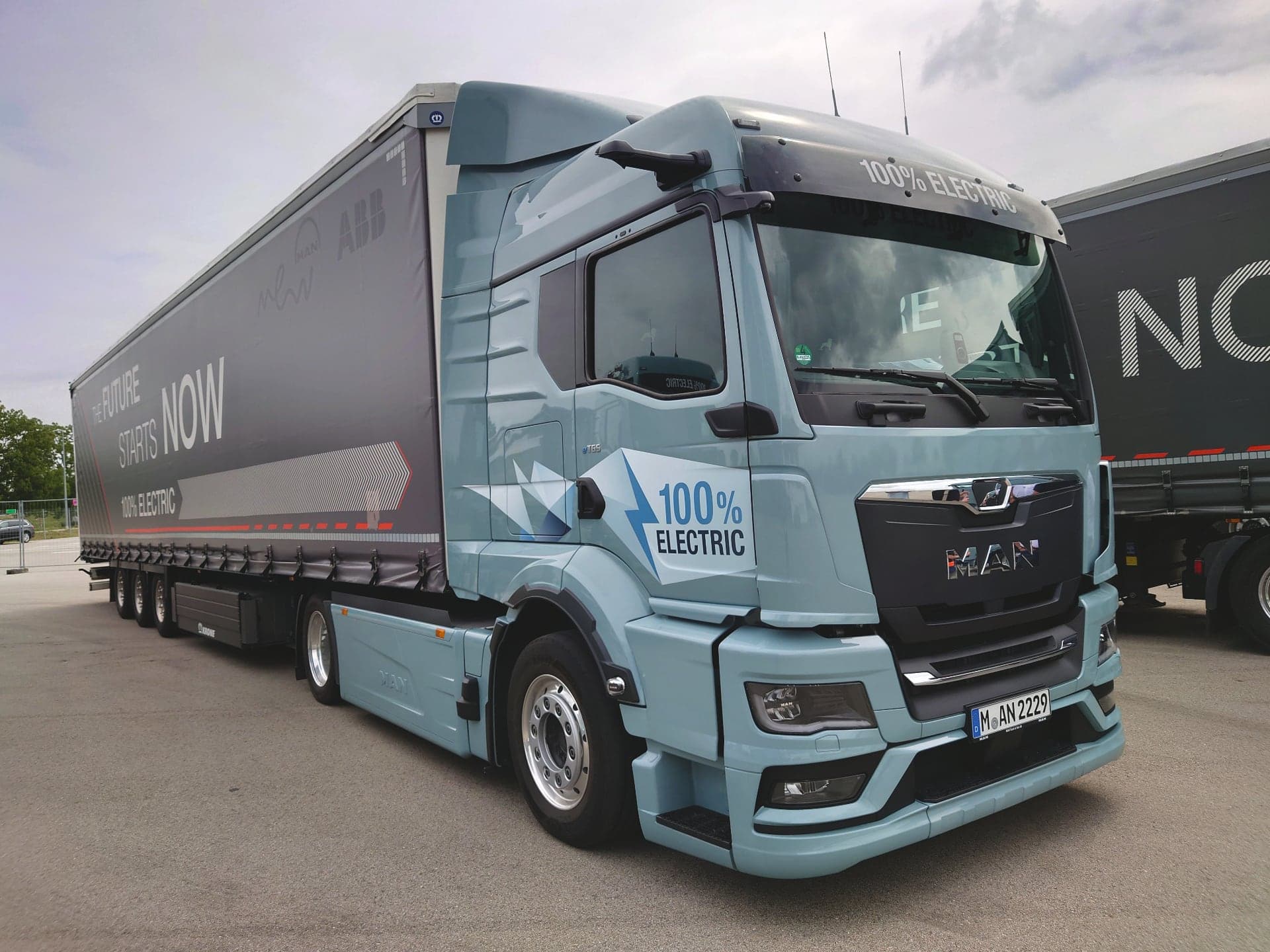
MAN invited us to Munich to test drive the new generation of electric eTGX and eTGS trucks, in a variety of configurations, from a short wheelbase skip lorry, to a fully freighted artic with 45ft trailer. These are not work in progress pre-production models, but trucks rolling off the production line now, ready to haul loads.
The trucks can be specified with battery packs of four, five or six, depending on your range requirements and at the top end there are two electric motor options for the largest variants, the ecd330 which has a minimum of four batteries and the ecd400 with a minimum of five, which give the equivalent of 449 or 544bhp. Both engines are mated to a MAN TipMatic four-speed gearbox, connected to a conventional propshaft and drive axle.
Technical Specifications and Charging
The 4x2 tractor unit has a 3750mm wheelbase, and with six batteries has 480kw of usable capacity, with charging times from 20 to 80% taking around 30 minutes, with smaller variants taking 20 minutes. The technical data sheets have a plethora of information about electronic PTOs, charging times and how many battery packs are ideal for various applications, For example on short-haul tipper work, where payload is an important consideration, you don't need the full six batteries, assuming you can get some charge during the day if required.
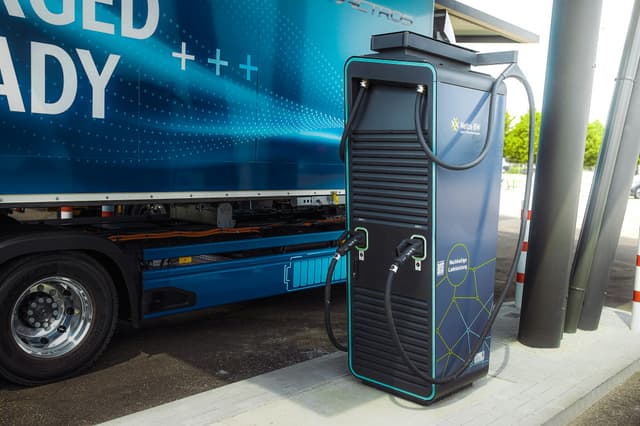
For an operator that's used to the simplicity of running diesels, it can seem very complicated, but MAN has worked out what specification is optimal for many different applications. Charging the truck is going to be one of the biggest questions UK operators have, and even if they can install the latest megawatt charging station back at base, they may still need to have access to charging on the road. But let's not concern ourselves with external issues for now.
Behind the Wheel
One thing you're bound to note if you read posts by drivers on social media, is a deep-seated fear, or suspicion at least, of electric trucks. They're worried about losing that traditional operation of mechanical machinery, as much as diesel trucks have advanced in refinement. Yet very few drivers will have sat in one, never mind driven one and they'll almost certainly never have had the opportunity to do work in one. So what ARE they like to drive, and potentially work with?
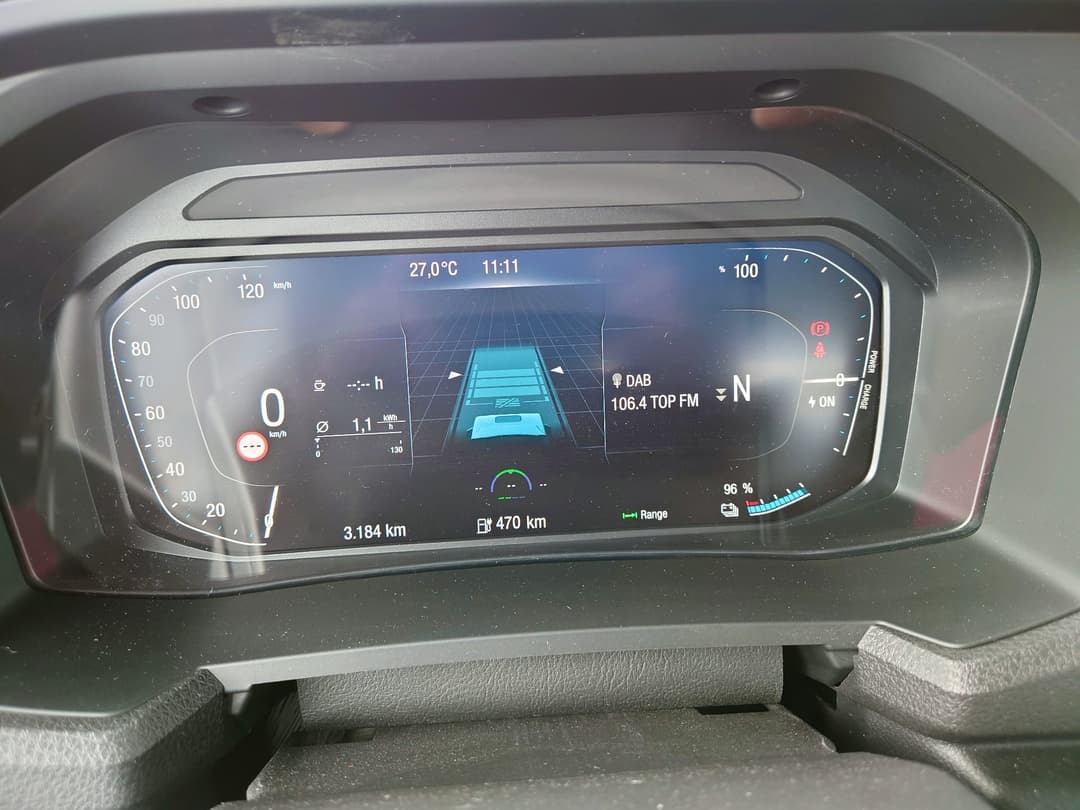
The first truck we drove was the eTGS skip truck, which would equate to a typical 18-tonne rigid outfit in the UK, or 20 tonnes with the exemption granted to electric trucks due to their higher tare weight. Batteries are heavy. The first thing you'll note when climbing behind the wheel is that, well, there's nothing to note. It's identical to the equivalent diesel. The control layout is the same as is the digital dash, with the tachometer replaced by power meter.
You engage drive using the right-hand stalk, the electronic handbrake will automatically disengage, and off you go. It's quiet, but not silent, you can hear the whirr of the electric motor as it sends power through the four-speed 'box. The flexibility of an electric motor with its high revving capabilities and constant availability of full torque from take-off means far fewer ratios are required.
It can run at a max speed of 6500rpm, with full torque up to 3050rpm and an optimum efficiency range of 2500-4500, not that you have to worry about any of that. Like the diesel MAN there are switchable power modes, from a languid economy mode to a full-on Tesla impression power mode that's only required for very short bursts such as on a short slip road when fully loaded. The system uses the momentum of the truck when rolling downhill to re-charge the batteries, so on coasting sections you can regain some charge.
We took the little skip truck on an off-road circuit to perform a tricky hill start on muddy ground, and the delicate control of the throttle allowed it to ease its way onward with no fuss.
On the Road
Next up was an eTGS 4x2 with a short tipping trailer, a configuration popular in Europe but – as with almost all 4x2 applications – never seen here. The effortless way it pulls away from standstill, and the top-class levels of refinement coupled with the complete familiarity of the cockpit means you soon forget you're powered by voltage instead of fossils.
The third truck was a fully loaded eTGX with curtainside trailer. MAN reckons this truck will have a useable range of 500km before it needs a charge boost, that's more than enough for many operations especially if they're able to make it back to base. Again, once on the motorway with cruise control set, you quite simply forget you're driving an electric truck, you're simply driving a truck.
If you were to introduce a few of these into a fleet in a situation with no worries about charging, the drivers would – seriously – not want to come out the electric truck and back into a diesel. It's effortless, the variable modes give you maximum efficiency when it's needed and a bolt of lightning if you need that too. You may be surprised to find that it'll even put a smile on your face.
Conclusion
These new electric MANs are excellent; they do everything that's required of them with a choice of battery options to suit payload and range, performance options and the familiar well-laid out interior and enjoyable driving characteristics the TGS and TGX are known for. The trucks work. MAN has held up their end of the bargain, and then some.
The UK has several challenges when it comes to the widespread adoption of electric trucks beyond the likes of supermarket fleets. Our three-axle 44-tonne standard immediately complicates matters when you're forced to attach a tag axle onto what's a much longer wheelbase unit than a diesel tag. Front-end price, and the viability of getting charging infrastructure installed, is a problem for many operators, who are quite simply going to have to be supported by the FTSE 100 companies many haul for, and the government and energy suppliers. They cannot do it all on their own.
But this is taking us away from the fundamental point of this article. The truck works, as a driver, you have nothing to fear and if you approach driving one of these new MANs with an open mind, you'll be surprised. For the operator, there is a comprehensive range of options, and support available from MAN, so the opportunity to go electric may be a lot closer than you think.