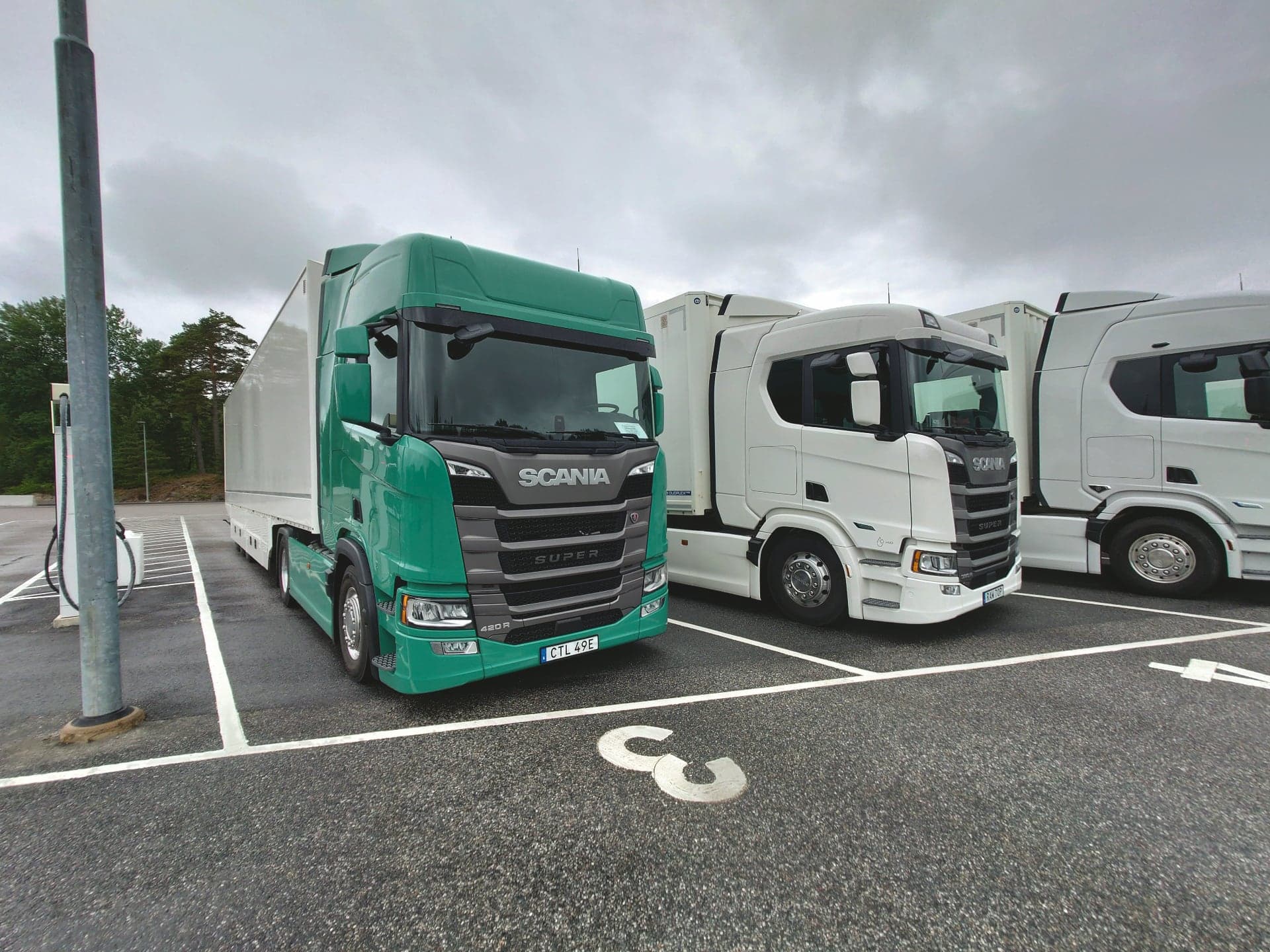
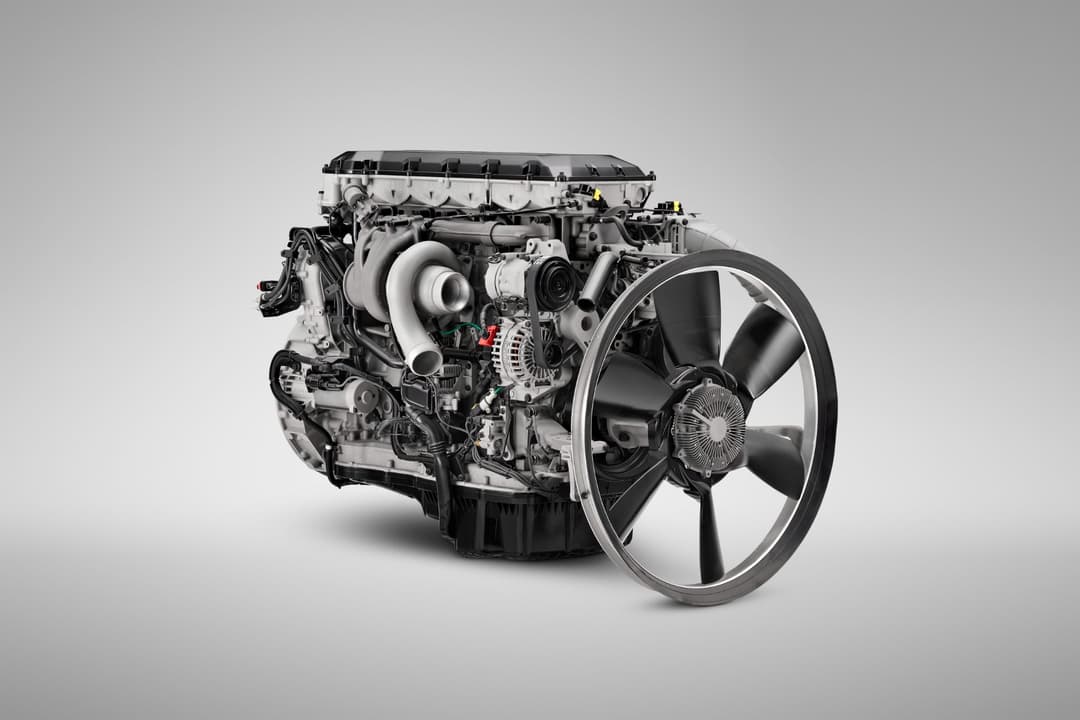
Scania has extended the Super range with the new 11-litre five-cylinder engine, featuring cutting-edge new technology to suit it for tightening VECTO and Euro 7 emissions standards.
Scania's lightest trucks start at 18-tonnes gross weight, with seven and nine-litre engines on offer. The six-cylinder DC07 (actual capacity 6.7-litres, and derived from the Cummins ISB 6.7) weighs a healthy 360kg less than the 9-litre and offers outputs from 220 to 280bhp. The 9-litre (9.3-litre) DC09 is a five-cylinder rated from 280 to 360bhp, with the latter producing upto1700Nm of torque.
Prior to the arrival of the new 11-litre there was quite a gap between the DC09 and the 13-litre Super which was introduced three years ago with its entry level 420bhp and 2300Nm torque. Where payload is a priority, the Super 11 is likely to be of great interest: tipper, mixer and tanker operators would all welcome the 85kg payload advantage over the 13-litre as well as a claimed fuel consumption reduction of 7% over the 9-litre.
While the three-axle tractor unit market has moved toward 13-litre engines as standard, demand for a lighter option still exists. In addition to those seeking ultimate payload, lighter articulated operations which use two-axle tractor units or shorter trailers may well see the Super 11 as a preferable choice.
Curiously, the eight-wheeler market has seen an increase in the use of 13-litres over 11s as well. The expected payload of an aggregate tipper is now widely considered to be 19.5 tonnes with anything over that a bonus. It’s common to see an eight-legger with just as much power as an artic (and an equally well-appointed cab) with operators citing the perceived improved longevity of the larger engine, residuals, driver retention and generally staying well on top of the job, with the latest 13-litres returning mpg figures running loaded which were unattainable when empty not too long ago.
With that in mind, the new Scania 11-litre has some work to do. The new Super 11 comes in three power ratings: 350bhp/1800Nm, 390bhp/2000Nm and 430bhp/2200Nm. All will run on HVO and the 430 can be prepared for FAME (Fatty Acid Methyl Ester). The 350 will make for a good 26 tonne option, while the 390 may tempt tipper and mixer operators in urban or relatively flat environments. The 430 will be the one the ultra-light 6x2 and 4x2 tractor unit users will be interested in and it would be no surprise if this option proves the most popular on four-axle rigids as well. The horsepower figure of 430 overlaps the entry level Super 13’s entry level unit, and while it’s less than some rivals, it’s important not to look only at the horsepower as the 2200Nm torque output isn’t far off a lot of 13-lites and betters most competitor 11-litre offerings.
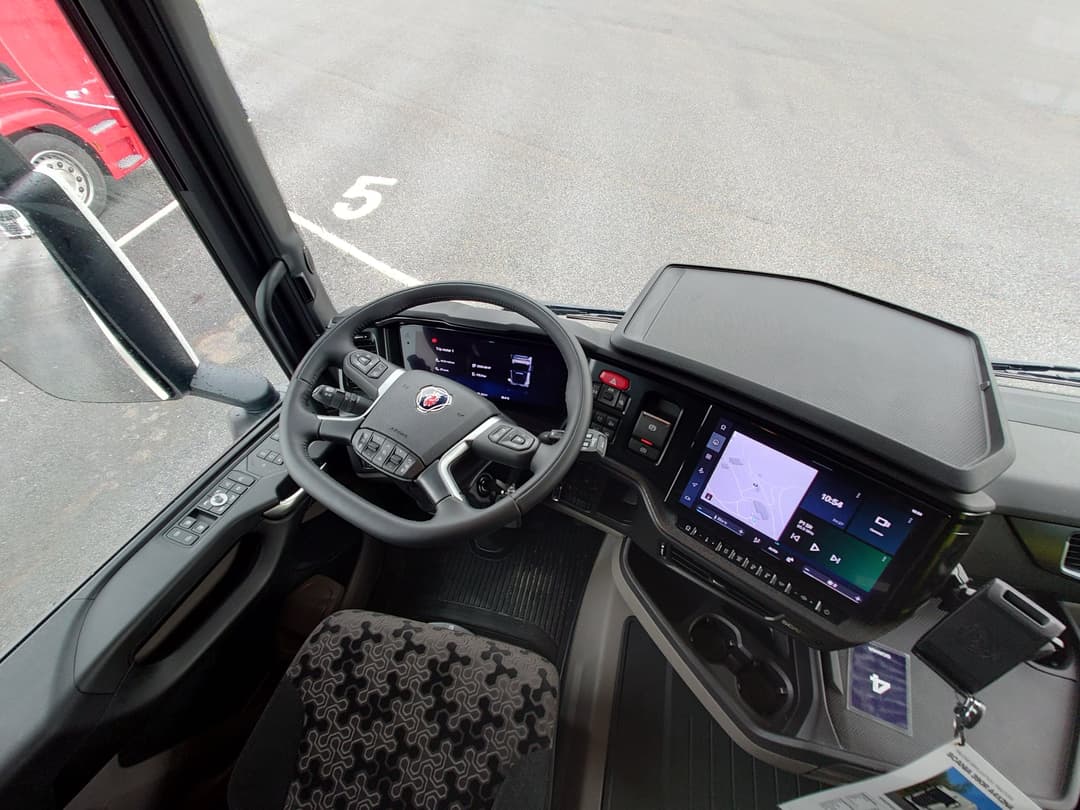
Numbers on screen or paper are one thing, what really counts is how the vehicle performs in the real world. With the Super 13, every power rating we’ve tested so far has exceeded expectations. For instance, the 460 Super 13 feels every bit as capable as the old 500. Scania’s switchable performance modes give outstanding flexibility and allow the driver to get the best from the truck, depending on the load and road conditions.
Scania has opted not to simply downsize the 13-litre six, choosing instead to develop an all-new five-cylinder platform. The company has plenty of previous experience with five-cylinder engines: the 9-litre is also a five-cylinder although it bears little relation to the new unit, being based on the previous generation architecture. The thinking behind switching to five cylinders is that it allows the Super 11 to share 85% of its componentry with the 13-litre engine.
There are several new features making their debut with the Super 11, one of the most potentially beneficial for drivers is the powerful new variable valve brake (or engine compression brake), operated using the right-hand column stalk), rated at 233kW in standard configuration: there is also a high output version which produces 344kW. Those kw figures might not mean a lot here in the UK with our mash up of metric and imperial units, but if you look into what engine brakes on other models produce, they’re impressive figures.
The high output variant produces stopping power that’s not that far off what a separate transmission retarder will provide; that’s impressive on a lightweight engine and it comes without the weight penalty of a retarder. Such is its potency, care must be taken not to simply engage full power when empty on wet roads, the first two stages are plenty.
While the engine is 85kg lighter than the 13-litre, it also features ‘cam phasing’ for the first time: Variable Valve Timing, or VTEC as it’s become known colloquially, which has been offered on automotive petrol engines for decades. This not only increases performance under load, but the continual monitoring and optimisation of the valve timing means exhaust gas temperatures are closely controlled under low load situations which improves aftertreatment performance and subsequently fuel economy.
There’s further good news as the exhaust aftertreatment system is Adblue only, EGR (exhaust gas recirculation) which was always a compromise with undesirable side effects, is no more.
The aftertreatment system is all-new and is another feature which shows Scania has its eye on the forthcoming Euro 7 regulations which come in during 2027. A new single stage dosing system debuts on the Super 11, with all AdBlue being injected immediately downstream of the turbo, where temperatures are at their highest. This replaces the previous dual-dosing layout where additional AdBlue was injected immediately ahead of the SCR catalyst. This is not only much simpler, it is more efficient as AdBlue conversion rates are higher, particularly at cold start. As we approach the end of the Euro VI era, this is an engine built for Euro 7 and the enormous engineering challenges it brings.
Although operators are increasingly looking to 13-litre engines for eight-wheeler applications and Scania buyers have had no alternative option up to now, if this new 11-litre, five-pot can deliver the same levels of performance and economy as its bigger brother it could tempt payload-conscious operators to give it a try.
The 430 will cope very well in eight-wheeler form and as a 40-tonne 4x2 artic, the real test for it will be as a 44-tonne tractor unit. The entry level Super 13 is the 420 which was once a benchmark power rating for Scania tractors with the 124 420 and R420, but time has moved on, and even the perfectly capable Super 460 is being phased out of some big fleets in favour of 500s. This is partly due to residual values and partly due to driver perception and retention. There’s little doubt that 500bhp is a benchmark where a truck is considered to have an element of ‘performance’ and therefore desirability, but buyers of 11-litre tractor units have other priorities.
We drove a selection of Super 11-powered trucks at Scania’s test track. The first thing to note is that a straight-six engine is naturally balanced and other configurations either aren’t as smooth, so they need some internal assistance to smoothen things out. With the Super 11 running with five cylinders, Scania’s engineers have had to install balance shafts to eliminate vibration and ensure the smooth running we’ve become so accustomed to in modern trucks.
We drove a 390 three-axle rigid, a 390 four-axle artic and a 430 five-axle artic. All of them were R-series with the rigid having a neat day cab with a fold down rest bunk. The clever packaging even provided a little fridge which had a surprising amount of storage. All day-cabs, where chassis configurations allow, could benefit from a set-up like this as it improves the working environment enormously for drivers who may often be involved in physical multi-drop work: even if it’s not for a night out, that rest bed could provide much needed relief for drivers.
The engine note is surprisingly satisfying, the Opticruise gearshifts are seamless and the facility to engage eco-roll with a tap of the throttle can be utilised to great effect by drivers who are familiar with their truck and the roads. A near standstill pull away on a steep hill was completed without the gearbox getting into any state of confusion. The 390 artic did feel a tad lacking in power, but you’d likely only find these used in the UK with two-axle trailers on urban work.
Changing the 430 from Eco into Standard mode livened up the shifting, with more priority given to retaining momentum rather than lugging down to the bottom of the rev band before finally changing down, and at 35 tonnes gross it was perfectly happy. Over-egging the Eco-roll into a corner where we were going too fast was contained entirely by the new engine brake, our foot hovered over the brake as the corner approached, but it knocked off enough speed without the pedal being required – with some practice drivers should be able to make their brake pads last a very long time. Again, this may help with Euro 7, where dust from brakes will be counted as particulate emissions.
It pulled cleanly out the corner and up a hill with no fuss, there were no premature downshifts as the truck reads to topography ahead of it and factors in the weight, speed and whether it’ll make it over the top without needing a downshift.
Some of the new technology debuted here in the 11 will no doubt be installed in the 13 by the time Euro 7 rolls around. Considering how well the likes of the 460 Super has performed both with its surprising power and fuel economy, the expectation will be more of the same from the 11. This engine is a completely new option for existing Scania buyers, and may also make the marque more attractive to non-Scania operators who regard the current offerings of 13-litre as overkill, and the 9-ltire as being not up to the job. If the fuel economy figures of the 13 are anything to go by, then a well specified Super 11 could be even more impressive.