Zero-emission, hydrogen-powered commercial vehicle innovator, Hydrogen Vehicle Systems (HVS), today invites fleet operators to register expressions of interest in trialling its state-of-the-art, clean-sheet-designed hydrogen-electric Heavy Goods Vehicle (HGV) prior to purchasing.
Supported trials are set to commence in Q4 2025 once the exhaustive pre-production prototyping phase is completed and the HGVs are ready to enter volume production in the UK.
Fleet operators will be offered extensive trial periods to test the hydrogen-electric HGV tractor unit, putting it through its paces and evaluating how the zero-emission vehicle will perform within their fleets.
Jawad Khursheed, CEO of HVS said:
In response to the huge levels of interest we have received from fleet operators we are inviting them to register expressions of interest in trialling our Hydrogen Goods Vehicle on the HVS website.
We understand the challenges of introducing disruptive technology such as zero-emission trucks to the logistics sector, so we will be offering extensive trials to fleet operators so they can thoroughly evaluate the technology and understand how it will perform within their fleets before they purchase our vehicles, which will help them achieve their environmental targets.
Hydrogen is the perfect fuel for the haulage industry, offering long range and quick refuelling thanks to stations being easily integrated into existing key transport networks, and we’re keen to help prospective customers learn all about this exciting technology.
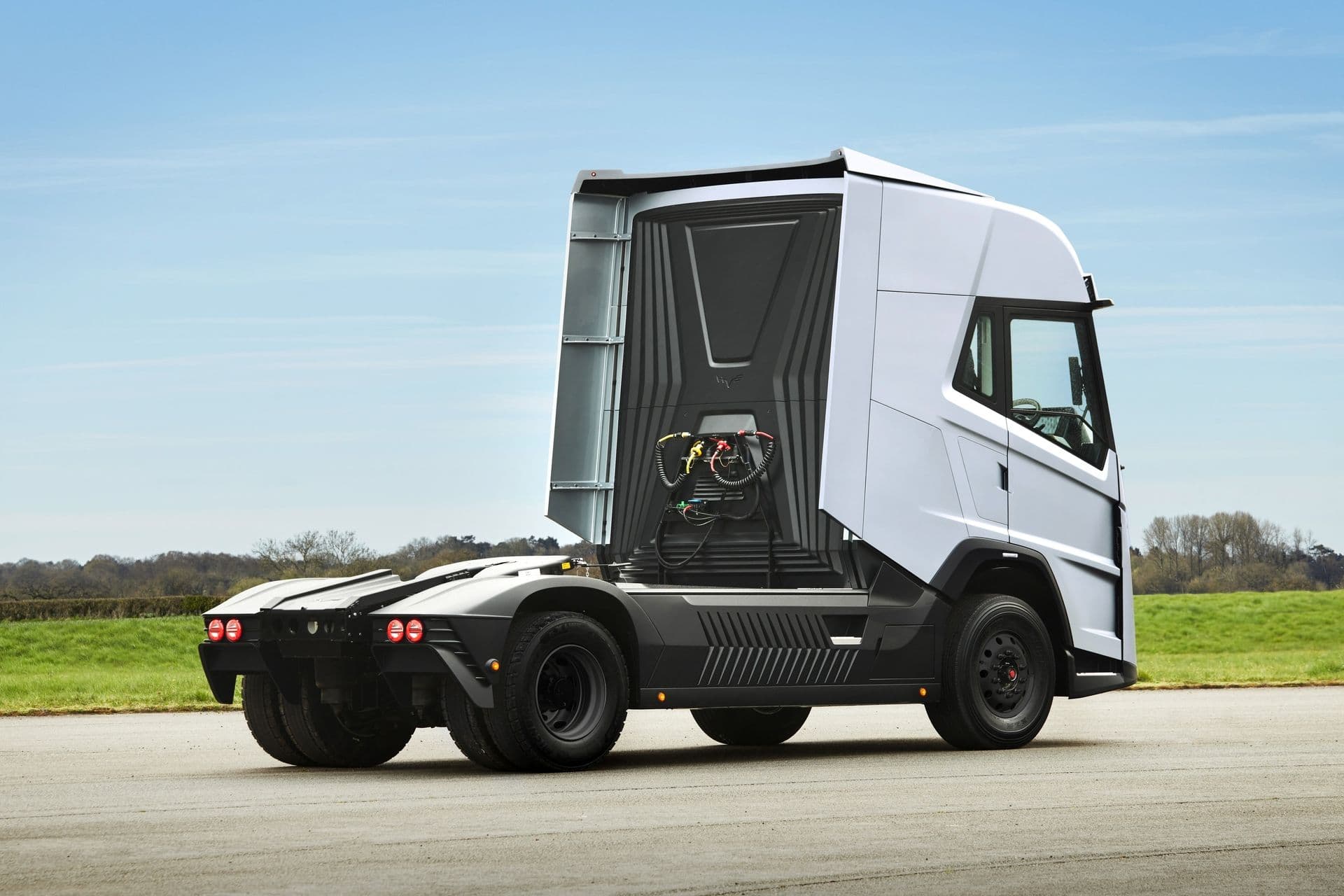
HVS revealed its 40-tonne HGV technology demonstrator complete with game-changing hydrogen-electric powertrain in April, underlining the company’s objective of being the first indigenous UK designed and developed hydrogen-electric HGV on the market.
Founded in 2017, in Glasgow, HVS focuses on the ground-up design and development of zero-emission hydrogen-powered commercial vehicles. The company comprises industry specialists, with vast experience in the automotive, energy, hydrogen technology, power electronics, sustainability and environmental management fields.
With government targets to curtail sales of all non-zero emission 3.5 -26t HGVs set to come into play by 2035 or earlier and all sales of new non-zero emission HGVs by 2040, HVS and its world-leading technology have the potential to play a crucial role in allowing emissions reduction targets to be achieved.
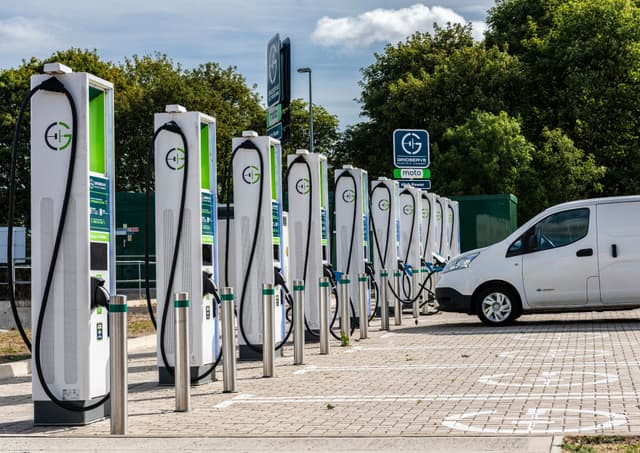
The company also has a defined route to market. In addition to funding from the Advanced Propulsion Centre, Innovate UK, CCAV, Scottish Enterprise and Energy Technology Partnership, HVS’ strategic investment partner is the service station and grocery corporation, EG Group, offering hydrogen refuelling infrastructure, fleet customer base and the potential for global scalability.
Breaking the mould
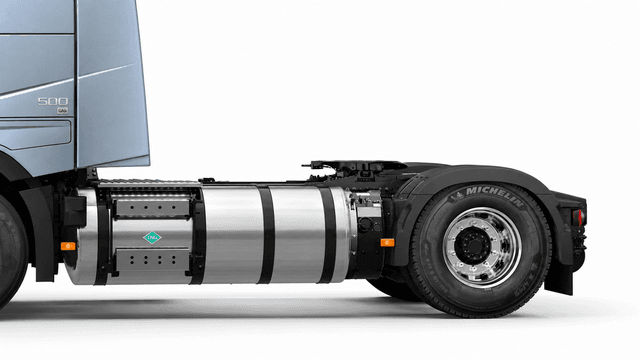
HVS’ tractor units will be built on an all-new chassis, designed in-house around the hydrogen powertrain, which consists of pressurised hydrogen cylinders, twin fuel cells, a high-power energy storage system and electrified rear axle.
Designed in-house by Pete Clarke, Head of Design, who has a wealth of experience designing commercial vehicles that he brings to bear on HVS’ striking truck designs, the unique ground-up design brings innovation in packaging, performance, efficiency, weight, range, consumption, maintenance, and lifecycle benefits. The technology demonstrator’s unique design allows significantly improved aerodynamics compared with current Internal Combustion Engine (ICE) trucks. Consequent benefits include enhanced fuel efficiency on long-haul runs and improved spatial ergonomics within the cab, including better access and more room at the controls, not to mention sector-leading aesthetics.
Driver comfort is taken care of, and stress levels are reduced, all contributing to a safer and more efficient operational experience. Confidence-inspiring too, since the driver will be well aware that they are abreast of the latest technology.
State-of-the-art fuel cell stack
HVS’ vehicle powertrain employs a fuel cell system and energy storage system to deploy electricity to an electric motor to transmit power to the wheels. It uses the KERS (Kinetic Energy Recovery System) to recapture energy under braking and while the truck is slowing down.
The integrated powertrain is controlled with HVS' advanced control system ‘SEMAS,’ which monitors interactions between drivers and control systems, delivering class-leading fuel efficiency and durability.
The fuel cell permits longer range, higher load-carrying capacity, and faster refuelling than would be possible using battery-electric technology alone: typical refuelling time is comparable to diesel, around 20 minutes to replenish the high-pressure hydrogen tanks. It is in the long-distance HGV segment that hydrogen fuel cells offer the most advantages.
The only emission from the vehicle is water vapour, meaning there are no harmful greenhouse gas emissions of any kind.
Long ranges and quick fill-ups
Depending on the journey – the route travelled, road conditions and driving style – HVS’ HGV has the capacity to travel up to 370 miles (600km).
Hydrogen-powered vehicles do not need charging like a battery-powered Electric Vehicle. They are refuelled with hydrogen gas, stored at pressure in hydrogen cylinders. Refuelling takes a much shorter time than charging an equivalent battery vehicle and is comparable to filling a truck with diesel (about 15 to 20 minutes). Many hydrogen fuelling stations will be located at existing commercial vehicle forecourts, using dispensers that look very similar to conventional petrol and diesel ones, but with a different nozzle.
UK-based production
HVS is Headquartered in Glasgow, Scotland, and is undertaking development work at Horiba MIRA, Nuneaton, Warwickshire. HVS envisages that it will open an R&D, engineering and pilot production facility alongside a permanent UK-based production facility. A workforce of circa 600 employees is predicted across all key disciplines, with many recruits coming from the automotive and aerospace industries. It’s likely that a further 10,000 workers will be involved in the UK supply chain, boosting the skills base.
Thanks to their fresh thinking and ground-up approach, HVS has created an HGV that offers the complete package; from game-changing technology and driver ergonomics to easy maintenance, all packaged into a striking design. EG Group’s investment secures crucial hydrogen fuelling infrastructure and a route to market.