The comprehensive Lifecycle Carbon Analysis (LCA), conducted by sustainability consultants, Tunley Environmental, also found that a Lunaz UEV saves 43 tCO2e when compared to a new all-electric model.
The study identifies and quantifies all sources of carbon emissions of a refuse truck. This includes the production, installation, use and end-of-life treatment of a Mercedes-Benz Econic refuse truck upcycled and electrified by Lunaz. It then compares them to the figures for conventional diesel and all-new electric versions of the same vehicle.
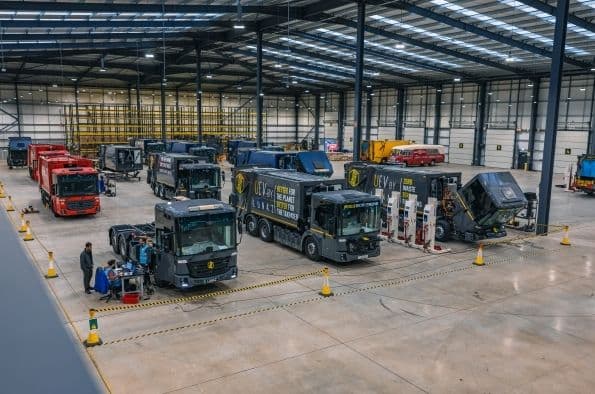
In the Lunaz upcycling process, end-of-life diesel refuse trucks undergo a bare-metal restoration; the engine and associated systems are removed, recycled and replaced with a Lunaz’ fully electric powertrain. The interior is remodelled with upgraded ergonomics, materials and technology, improving safety and operator wellbeing.
However, upcycling not only gives a second life to a diesel refuse truck: after seven years, Lunaz will take the vehicle back and refurbish it again, with a third refurbishment possible seven years after that. The study therefore looks at the total CO2 emissions over three seven-year operating lifetimes. This is supported by a recent partnership with UK-based Altilium, in which a low carbon logistical solution is being developed for the safe transportation and discharging of end-of-life electric vehicle (EV) batteries.
Preserving the embedded carbon in the raw materials and initial manufacturing emissions up to the point where the vehicle enters service - known as ‘cradle-to-gate’ emissions – is where Lunaz offers such unprecedented sustainability benefits compared to all-new models. This is much more environmentally impactful than the ‘tailpipe’ emissions of new diesel refuse collection vehicles in their early years of service. Given the greater raw material burden of all-new electric refuse trucks, the cradle-to-gate emissions of a new electric truck are almost twice as high as a UEV at 99.5 tCO2e.
For operators and consumers, the most relatable statistic is likely to be operational carbon emissions. The report calculated that total carbon dioxide emissions from a new diesel equivalent was 3.6 times, or 1,410 tCO2e, greater than a Lunaz UEV over three lifecycles. Likewise, the report found that an all-new electric refuse truck was 27%, or almost 145 tCO2e worse on CO2 emissions, compared to a Lunaz UEV.
Accelerating the transition to clean-air transport and logistics
By providing a sustainable and more economically viable alternative to replacing existing vehicles with new EVs or ICE equivalents, at full scale, Lunaz saves millions of tonnes in embedded carbon and billions of pounds in capital.
This approach has been commercially and technically proven through landmark fleet electrification agreements signed with UK Local Government Authorities and Biffa, the UK’s largest sustainable waste management company.
This commercial success and continued inward investment supports one of the fastest growing companies in the UK. Lunaz now employs more than 250 highly skilled engineers and technicians at its upcycling and electrification campus on the Silverstone Technology Park.
Investing in the future
The report is a clear validation of the Lunaz upcycling approach as a means to drive down carbon emissions as the world transitions towards net zero. It highlights that, as the proportion of renewable energy from wind, solar, tidal and nuclear sources in the UK grid increases, the lifetime emissions of electric vehicles decrease. This is significant because the values presented above use the average UK electricity grid CO2 values as a baseline. However, a likely ‘greening of the grid’ would reduce CO2 emissions significantly: by around 40%. In addition, operators using certified 100% renewable tariffs, as Lunaz does, can achieve even lower emissions: the report suggests that these could drop by a further 65%.
The report also considers the effect on switching to biofuels, such as hydrogenated vegetable oil (HVO), which has production and usage emissions around 80% below those of commercial diesel fuel. Despite more renewable fuel, over three seven-year life cycles, the Lunaz UEV would still have fewer emissions than a diesel truck running on HVO, even before ‘greening the grid’ or renewable tariffs are considered.