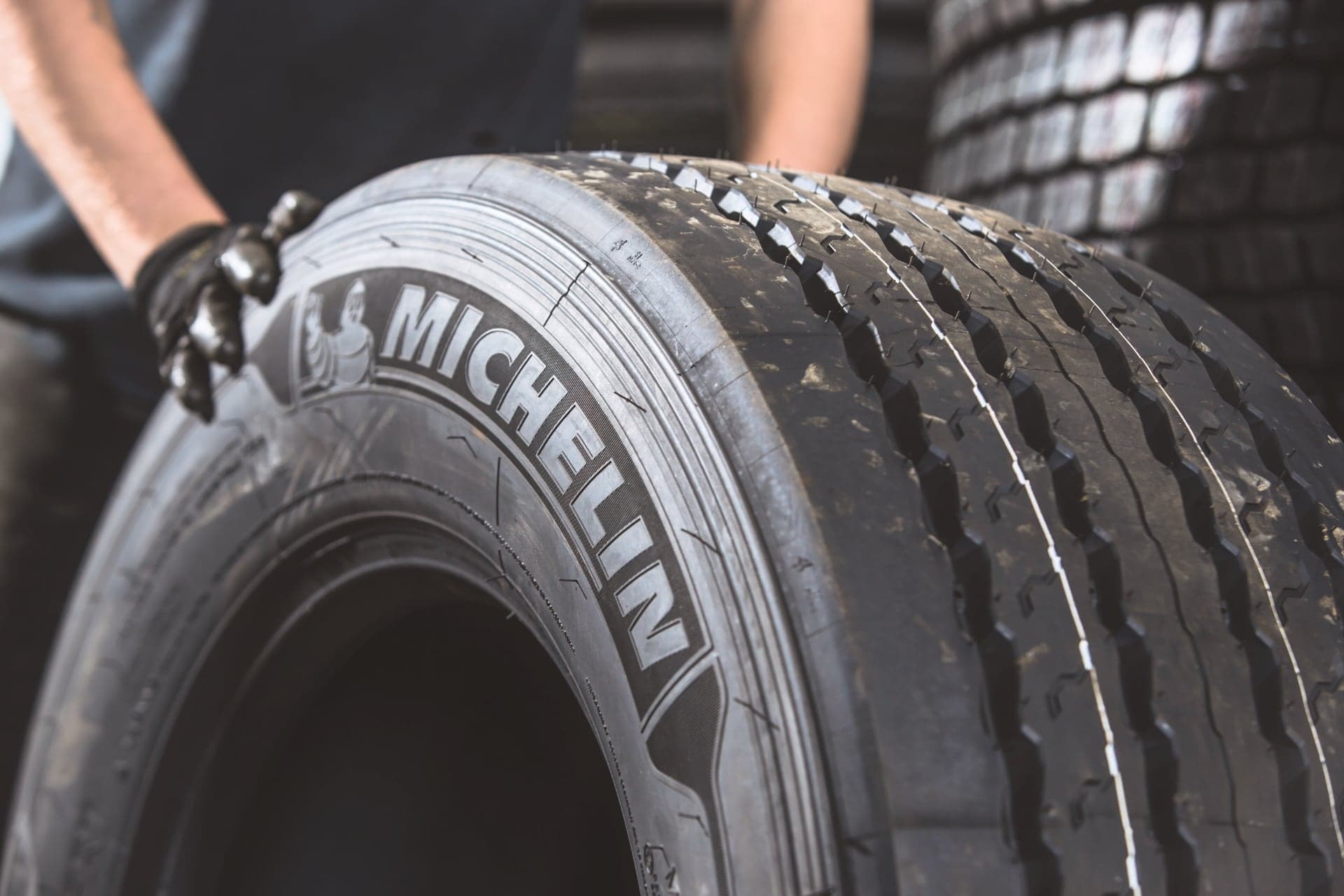
The new products Michelin will introduce under this programme will cut fuel usage by up to 12% and deliver durability improvements of up to 20%, it insists, compared with what is on offer from its key competitors.
Among the products it is now rolling out is X Line Energy 3. Designed for long-haul work, it is initially appearing in D3 (drive) 295/60 and Z3 (steer) 315/60 R22.5 sizes. The new arrivals are the first 60 sidewall aspect ratio long-haul tyres capable of being labelled with an A energy-efficiency rating says the global tyre giant.
As well as combatting its premium truck tyre market rivals, including Bridgestone, Goodyear and Continental, Michelin is having to ward off competition from low-cost Far Eastern imports. A key advantage it has over them is the retreadability of its products says executive vice president, Benedicte de Bonnechose. The majority of cheap imports cannot be retreaded.
Retreading is in Michelin’s DNA, and our Remix 2 programme allows the life of one of our tyres to be extended dramatically,
she says. That can include retreading it twice and regrooving it no less than three times.
Making maximum use of a tyre in this way cuts costs for fleets and reduces their environmental impact. Retreading consumes far fewer raw materials and uses less energy than the production of a new tyre.
Conscious of the environmental cost of new tyre production, and under pressure from customers to adopt as green an approach as possible, Michelin intends that 40% of every tyre it manufactures will be made from recycled and renewable materials by 2030, rising to 100% by 2050.
As an earnest indication of its intentions, it has been exhibiting a 275/70 R22.5 bus tyre with a 58% per cent recycled or renewable content.
It includes silica derived from rice husks, carbon black recycled from end-of-life tyres, and recycled scrap metal. Michelin says that it is the first bus tyre with this level of sustainable material to be homologated for road use.
A major challenge Michelin is about to face along with other truck tyre manufacturers is compliance with the new Euro 7 emission regulations, which cover particles emitted by tyres and brakes for the first time as well as from exhausts. It’s a challenge the company’s senior executives are confident they can overcome.
Michelin has been cutting particle emissions from its products for many years, they point out, adding that the regulatory obligation to conquer the challenge is still a little way away so far as truck tyres are concerned. Meeting this aspect of the Euro 7 regulations will not start becoming mandatory until April 2032.
Total exhaust emissions from trucks will reduce steadily as more electric models go into service.
Thirty percent of new trucks sold in Europe will be electric by 2030,
Bonnechose predicts. In anticipation, Michelin is introducing tyres with load ratings that will enable them to cope with the burden imposed by heavy battery packs.
Michelin has been making major investments in research and development. Last year its research and development budget totalled 786m euros (£660m) and its vast r&d centre at Ladoux in France covers over 1,100 acres, employs 4,000 people, and encompasses 22 test tracks with a total length of nearly 27 miles.
Nor is Ladoux the company’s only r&d facility.
Michelin’s activities have always stretched beyond tyres, and in 2023 it opened HydrogenLab in Montpellier in the south of France. Its role is to develop a new generation of materials for membrane-electrode assemblies that play an essential role in hydrogen fuel cells and electrolysers.
While cutting fuel costs and minimising environmental impact are both vitally-important concerns, safety will always matter more.
That is something Michelin has addressed with X Line Energy 3, and with its new X Multi Energy 2 for regional applications.

The wet lateral grip of our X Line Energy 3 and X Multi Energy 2 tyres is superior to that of other premium makes. That’s been certified by DEKRA, an independent testing organisation,
states vice-president long-distance and urban transportation, Maria-Esperanza Gaspar.
X Multi Energy 2’s key tyre sizes are D2 (drive) 315/70 and 80 R22.5 and Z2 (steer) 315/70 and 80 R22.5.
Michelin says that their lateral grip has improved by 5.06% when the tyres are new and by 5.67% when they are two-thirds worn down compared with the previous range. One of its aims is to ensure that a tyre’s performance stays consistent (or even gets better) as the tread begins to wear.
Tipper operators are not being ignored. On their way are X Works Z2 and D2 for on-/off-road applications which will appear between now and September.
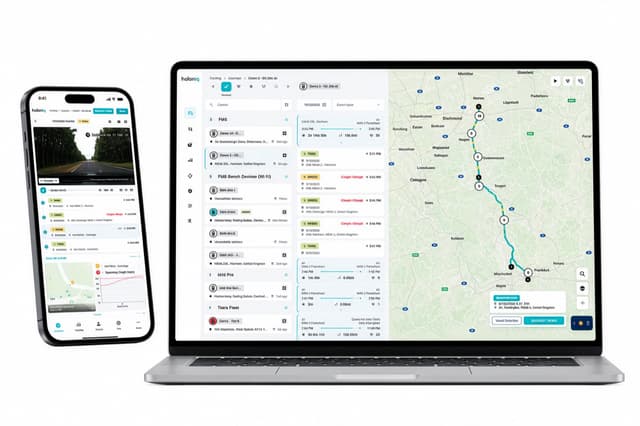
Products that you cannot actually see have become increasingly important to hauliers in recent years, and the one that has most influence on their efficiency and profitability is connectivity.
Our customers are overwhelmed by data, so Michelin Connected Solutions has developed algorithms that can help them identify and prioritise the things that matter,
says Michel Vincentelli, senior vice president, connected solutions business line.
By employing Michelin’s system, transport managers can see if trucks are idling excessively. They can also identify drivers who burn too much fuel by driving too aggressively, and ensure that they are trained to drive more responsibly.
Michelin Connected Solutions can keep a weather eye on data from onboard tyre pressure monitoring systems and decide whether a drop in pressure can be safely dealt with once the vehicle is back at the haulier’s depot or whether action needs to be taken instantly so that it doesn’t end up stranded at the roadside. Both the manager and the driver can be advised accordingly, and a Michelin’s service provider can be alerted and take action if required.
It’s an approach that can lead to up to 80% per cent fewer tyre-related breakdowns,
Vincentelli contends. Responding promptly can lead to a 9% increase in tyre life – and that has to be worth having.