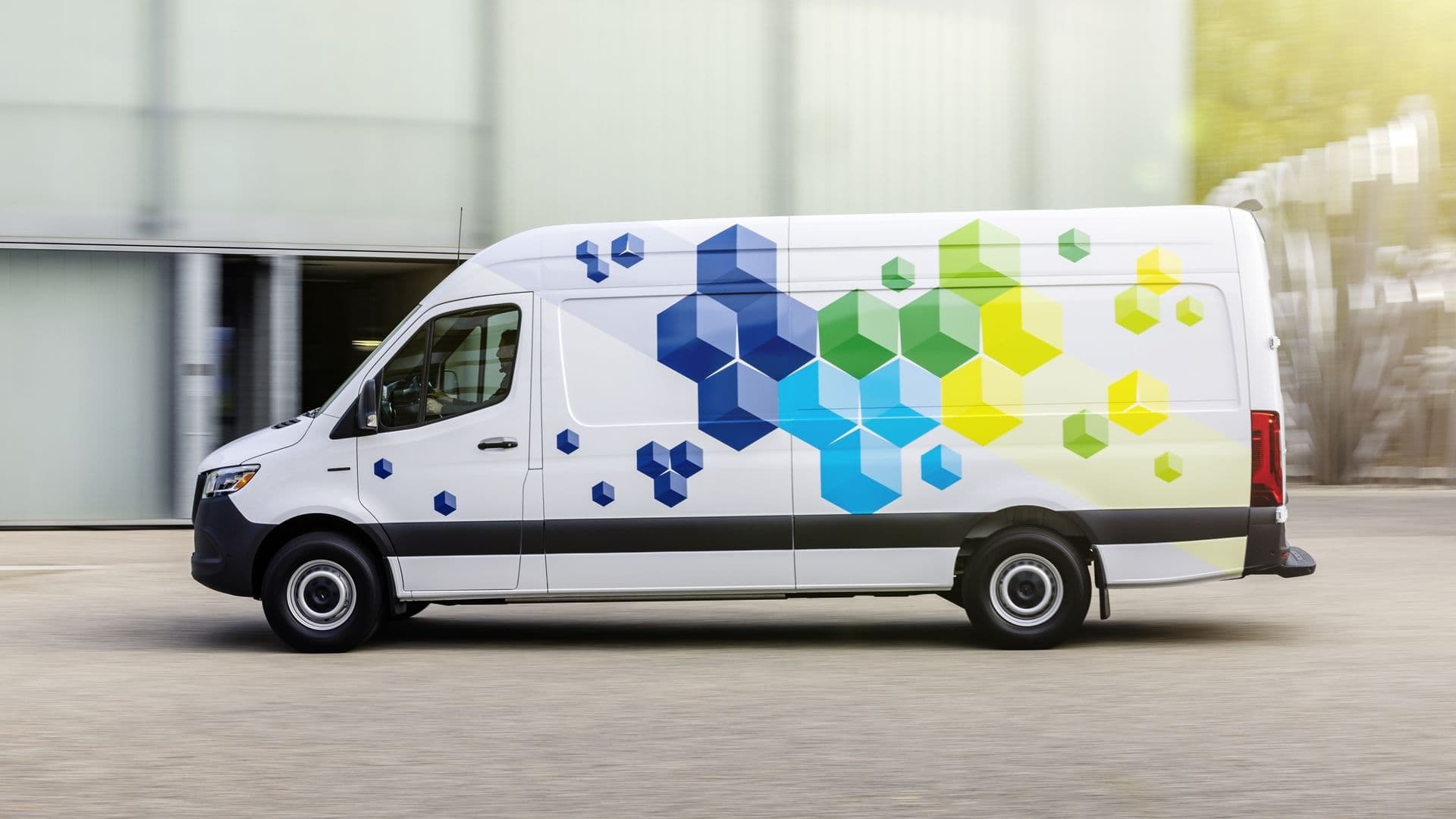
With greater efficiency, range and load capacity, the new eSprinter will underline the Mercedes-Benz future claim to "Lead in Electric Drive" in around 60 markets.
The new Mercedes-Benz eSprinter consistently follows our strategy - to be the leader in electric mobility with the most desirable vans while achieving profitable growth worldwide.
Mathias Geisen, Head of Mercedes-Benz Vans
Around 350 million euros has been invested in the new Mercedes-Benz eSprinter, of which around 50 million euros will be invested in each of the three production plants: Charleston, Düsseldorf and Ludwigsfelde. Launching in the USA and Canada in the second half of 2023, initially. Customers in these markets will be able to purchase a long-wheelbase panel van with a high roof, equipped with the largest battery available, with a usable capacity of 113 kilowatt hours, load capacity of 14 cubic metres and a gross vehicle weight up to 4.25 tonnes.
This first variant of the panel van will launch in Europe at the end of 2023, with the cab chassis variant and other battery variants gradually following, making the eSprinter a viable option for numerous new sectors, as well as for converters and body manufacturers.
The vehicle will be based on an original concept consisting of three modules. The front and back modules can be used with all available variants, regardless of wheelbase and battery sizes, ensuring maximum synergies in production, and greater economies of scale.
The module for the integrated high-voltage battery is housed in the underbody of the front module between the axels to save spaceand creates a low centre of gravity, which has a positive influence on handling and Press Information February 7, 2023 Page 2 Internal increases driving safety. The rear module features an electrically driven rear axle and a powerful electric motor. The electric range, based on a simulation using the WLTP cycle, will be up to 248 miles (400 kilometres). 234 The simulated range based on the WLTP city cycle will be up to 310 miles (500123 kilometres).
With the new eSprinter, we are taking the electric large van segment to a new level. The triad of efficiency, range and load capacity with simultaneous Total Cost of Ownership optimisation makes the new eSprinter the most versatile Mercedes-Benz eVan ever.
Mathias Geisen, Head of Mercedes-Benz Vans
The main components of the electric powertrain (eATS) in the new eSprinter are two new developments: the efficient motor and the innovative electric rear axle, both of which are being used for the first time in a battery-electric van from Mercedes-Benz.
The permanent magnet synchronous motor (PSM), which weighs only around 130 kilograms, is characterised by particularly high efficiency and optimised thermal management. The motor is available in two power levels, with 100 or 150 kilowatts of peak output, and delivers a torque of up to 400 newton metres.
The electrically driven rear axle makes cab chassis variants possible in addition to the classic panel van. For the customer, this brings advantages with regard to conversions and superstructures, vehicle lengths (A2 and A3), maximum gross vehicle weight (up to 4.25 tonnes) and trailer loads (up to 2 tonnes).
In keeping with the three modules, Customers will also be able to choose between three different batteries for the new Mercedes-Benz eSprinter, depending on their individual range and payload requirements, with usable capacities of 56, 81 or 113 kilowatt hours. Lithium/ion phosphate (LFP) cell chemistry allows the battery variants to be kept free of cobalt and nickel, while active thermal management to ensure maximum efficiency.
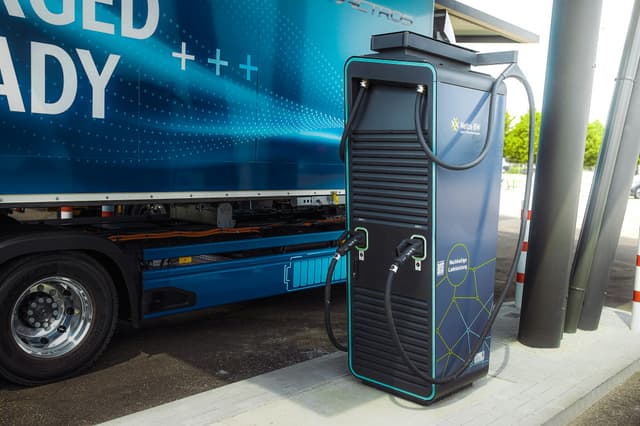
Like all electric vans from Mercedes-Benz, the new eSprinter is capable of charging with both alternating current (AC) and direct current (DC). The on-board charger, which converts the current in the vehicle when charging with alternating current, for example at a Wallbox, has a maximum output of 11 kilowatts. The new model can be charged with up to 1151 kilowatts at rapid-charging stations, enabling customers to charge from 10 to 80 percent2 in around 28 minutes for the 56 kWh battery and around 42 minutes for the 113 kWh battery.
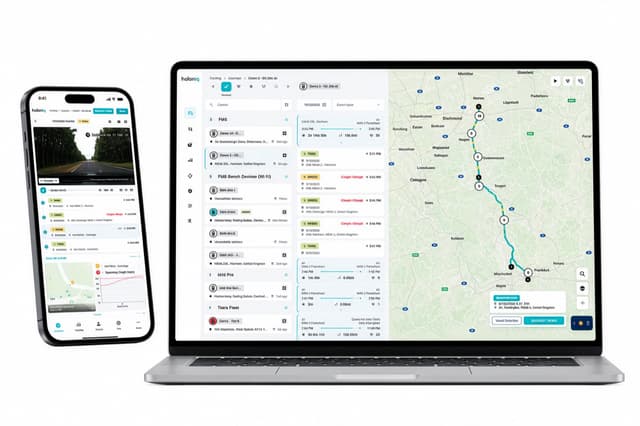
The new eSprinter will offer a multitude of technical innovations, including and the cloud-based services in the Mercedes me3 digital ecosystem. It also comes with the latest software generation of Mercedes-Benz User Experience (MBUX). Features include Navigation with "Electric Intelligence", which helps customers plan ahead efficiently and effectively. For example, it shows the current range in real time depending on the current traffic situation and the topography of the route. It also calculates the best possible charging strategy to get to the destination as quickly as possible, or to have the desired state of charge (SoC) at the destination. Authentication at the charging station is simple via MBUX, with payment via Mercedes me. Other highlights include increased performance, extensive personalisation options and optimisations of the "Hey Mercedes" voice control assistant.
Mercedes-Benz Vans has firmly anchored its leadership aspiration for electric mobility in its strategy. With the Vito E-CELL, Mercedes-Benz Vans was already a pioneer in the market for locally emission-free vans in 2010. Today, Mercedes-Benz has electrified all segments from the Small Van to the Mid-size Van and the Large Van.
From the middle of the decade, Mercedes-Benz Vans will be implementing the next stage of its electrification strategy with VAN.EA (Mercedes-Benz Vans Electric Architecture): From 2025, all new models will be allelectric.
Sustainability at Mercedes-Benz
On the road to the fully electric future of mobility, Mercedes-Benz is taking a holistic approach with Ambition 2039. One of the most important transformation goals is CO2-neutrality in the new car and van fleets, which is firmly anchored in the sustainable business strategy, partly including offsets. At Mercedes-Benz AG, this goal is reflected in Ambition 2039 and in the "Electric only" approach. Concretely, this ambition means: by 2039 – eleven years earlier than required by EU legislation - the entire fleet of new passenger cars and vans is to become CO2-neutral across all stages of the value chain, partly including offsets.