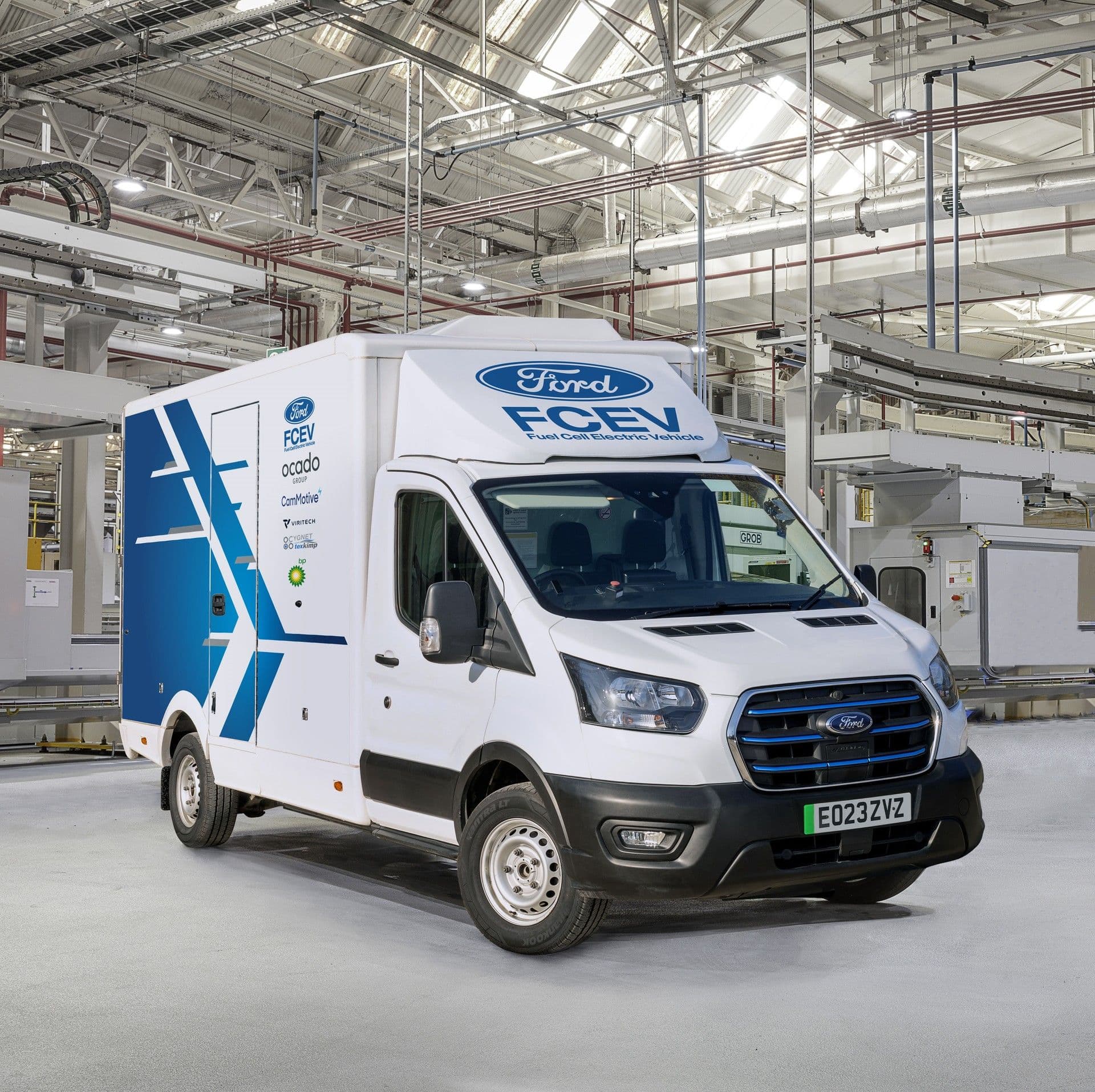
Viritech is to play a major role in one of the UK’s most significant fuel cell hydrogen electric vehicle (FCHEV) projects: a programme to test the viability of fuel-cell versions of the UK’s best-selling commercial vehicle, the Ford Transit.
With the concern that Battery Electric Vehicles (BEV) will be unable to fulfil LCV use-cases that require high payloads, high daily energy consumption, extended range, or where there are limited opportunities for charging, FCHEV offers a zero-emissions alternative that can address these deficiencies.
Viritech will develop hydrogen pressure vessels using its proprietary integrated mounting system which reduces the cost and weight of fitting hydrogen pressure vessels to a vehicle. Current pressure vessels use external attachments which add weight, complexity and cost. Viritech’s breakthrough Graph-ProTM design, integrates the mountings into the structure of the pressure vessel, so they can be bolted directly to the chassis.
In addition, Viritech will lead development of Type 5 hydrogen pressure vessels. These are not yet commercially available, but offer the prospect of a significant weight reduction, thanks to the removal of the inner tank liner currently used to prevent leakage.
Viritech’s Graph-ProTM pressure vessel solution will be manufactured in the UK, and developed for volume manufacturing as FCHEVs become mainstream later this decade.
In addition, Ford will test Viritech’s revolutionary Tri-VoltTM hydrogen powertrain ecosystem. Tri-VoltTM represents a radically different approach to the architecture of hydrogen fuel cell powertrains. Unlike other systems which use fuel cells to charge batteries to extend their range, Tri-VoltTM uses the fuel cell as the prime mover when a vehicle is at a steady speed, and uses very small, high C-rate batteries to manage power during transient conditions (e.g. pulling away from rest or braking). High C-rate batteries are able to charge and discharge far more quickly than conventional batteries and produce much more power for short periods – e.g. a 6KWH battery pack can produce up to 600KW for 20-30 seconds.
The Tri-VoltTM eco-system is a combination of hardware and software, and includes an ultra-high-performance DC-DC Convertor with an HV bus connecting the fuel cell, battery pack and traction motor. This integrates these components into a single system, removing the need for separate DC-DC convertors for the fuel cell and for the battery pack, saving significant cost and weight.
Timothy Lyons, CEO of Viritech said:
We are delighted to be part of this hugely important research project. Believing that FCHEVs will play a vital role in decarbonising commercial vehicles, and that they will become a vital contributor to Sustainable Transportation, Viritech is proud to be at the forefront of the development of this critical technology. We are especially proud to be a key contributor to this important project with the manufacturer of the world’s best-selling cargo van. This will be a major demonstration of Viritech’s ground-breaking technology and an important opportunity to demonstrate the efficiency and relevance of FCHEVs.