A Legacy of Sustainability
For more than 75 years, Macfarlane Group has been a major player in the UK’s packaging industry. While its roots lie in the labels sector, the company has evolved into the country’s largest packaging distributor, with a growing footprint in bespoke manufacturing. But today, Macfarlane has far more on its plate than managing and distributing its product range – as is the case across the transport sector, it has a pressing responsibility to decarbonise.
Sustainability is at the heart of our strategy.
says David Patton, head of sustainability at Macfarlane Packaging.
It’s a key differentiator for us, not just in terms of improving our own operations, but also in helping our customers achieve their goals too.
Emission Reductions and Fleet Expansion
This commitment is more than a mission statement. Over the past five years, Macfarlane Packaging has achieved a 32% reduction in CO2 emissions, a milestone driven largely by operational efficiencies and smarter logistics.
Truck fuel accounts for about 80% of our Scope 1 and 2 emissions.
Patton explains.
We’ve focused heavily on improving our fuel economy, investing in logistics planning software, incentivising smoother driving, and optimising our fleet usage.
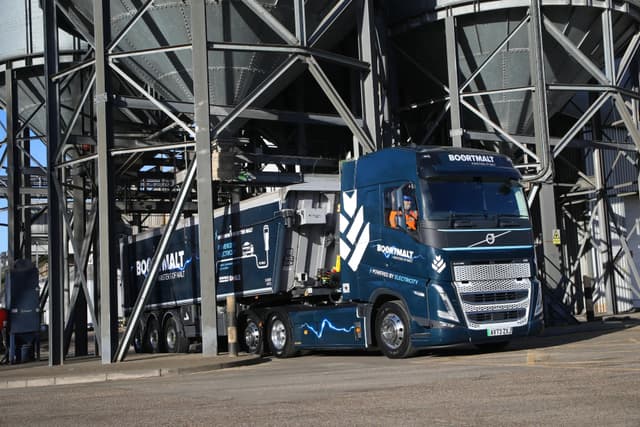
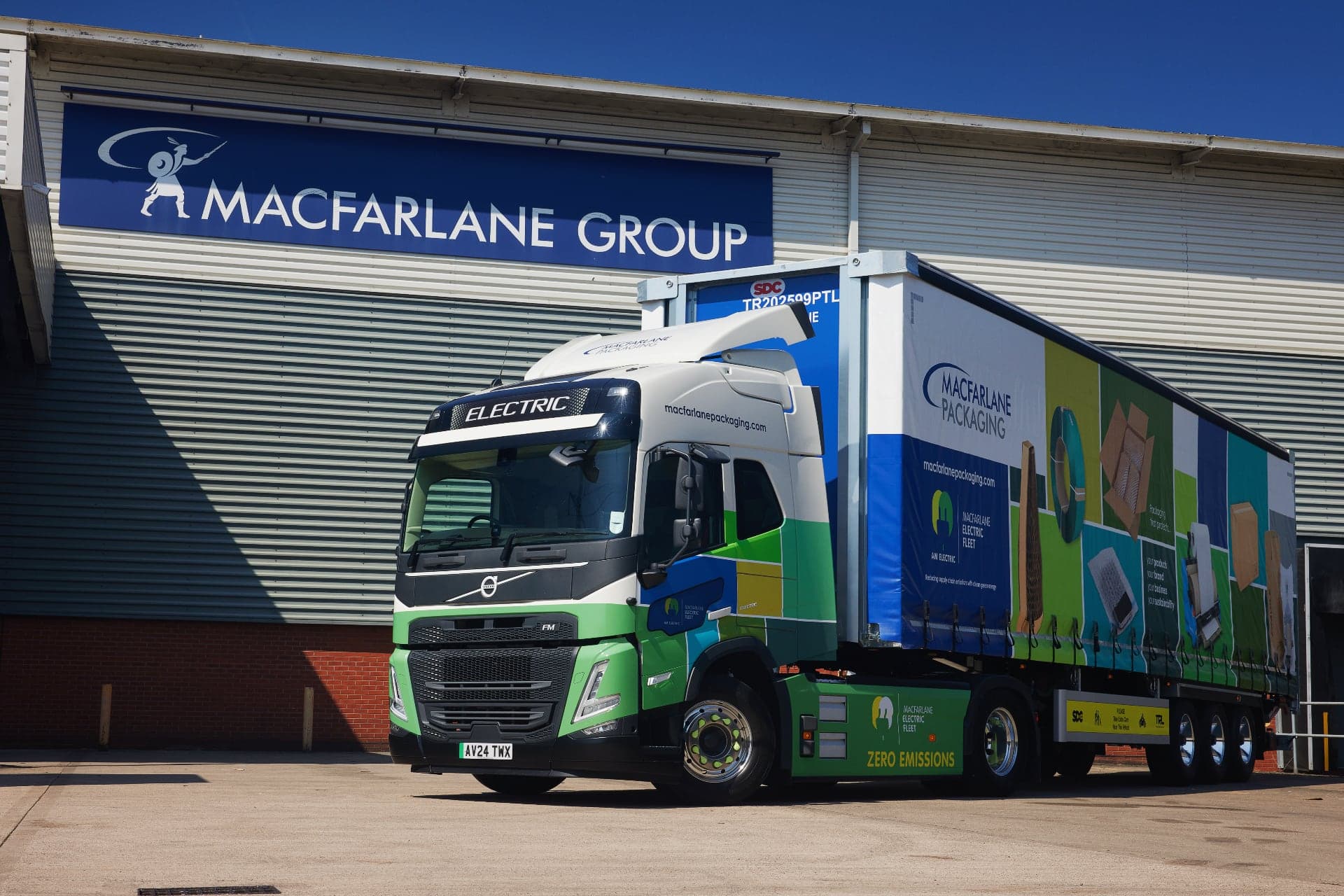
While progress can be made within Macfarlane Packaging’s existing fleet, like many other logistics companies, it is also starting to embrace the raft of alternative fuel vehicles coming to market. Most recently, it has more than doubled its electric vehicle contingent through the acquisition of five Volvo trucks: four FE Electric rigids and one FM Electric tractor unit.
We now have four vans, five rigids, and one electric tractor unit.
says Patton.
It is early days, but we are really happy with the performance so far across the board.
Electric Mobility in Action
As Patton details, Macfarlane Packaging’s local delivery model makes its operations particularly well-suited to electric mobility. Packaging is, by its nature, lightweight and most of its sites serve their immediate areas, meaning it does not operate many trucks that are travelling long distances day-in and day-out. Its new rigids will typically cover up to 150 kilometres a day each, with the vehicles’ specification meaning they are well equipped to comfortably service their routes without any range concerns.
The FM Electric tractor unit is travelling further – up to roughly 240 kilometres per day – but this is still well within its capabilities. The 4x2 truck has been specified with the maximum six batteries, which offers a maximum range of approximately 300 kilometres. It also has a charging time of just 2.5 hours with a 250kW DC charger, or 9.5 hours on a 43 kW AC charger, while the battery can be charged more quickly up to 80% capacity mid-shift, in just the same way as a smartphone as the charger slows down towards the end of the process to protect the battery cells.
Vehicle Specifications and Partnership
Diving further into the specification, the FM Electric is powered by three electrical motors, generating 2,400 Nm of continuous torque. These motors are paired with Volvo’s popular I-Shift gearbox, which delivers a smooth and ultra-quiet driving experience by constantly evaluating information about speed, weight, road grade and torque demand.
We are a packaging company, not a truck manufacturer. That is why having credible, experienced partners like Volvo Trucks is so critical to making this transition a success.
says Patton.
They have been a trusted partner, and we have been genuinely impressed with their approach – not just with regards to the vehicles’ performance but especially in their thinking around battery lifecycle, end-of-life use, and decarbonising manufacturing. The trucks have hit the ground running, which is significant. What has really impressed us is the pace of progress and the potential for even more improvements in the future.
Inside the tractor unit’s Globetrotter cab, the customer’s chosen driver is treated to leather upholstery; DAB radio and satellite navigation; Volvo Dynamic Steering; and a suspended and heated driver’s seat with lumbar support. Combined with full air suspension, it delivers a comfortable working environment.
Overcoming Challenges and Looking Ahead
We find that even those that are very attached to their diesel trucks tend to come around to electric once they understand the rationale and experience the quality of the vehicles.
says Patton.
These trucks really do sell themselves once they are in use.
Still, the transition has not been without its challenges.
We can’t replace our entire diesel fleet just yet.
admits Patton.
There are still range limitations and infrastructure hurdles that limit a complete fleet overhaul. Planning is essential as you must use these vehicles smartly to get all the benefits. There are also definitely some sceptics as any major change brings resistance. Climate discussions have become more polarised recently, but the science is the science. People naturally resist change, and this is no different. And while we don’t yet have all the answers to many valid questions about sustainability, battery manufacturing, mining, and end-of-life processes, we see a clear path to finding them.
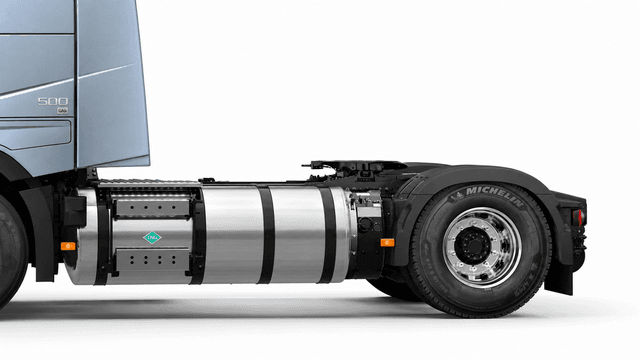
Looking ahead, Macfarlane Packaging is keeping an open mind about other emerging technologies such as hydrogen and biofuels, but for now, electric is the most viable option.
We are not ruling anything out.
says Patton.
If there is a breakthrough in innovation or a major market shift, we will absolutely look beyond electric. But right now, we don’t see the other emerging options as being close to viable, at least not in the next year or two. It is hard to predict beyond that.
A Comprehensive Decarbonisation Strategy
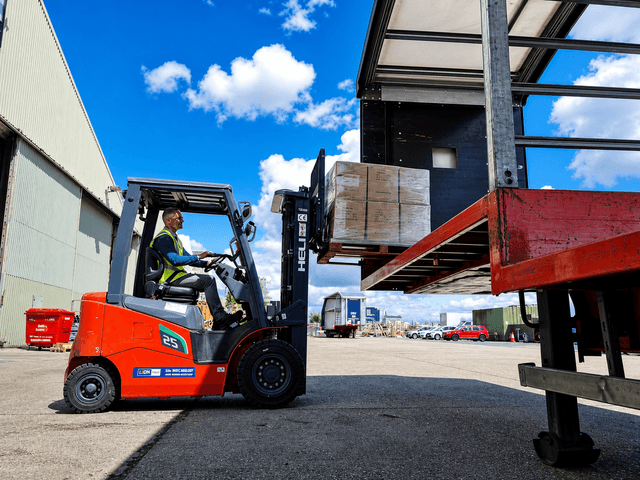
The company’s decarbonisation strategy also continues to span multiple fronts. It has already electrified its forklift fleet within its distribution division and invested in solar panels, while it is also actively purchasing renewable electricity.
Efforts are also ongoing to help its customers reduce their own environmental impact through packaging optimisation tools and innovation labs.
Those efforts are not just about trying to use less cardboard or plastic but also maximising logistics efficiency, reducing product damage, and looking at the full life cycle. While reducing our own footprint is important, a big part of our mission is enabling our customers to do the same.
Its commercial vehicle fleet though remains a key part of Macfarlane Packaging’s ambitious decarbonisation goals, with the business very grateful for the expert support and guidance it has received to-date.
There is still uncertainty in this space and as a business we are navigating that, but we have been very impressed with what Volvo Trucks brings to the table, not just in terms of the vehicles, but also their efforts to influence government policy and support the broader transition.
says Patton.
And perhaps most importantly, these are really good trucks. Our drivers enjoy them, and they offer a great driving experience alongside the environmental benefits.