Share this post
With a new chassis variant that features the recently launched e-machine and charging options, plus new rear axle options, Scania provides bus operators with a compelling alternative for electrifying transport operations beyond purely urban applications.

With a new chassis variant that features the recently launched e-machine and charging options, plus new rear axle options, Scania provides bus operators with a compelling alternative for electrifying transport operations beyond purely urban applications.

Published on 16 Apr 2025 • 3 min read

Scania extends battery-electric bus portfolio with addition of three-axle low-entry alternative

With a new chassis variant that features the recently launched e-machine and charging options, plus new rear axle options, Scania provides bus operators with a compelling alternative for electrifying transport operations beyond purely urban applications.

Scania has expanded its e-mobility offering by launching a 6x2*4 variant on the battery-electric bus platform introduced in 2023. The new low-entry variant is designed to meet the demands of medium and heavy-duty operations, and with an increased passenger capacity compared to the existing 4x2 LE BEV, it is suitable for city, suburban and shorter intercity routes.

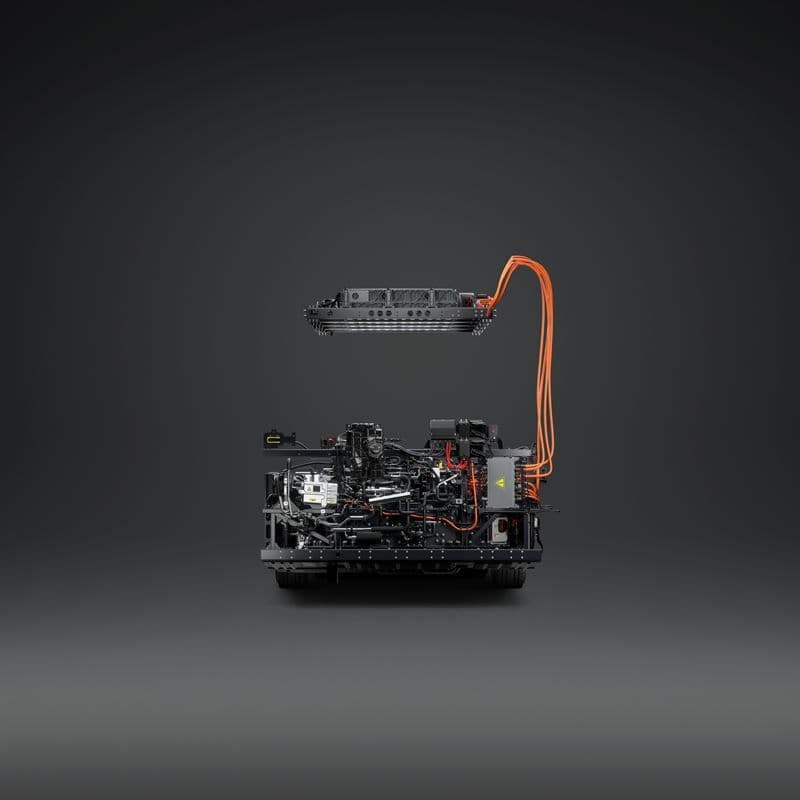
Featuring a new rear axle as well as the recently launched e-machine and charging interface, all of which are also available for the existing two-axle, the three-axle variant offers a competitive solution that is both efficient and highly reliable.

The new electric chassis is built to deliver maximum performance under tough conditions throughout its service life, and its flexibility allows for adaptations to further fit both bodybuilder needs as well as customer demands.

The axle gears are designed for the best possible energy efficiency and long service life. Two new axle gears come with faster gear ratios and reduce internal losses, bringing improved efficiency. In addition, the new steered tag axle is situated behind the half shaft, and is designed to match the new rear axle. Steering using the last axle helps to distribute weight better and reduces the wear and tear of the tyres.

There are a number of key benefits to customers using the new 6x2*4 LE BEV variant in their daily electric transport operations. A robust chassis design helps increase the vehicle’s durability and thus extends its service life, while the flexible adaptation to specific applications makes a huge improvement to overall efficiency. The enhanced sub-frame of the bus minimises noise levels and improves driveability, making for a more comfortable journey for passengers and driver. Finally, the positioning of the vehicle’s components make maintenance simpler, reducing costs and boosting the operational availability of the bus.

“With a completely new e-machine, this three-axle electric variant is reliable, energy-efficient and powerful, thus providing excellent uptime, range, acceleration and startability, not least on steep slopes. And with the new rear position high-speed charging option and several more power nodes to choose from, it offers flexibility that translates to buses that fit local requirements,” says Carl-Johan Lööf, Head of Product Management for People Transport Solutions at Scania.

“As the momentum towards electrification keeps increasing, buses built on this platform will be competitive all around the world and can be utilised to expand electric operations to new types of applications.”

More news

A&M Smith Recycling puts Scotland's first Renault Trucks electric skip loader to work
13 August 2026

A&M Smith Recycling puts Scotland's first Renault Trucks electric skip loader to work

Aberdeen-based waste and recycling specialist A&M Smith Recycling has put the first Renault Trucks electric skip loader in Scotland into operation, adding an 18-tonne E-Tech D Wide to its fleet.

Let's hope this never happens again
7 August 2026

Let's hope this never happens again

BYD says when its software drives, its software pays — the first crack in 130 years of blaming the driver, and why UK hauliers and insurers should be watching.

Menzies introduces first battery-electric trucks under eFREIGHT 2030
7 August 2026

Menzies introduces first battery-electric trucks under eFREIGHT 2030

Menzies Distribution Solutions has put three 42-tonne Scania battery-electric tractor units into live operation, the first of 10 electric HGVs it will deploy through the eFREIGHT 2030 programme.

Truck depots face near decade-long wait for EV grid connections while data centres' capacity goes unused
26 July 2026

Truck depots face near decade-long wait for EV grid connections while data centres' capacity goes unused

Freight depots face waits until 2035 for the grid connections they need to run electric trucks, while data centres that use less than a fifth of their reserved capacity remain at the front of the queue, freight infrastructure body TwentyForty warns.

Cespira raises the bar for low-carbon diesel technology with next-generation HPDI 3.0
25 July 2026

Cespira raises the bar for low-carbon diesel technology with next-generation HPDI 3.0

Cespira will use IAA Transportation 2026 to unveil HPDI 3.0, a fuel system that lets diesel engines run on LNG, bioLNG and future renewable fuels with up to 100% lifecycle CO2 savings.

The cost-of-living crisis arrives by truck
25 July 2026

The cost-of-living crisis arrives by truck

Cap the bus fare and you help the people on the bus; let freight costs rip and you punish every household the moment they go shopping - why the new PM should fall for the 44-tonne artic.

The Race of Our Lives Needs a Bigger Engine
24 July 2026

The Race of Our Lives Needs a Bigger Engine

Why fusion, and a Manhattan Project mindset, may decide whether British haulage reaches net zero.

Replacing your forklift? Ask these five questions first
24 July 2026

Replacing your forklift? Ask these five questions first

Grant Handling's Martin Walker sets out the five questions every operator should ask before replacing a diesel forklift with lithium-ion.